SCI-Arc is pleased to announce MAIN EVENT 13 returns to its Downtown Los Angeles Art District campus (960 E 3rd St, Los Angeles, CA 90013) supporting their endowment scholarship fund. This year, MAIN EVENT 13 will showcase SCI-Arc’s annual schoolwide exhibition of final thesis projects and presentations of its most talented and promising young minds. This most anticipated event will also will also recognize two stand-out pioneers in the field of design and architecture - famed Pritzker-Prize-winning architect and founder of Morphosis, Thom Mayne and arts advocate Merry Norris, founder of Merry Norris Contemporary Art.
What is the place of the museum in the modern city? What role does architecture play? How can these buildings be effectively interpreted?
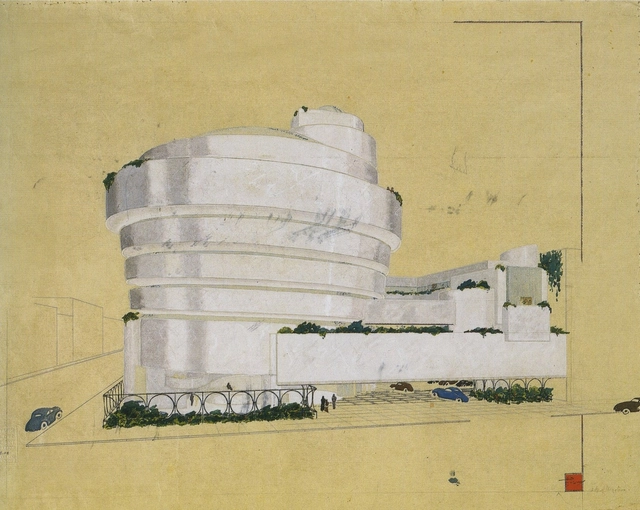
Frank Lloyd Wright’s design for the Guggenheim Museum in Manhattan broke with all existing conventions, setting a new standard for the postwar art museum and, together with the Museum of Modern Art, firmly establishing the city of New York as the cultural capital of the 20th century.
Mark Mills was a visionary architect, a Frank Lloyd Wright apprentice whose innovative designs grow beyond Wright's work to uniquely blend structural principles and the organic forms of seashells. When he heard Wright say that seashells are Nature’s perfect architecture, Mark made that idea the foundation of his life’s work. As seashells change their forms to meet the needs of their inhabitants, so Mark adapted structural roof systems to shelter his clients, and he made them spectacularly beautiful. If the sky is Nature's umbrella above us, Mills's ceilings were the umbrella over his clients' lives in their homes.
Since its first iterations in the early 19th century, the architectural museum has been one of the most significant forces in the creation and dissemination of architectural culture to a wide audience, while also serving as an important locus of authority for architectural discourse and practice. Architect and scholar Sergio Figueiredo’s new study, The NAi Effect: Creating Architecture Culture, elucidates the social and cultural aims of architecture museums and their impact in creating architecture culture through a critical survey of the history and the legacy of one such institution, the Netherlands Architecture Institute (NAi) in Rotterdam.
Ever since the 18th Century when Alexander Pope advised his peers to “consult the genius of place,” the idea that designers could interpret and then express the essential identity of a place has been venerated in landscape architecture. This issue of LA+ is devoted to critically exploring the nexus between place and identity with contributions from disciplines as varied as landscape architecture, architecture, philosophy, literature, ethics, marketing, anthropology, history, politics, and visual arts.
Chandigarh Rethink captures the rich, ongoing discourse on radically transforming urbanities within the Global South with specific reference to India’s social, historical, economic and cultural repositioning. It examines urban edge ‘figures’ and their rural ‘grounds’―relevant not just to Chandigarh, but also to cities in general―while suggesting narrative strategies via provocative design studio design work. These introspections are framed within themed contributions from a globally recognized group of scholars who represent the diverse disciplines of architecture, planning, urban design, landscape ecologies and the humanities.
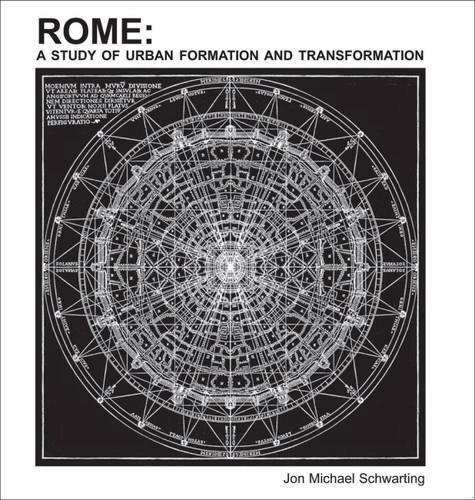
In this book, Formation is ideal and utopian thinking, and Transformation is the adaptation of the ideal to the real or existing conditions. The book examines the dialectical relationship of these in the creation of the city. The subject is a contextual theory of urban design, utilizing Italian Renaissance and Baroque architecture and urban development of Rome, as a case study. It demonstrates the complexity of Roman urbanism and the inter-relationship and role of Roman architecture to its urban context.The theory of urban ’Contextualism’ has not been adequately discussed and presented in regards to this historical city.
Doggerel, the online magazine of Arup in the Americas, is pleased to announce its 2017 Writing Contest! The topic: Describe an undercelebrated idea with great potential to shape better cities. Participation is open to design professionals, journalists, students, and anyone with an interest in the built environment. The grand prize winner will be awarded US$1,000, with up to two runners-up winning US$250 each. Winning submissions will also be published on Doggerel.
For centuries the population undertook great efforts to materialize the worship to their gods. Some examples are offerings, rituals, monuments or buildings, depending on their culture. The construction of churches was very important for the development of architecture. Every project took the constructions systems and technology of that time to its limit, generating suggestive spaces which transcended religions.
Rome, the crib of occidental civilization, witnessed multiple religious constructions along history. The juxtaposed layers throughout history include the first temples of the Roman Empire such as the Pantheon, to current Christian churches like the St. Peter´s Basilica, among others. Each building
Curated by Angela Rui and Maja Vardjan, and organized by the Museum of Architecture and Design in Ljubljana, the 25th Biennial of Design—FARAWAY, SO CLOSE—responds to the observation that although the city remains the model within which the evolution of contemporary society is discussed and interpreted, we are now witnessing a growing percentage of people that leave the city for other contexts and environments.
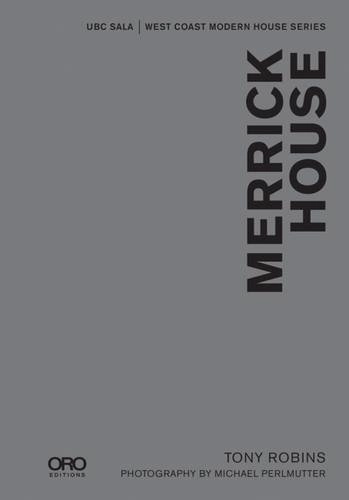
‘Merrick House’ is an exhaustive documentation of one of Western Architectural period jewels, a home Merrick as a young architect built by hand on the steep wooded slopes of West Vancouver, BC in the early seventies. The photographs, by Michael Perlmutter, bring out the wonders of architectural space and materiality, and Robins’ text explores in great detail the influences that Merrick drew from, the way it was constructed, the many spatial moves he employed, and how it changed over time with successive renovations. The 17 level edifice is both contextual and truly eccentric, with spatial majesty.
The Source Books in Architecture series documents the work of the Herbert Baumer Distinguished Visiting Professors at the Austin E. Knowlton School of Architecture. While previous books have addressed a single project of the Baumer Professor, this one has a slightly different focus. Stan Allen was the Baumer Professor at the school in 2012–13, and this book documents projects that were discussed during Allen’s seminar as well as the theoretical position that Allen began to articulate with Field Conditions in 1996.
Built in 1955, and fully restored in 2014, House Friedman was designed by internationally-trained architect Frederic Lasserre, founder of the UBC School of Architecture. Situated near the university, just outside the city of Vancouver limits, the house combines a modernist aesthetic with a distinctly West Coast Modern ethos. Distinguished by its spatial complexity, and by its seamless relationship to the landscape design of Cornelia Oberlander, the house asserts at once its adherence to global modernism while asserting a local aesthetic that has come to be identified as West Coast Modernism.
As populations steadily increase in cities, the world’s natural resources are consumed at ever-faster rates. The majority of the world’s populations live in countries where clean water supplies are dwindling, and these water shortages are also quickly translating into food shortages. What can designers do to avert looming water-related realities?
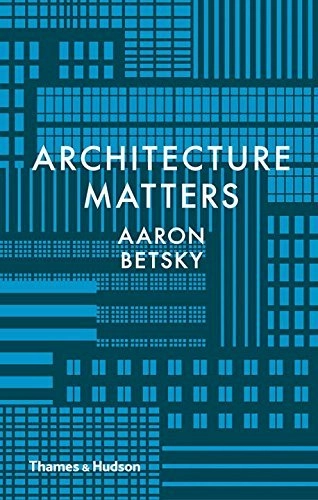
Architecture matters. It matters to cities, the planet, and human lives. How architects design and what they build has an impact that usually lasts for generations. The more we understand architecture―the deeper we probe the decisions and designs that go into making a building―the better our world becomes.
Description via Amazon. Though it was never built, the design for the legendary artist’s house Maison d’Artiste is one of the key works of the Dutch avant-garde movement De Stijl. Created in 1923 by painter Theo van Doesburg and architect Cornelis van Eesteren for De Stijl’s first group exhibition, the Maison d’Artiste was intended to encapsulate what De Stijl aspired to: a new everyday environment achieved through the harmonious fusion of painting and architecture. The scale model presented De Stijl’s ideal space for life and work, with a gym, a music room and a studio, as well as living spaces like guest rooms and bathrooms. Maison d’Artiste: An Unfinished Icon by De Stijl explores the revolutionary cultural importance of the design, its significance for the history of De Stijl and its place in a history of the unbuilt architecture of the 20th century.
The architectural competition for Kulbroen (the Coal Bridge) is on and teams can now apply for the pre qualification. Please note that the material is in Danish, so if foreign teams want to sign up it would be a good idea to find someone here that master the language.
After the huge success of Re-thinking The Future Awards, RTF Sustainability Awards 2015, IATA, and RTF Sustainability Awards 2016 and now RTF in its fifth year, launching the Rethinking The Future Awards 2016. The RTF Awards 2016 are the absolute global architectural award event with 35 categories and 15 esteemed judges across the globe. Winners from previous Awards include Bjarke Ingels Group & DIALOG, Perkins Eastman, Page, RTKL, AHR, Sanjay Puri Architects, and more. With Professionals and Creative people around the world, It’s your chance to be distinguished around the best in the profession.