In a world that has always taken nature for granted and humans have exploited the earth, we as Architects have a major role to play on multiple fronts, to reverse the impending catastrophe. As sensitive professionals, we cannot divorce ourselves from social and environmental exigencies. In the past architects have almost always laid the larger focus on building envelope, active and passive energy systems, pure aesthetics or short-term economics of materials.
Every project begins with a design, and ends with an attractive and functional building. What happens between these two end points is where it gets interesting - and challenging. The construction process is complicated. It means meeting and exceeding expectations in design, affordability and constructibility. It means overcoming hurdles and facilitating smooth transitions from design to engineering to construction. And for complex projects with more unusual features and elements, the risk factors increase exponentially.
Smart Technologies and Design for Healthy Built Environment connects smart technology to a healthy built environmentthat builds upon the sustainable building movement.It provides an overall summary of the state-of-the-art technologies that are applied in the built environment. The book covers a broad spectrum of smart technology categories ranging from dynamic operability, energy efficiency, self-regulating and self-learning systems, and responsive systems. The foreseeable challenges that are associated with smart technologies are discussed and outlined in the book.
The Yale School of Architecture has announced the events to be held during October 2020. From Rebecca Choi's "Surveillance and Self-Determination: The Black Workshop" to Kate Wagner's "Embracing the Discourse: New Horizons in Architectural Criticism".
'Egyptian Places: An Illustrated Travelogue' is a rich and multi-faceted account of an architect’s visits to 12 of Ancient Egypt’s most spectacular sites, a journey that transports the reader from the urban metropolis of Cairo and the Great Pyramid of Giza to the remote desert setting of the rock-cut temples at Abu Simbel, with visits to other monumental temples and towering pyramids which line the Nile River.
Videos
2019 Commended: Ark City, viewed from flood level, passing through London, Eric Wong, Louis Sullivan, Colette Roberts Camina and Christopher Canada
The Architecture Drawing Prize is an international competition that celebrates the art and skill of architectural drawing. The prize is curated by Make Architects, Sir John Soane’s Museum and the World Architecture Festival.
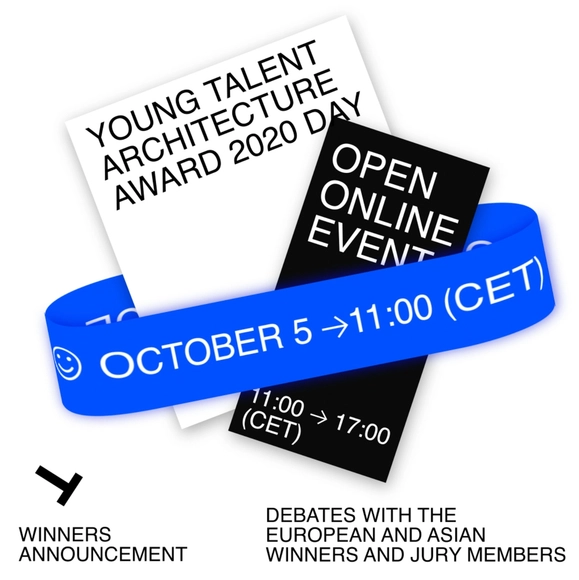
On Monday, 5th October 2020, discover the Winners of the Young Talent Architecture Award, organized by the Fundació Mies van der Rohe with the support of Creative Europe as an extension of the European Union Prize for Contemporary Architecture - Mies van der Rohe Award.
Cover Image by: Marshall Blecher (Designer and Architect), Magnus Maarbjerg (Designer) and Airflix (Drone Photography)
Pavilions. Shelters. Backyard studios. Outdoor toilets. Playgrounds and play structures. Treehouses. Phone booths. Chapels. Meditation spaces. Cabins. Bus stops. Information stations. Mountain huts. Installations. Pods for private sleeping in public spaces. Mobile offices in trailers. Food trucks. Enclosures for reading in libraries. Floating rooms set adrift in lakes. Stage sets. Pedestrian footbridges. Shading canopies. Viewing platforms.
Pivot doors are not ordinary doors. They used to be a hassle to install and once in place, the door movement was often lacking. Things are different now, as companies like FritsJurgens have incorporated new technologies that take pivot door hardware to a whole new level. Installation is now extremely easy, allowing for versatility and creativity in pivot door design. So, in what ways can a pivot door enhance your interior design?
MahaNakhon in Bangkok. Photo by Iwan Caan. Courtesy of Buro Ole Scheeren.
International architecture practice Buro Ole Scheeren Group is helping re-imagine the form and function of skyscrapers around the world. Founding principal Ole Scheeren will illuminate the firm’s unique approach to every project.
Join us for the two-part Neighborhoods Now Summit: Strategies for Reopening and Recovery, a culminating event bringing together working groups and their community partners to reflect on this six-week initiative and how collaborative design informs our neighborhood recovery strategies.
The Terraforming is a three-year design research initiative and think-tank of Strelka Institute for Media, Architecture and Design directed by Benjamin H. Bratton. Each program cycle runs for five months with a group of 30 Russian and international researchers. The Terraforming explores the geotechnical, geourban, and geopolitical conditions by which a viable planetarity can be conceived, modeled, and articulated.
The Tiny House Movement seeks to revamp the notions of a home, one's personal sanctuary through innovations in design and technology.The competition aims to celebrate individuality, redefine sustainability and exalt simple, resourceful living.
Home is a space that is intimate to all of us. A home goes beyond its everyday function of being a physical shelter for people and their activities; a home connects with its users at a personal and emotional level.
LIBRARY ILLUSTRAZIONI is a cultural association born with the aim of promoting graphic research in Architecture, stimulating its cultural production up to the limits of the discipline.
Join us for the two-part Neighborhoods Now Summit: Strategies for Reopening and Recovery, a culminating event reflecting on how collaborative design can inform neighborhood recovery strategies.
Non Architecture competitions is an initiative pointed at finding and bringing forward unconventional and unexplored design solutions in the field of Non Architecture Competitions aims to find unconventional and unexplored design solutions in the field of architecture. The second phase of competitions is structured in 9+1 themes: a Research Ecosystem with the purpose of exploring each theme from different perspectives. All competitions have their focus on tackling the big issues of tomorrow, by seeking nontraditional approaches in the architecture work.
Open webinar hosted by Laka Perspectives: a discussion on predictive urban planning for the creation of future-proof architecture with Marvin Bratke and Paul Clemens Bart!
Despite turbulent times, this year's largest film festival about architecture and city offers a more diverse program than ever. The twelfth edition of the Architecture Film Festival Rotterdam will take place from 7 to 11 October 2020 in LantarenVenster as usual. But also at new locations, such as in the studio of Conny Janssen Danst in Fenixloods I and in a Drive In cinema on the parking lot of RDM campus.