The curatorial team for the Spanish Pavilion at the 17th Venice Architecture Biennale, Uncertainty, invites the entire architectural community to participate in this open call, which will prioritize interdisciplinary projects that have demonstrated a positive and tangible social impact.
Applications are now open for the 6th edition of the Cátedra Madera Final Degree Project (PFC) Competition, which recognizes final degree projects that demonstrate excellence in quality, innovation, originality, or creativity, specifically through the use of wood and sustainable design principles.
The Arquia Foundation is launching this competition to design the festival's architecture (scenography and/or ephemeral installation) to host the activities outlined in the program for the VI arquia/próxima Festival: RELEVANT PRACTICES. The competition encompasses both the design and the subsequent construction and dismantling by the winning individual or team.
The architecture festival celebrates its 10th anniversary, having become an essential event on the capital's cultural calendar. The festival is designed to make architecture accessible to visitors in a clear and educational way. Open House Madrid is a non-profit organization that offers the opportunity to visit over a hundred iconic spaces that are usually inaccessible or have recently opened. It is part of the global Open House Worldwide network, which takes place in more than 50 cities around the world with a common goal: to bring architecture closer to society and raise awareness about its influence on our way of life.
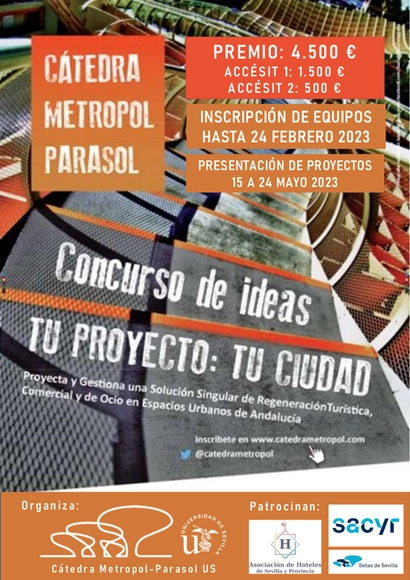
The general objective of this ideas competition is to foster reflection, commitment, entrepreneurial spirit, and innovation among students and recent university graduates, while promoting a better understanding of the technical and management factors that add value and influence the dynamics of urban complexes dedicated to tourism, commerce, and leisure.
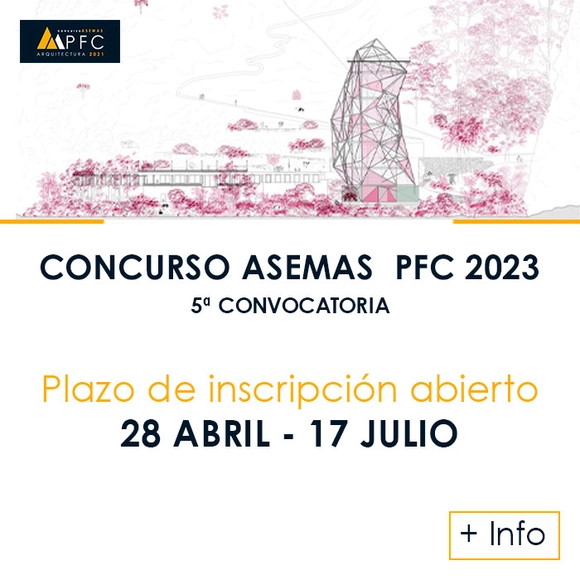
To support young Spanish architects and promote the recognition of professional quality and competence, ASEMAS presents the 5th edition of the 2023 ASEMAS PFC Architecture Competition. The jury will evaluate the effort put into materializing the concept, the precision of the solutions, the quality of the work, the originality of the construction details, and the understanding of applicable regulations.
The Arquia Foundation, in collaboration with Barcelona Activa, is offering one Social Entrepreneurship Grant aimed at developing a sustainable business project with a strong social component. The goal is to foster and support the creation of business initiatives that aim to achieve a positive impact on society by addressing current population issues from a social or environmental perspective.
The 40th edition of the European Architecture Students Assembly (EASA) is ready! 600 architecture students and over 35 workshops will gather this year (July 25 – August 9) in Valga, Estonia, under the theme "APATHY."
Starting February 1, 2019, you can register for the 5th edition of the Arquia Grant for Entrepreneurship and Innovation in Architecture 2019. The grant is intended for the development of a business project at the Factoría Cultural Creative Industries Incubator in Matadero Madrid. The project may encompass any field within the architecture profession.
The Ministry of Housing and Urban Agenda announces the inaugural edition of the La Casa de la Arquitectura Awards to recognize quality architecture, in accordance with the principles of the Law on the Quality of Architecture, and to highlight its commitment to collective well-being by demonstrating architecture's capacity to address present and future challenges.
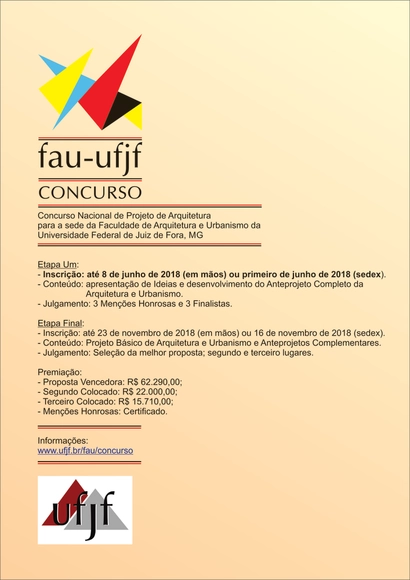
The Federal University of Juiz de Fora (UFJF) announces the opening of a PUBLIC COMPETITION for the complete Basic Architectural and Urban Design and its complementary preliminary designs for the construction of the architectural complex intended for the headquarters of the Faculty of Architecture and Urbanism at the Federal University of Juiz de Fora (FAU/UFJF).
AsBEA-PR has just launched the Agisa Todeschini Ideas Competition, open to architects, urban planners, and students throughout Brazil. The goal is to award the best design for a habitable module to be donated to the Lar Infantil Sol Amigo, an organization in Curitiba, Paraná, that supports vulnerable children.
6th edition of the Saint-Gobain Architecture Award - Sustainable Habitat has registration extended until November 28th
How about ending the year with a chance to receive one of the most important awards in the field of architecture? The 6th Saint-Gobain Architecture Award – Sustainable Habitat has extended its registration deadline to November 28, offering another opportunity for those who have not yet submitted their projects. To participate, simply visit the website www.premiosaintgobain.com.br. The first five editions received over 2,000 entries, with 57% from professionals and 43% from architecture students.
The Municipality of Conde (on the South Coast of Paraíba), a city of 25,000 inhabitants integrated into the metropolitan region of the capital, João Pessoa, launched its first National Competition for Urbanism and Architecture this Thursday afternoon (9). The competition seeks a design for the requalification of the city's central area, which serves as the hub of the region's urban life and hosts key public facilities.
Competition for Mined Areas for economic and social use
The competition aims to select and award the best projects that propose urban solutions or new activities with social and economic benefits for areas that have been or are currently being mined.
The first competition for architecture and urbanism students and recent graduates, organized by MINIMUM, aims to foster participants' ideas and creativity. Consequently, the challenge is to design a space in front of the Iberê Camargo Foundation in Porto Alegre. The central theme is open, provided that teams adhere to the fundamental premise of creating movement, animation, and activities to reconsolidate the Foundation and its immediate surroundings within the city throughout the week. The five highest-scoring projects will be presented by their teams on September 1st of this year at the Foundation's headquarters. Confirmed jurors include the general director of the Iberê Camargo Foundation, Emilio Kalil. Registration is now open and can be completed until August 9th on the official Minimum website (www.minimumpoa.com.br), where the full competition brief is also available.




.jpg?1583787962&format=webp&width=640&height=580)