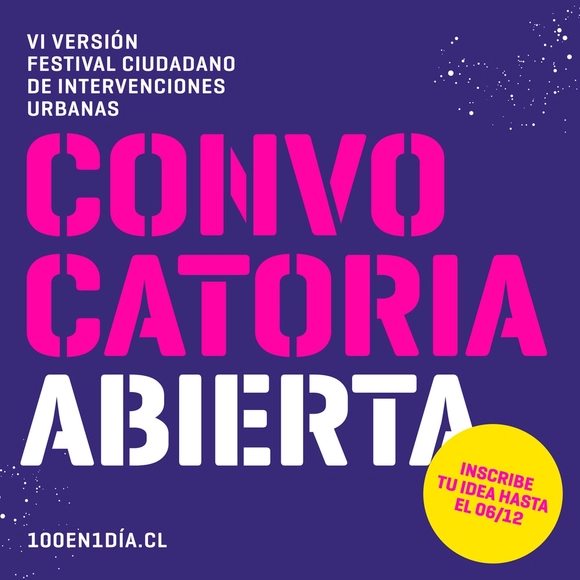
On November 16, the call for entries opened for the 6th edition of the Citizen Festival of Urban Interventions, which invites the residents of Santiago to carry out various initiatives, including music, performance, theater, installations, dance, workshops, and games in public spaces.
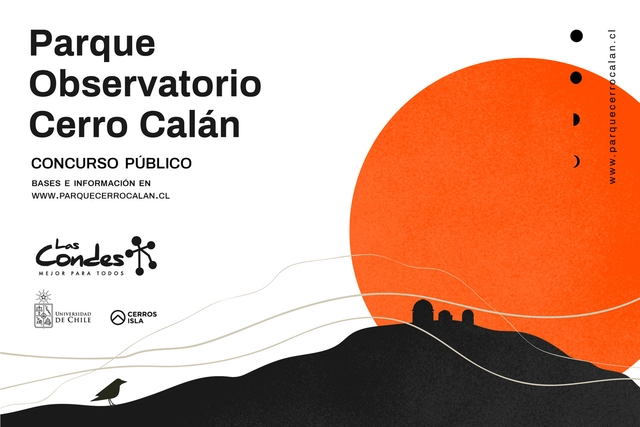
The Illustrious Municipality of Las Condes, in collaboration with the University of Chile and the Cerros Isla Foundation, announces the launch of a national public competition for the design of the "Cerro Calán Observatory Park." The competition aims to select the best proposal and an interdisciplinary team for the architecture, landscape, and specialty design.
The EARQ-UC Architecture Initiation Cluster (Chile) invites participants to the first national meeting on architecture initiation, to be held on Thursday, August 27, and Friday, August 28, 2020. The event aims to share diverse perspectives on teaching during the first year of university architecture studies in Chile, as reflected in the content and methodologies proposed by each school within the national academic landscape.
Metropolitan life implies an accelerated pace that excludes moments of contemplation and introspection. The ideal of the primitive hut, meanwhile, represents a primordial moment for architecture, where material and symbolic needs converge, the relationships between form and use intensify, and the distinctions between furniture and building blur.
The VAAD HAJINUJ Educational Corporation, the central body for Jewish education in Chile, invites Chilean and foreign architects (based in Chile) to submit architectural proposals for the new Instituto Hebreo building. The site is located at Chesterton No. 8630 in the Las Condes district, which is part of the current grounds of the Estadio Israelita Maccabi (EIM).
The objective of this competition, sponsored by the Colegio de Arquitectos and the Association of Architectural Offices (AOA), is to obtain an architectural response that is well-suited to the functional and spatial needs of the Instituto Hebreo’s program, as well as the urban and environmental requirements inherent to its site and the building's institutional character.
Now in its third edition, the Mi Parque Foundation and Fahneu Design and Innovation Competition invites students and professionals in design and architecture under the age of 30 to submit proposals aimed at improving the experience of young people in public spaces.
To foster the creative work of young talent and promote knowledge of steel and its applications, CAP Acero, a company of the CAP Group, has opened submissions for the 33rd edition of the "CAP Competition for Architecture Students."
Due to the ongoing social crisis in Chile, the Infrastructure Department of the Universidad de los Lagos is requesting a modification to the bidding terms, waiving the mandatory site visit requirement, as the necessary conditions for travel were not available in recent weeks to carry out this activity.
Two-stage application process: 1) Pre-selection, June 24 before 1:00 PM, and 2) Submission of bids, July 19, 2019, between 9:00 AM and 1:00 PM. More information at www.mercadopublico.cl
The Ministry of Housing and Urbanism (Minvu) has launched an open call for architects to design a future flora conservation center to be located in the Metropolitan Park (Parquemet).
Titled "Architectural Design and Specialties for the Chagual Botanical Garden," the competition is organized by Minvu in partnership with the Chagual Botanical Garden Corporation. The goal is to select proposals for the buildings that will define this new space.
The Arquitectura Film Festival Santiago (ArqFilmFest) and Kiné-Imágenes invite you to participate in the "Re-visiones de ciudad" (City Re-visions) workshop. Participants will collaborate to create an audiovisual piece, which will premiere during the 2018 edition of the festival, taking place from October 25 to 28 in Barrio Lastarria.
CoNEA Chile currently has 33 delegates across 27 universities, spanning from Iquique to Puerto Montt. However, we have yet to appoint representative delegates in several architecture schools and faculties; consequently, we have opened this call for applications.
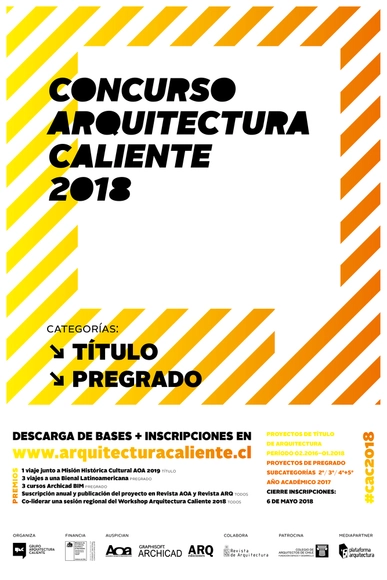
Grupo Arquitectura Caliente invites architecture students from all Chilean universities to participate in the new edition of the 2018 Arquitectura Caliente Competition (CAC).
During the "6th BIM Conference" on March 21 at the Architects' Association, two half-scholarships of 450,000 CLP each will be awarded via raffle for the Advanced BIM Diploma program, starting April 24.
The Chilean Chamber of Construction invites architecture students from universities across the country to envision future Metro stations for the Greater Concepción area and to design an urban-architectural intervention proposal that enhances the urban environment and contributes to public space as a city landmark.
In our effort to broaden the reach of our work as students, we have launched an initiative to create a dossier showcasing projects by architecture students. Submissions can be current or past work that faithfully captures our approach to the various facets of the profession.
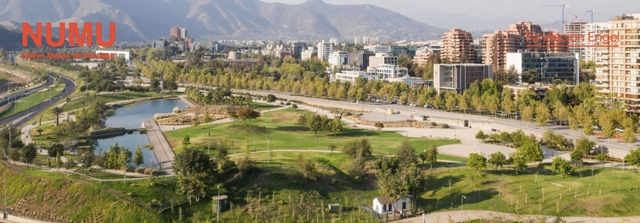
The Engel Foundation invites Chilean architects to participate in the National Architecture and Landscape Design Competition for the New Museum of Santiago (NuMu). The museum will be located at the southern end of Bicentenario Park in Vitacura and will serve as a key element in consolidating a large area of the park and its edges, connecting it to the city and the urban fabric.