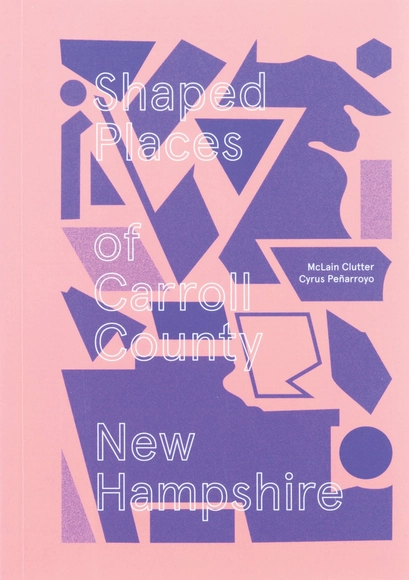
Shaped Places of Carroll County, New Hampshire expands upon an award-winning speculative urban design project by the architecture and design practice EXTENTS, led by McLain Clutter and Cyrus Peñarroyo. The project investigates the complex reciprocity between who we are and the shape of where we live; between identities and the built environments that support them. In doing so, Shaped Places creates a dialogue between seemingly disparate discourses spanning from critical geography, to formalist art criticism, to the urbanization strategies of the early twentieth-century Russian avant garde. The role of the rural-urban divide in affirming the divided political landscape in the United States is a central theme in the work. The project culminates in the design of three linear cities in Carroll County, New Hampshire. In each speculative urban design proposal, rural and urban patterns of development and divergent lifestyles are combined in urban design proposals intended to produce a functional body politic from a sharply divided population.
Since the mid-1990s, when China allowed its architects to practice independently from government-run design institutes, a new kind of architecture, distinguished by unique regional characteristics, has emerged. China Dialogues is a rigorously selected collection of insightful interviews that the book’s author Vladimir Belogolovsky has conducted with 21 leading Chinese architects during his extensive travels in China. At the time when so many buildings that are being built around the world are no longer rooted in their place and culture, the leading Chinese architects succeeded collectively in producing unique architectural body of work that could not be confused with any other regional school. The interviews are accompanied by over 120 photographs and drawings of beautifully executed projects built throughout China since early 2000s. China Dialogues opens up the thinking process of the country’s top architects, as they share their ideas, insights, intentions, and visions in unusually revealing and candid ways.
Working Water demonstrates better approaches of managing urban water resources in ways that support more efficient water use, clean urban runoff, support natural systems, and enhance the vitality and livability of our cities. Exploring the potentials of urban water resources is an important part of Wenk Associates’ practice, and the focus of this book.
For a long period of time, spatial design has been seen as an action that could be performed by people, and for people only. Today, as some of the most meaningful projects of our times seem to challenge this concept, qualitative research still struggles to emerge. This book collects, reconstructs, and discusses archetypal models of posthuman architecture, from the cabin of Henry David Thoreau to the Svalbard Global Seed Vault. This book aims to show how architectural, landscape, and industrial designers, be they professional practitioners or not, redefined their tools in order to meet the functional and symbolic needs of new and different kinds of subjects. All this in ten monographic architectural tales, thought to trace the evolution of an extended idea of coexistence between humans and other species or technologies.
Emerging from the vivid landscape of California’s Central Valley, architect Maria Ogrydziak’s iconic, light-filled houses reflect a region where growth abounds, rich soil runs deep, and blue sky goes on and on. She designs for a new California dream, outside the hustle of the big cities, far from the deep turquoise of the Pacific.
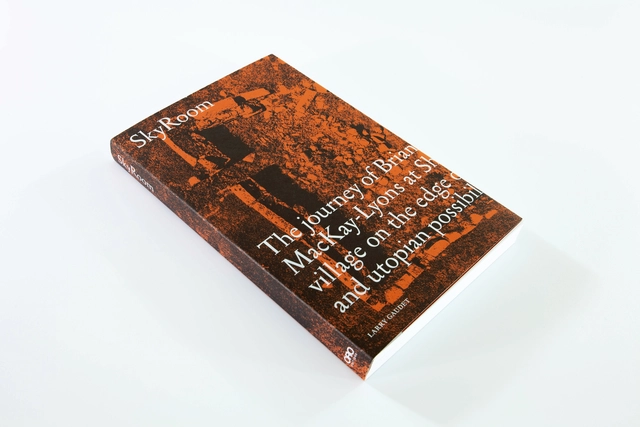
As you crest the ridge, the green valley below and the ocean beyond come into view. This is Shobac, a seaside village featuring an ensemble of buildings that, on first glance, looks like a monumental work of Land Art. What is this place? A fishing village from the future? A monastery teleported here from another planet? A utopian colony with a message for the world?
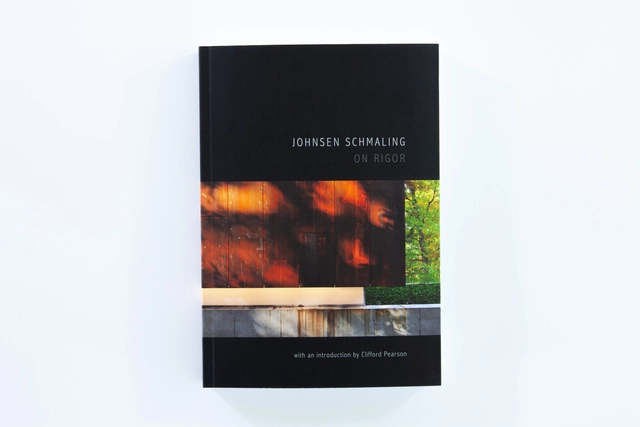
In a world that fetishizes aesthetic frivolity and iconographic bombast at the expense of substance and nuance, the critically acclaimed work of Johnsen Schmaling Architects stands out for its conceptual rigor, profound simplicity, and quiet repose. Formally restrained and informed by innovative tectonic and material experimentations, Johnsen Schmaling’s precisely crafted architecture creates poetic atmospheres of enduring clarity.
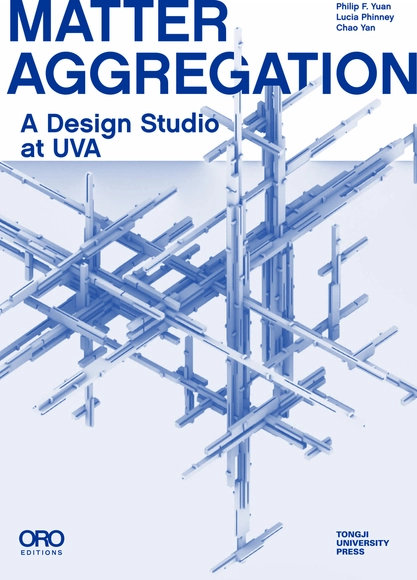
Within the human-machine collaborations cultivated in the digital age, crafts and materials are playing an increasingly important role in forming various ways of matter aggregation for architecture. Based on the pedagogical exploration of the design studio—Matter Aggregation at UVA, the book seeks new values of wood craft for contemporary architectural design, by introducing digital design and robotic fabrication techniques into the design process for timber building. The book integrates explorations of traditional crafts with digital fabrication technique, establishing a digital crafting as a new field for contemporary practice. The book explores the computational mechanisms and diagrammatic grammar within these craft-based aggregation systems, paying close attention to geometrical configurations, material effects and fabrication details and take advantage of these qualities to produce a unique spatiality.
The book tells the story of Sullivan’s development as an artist using architecture as his medium. It includes essays on his views of architectural design, which have been shaped by his personal history in the landscapes and the architecture of New England and Japan. Sullivan’s training as a potter informs his architecture in its interpretation of houses as “vessels of experience” and in his work’s focus on materiality and the craft of construction.
How does one envision architecture? Forays gathers the work of Joe Day and Deegan-Day Design into six diptychs, unified by this question. Working in a wide range of media and scales, Day’s work mines the differentials between perspective and projection. Forays is organized in six “diptychs,” the first two paired projects are books in their own right; the second pair, a clothing line and a first building; the third, two houses; the fourth, two plays on brand identity and design methodology; the fifth, permanent and transient cinema proposals; and the sixth, two series of speculative work in local and global registers. Modeled on a comparison of two classic cameras—the Leica M3 and Polaroid SX-70—each diptych includes a project with more “Leica” to it—a more bounded, Cartesian clarity or distilled focus—and another closer to an SX-70 in its moving or folding parts, its shape-shifting adaptability.
The region of Bundelkhand in India faces enormous challenges in development. With a population of 18 million people, it has one of the lowest human development indices in India. Groundwater, which the vast majority of people rely on for domestic and agricultural purposes, is being rapidly depleted, while droughts have become more frequent and severe. Livelihood options are narrowing quickly. A lack of public services, infrastructure, and market access has made the situation unlivable for many. The state and central governments carry out initiatives that are extremely expensive but highly ineffective.
Rooted in the modernist tradition, Erdy McHenry Architecture brings uncommon rigor to their work. Recognized for their uniquely diverse portfolio of mixed-use, institutional, office, agricultural, and residential design, Erdy McHenry Architecture presents this monograph as a window into projects developed throughout the firm’s twenty-year history. With an appreciation for place and creative constraints, Erdy McHenry Architecture considers each project challenge as an opportunity: how can architecture make great places? How can design elevate the human experience? How can a project team address the realities of construction without sacrificing programmatic intent? For each case study presented in this monograph, Erdy McHenry Architecture provides a brief narrative of the project’s design intent and evolution. Whether it is a tower, a school, or an office headquarters, Erdy McHenry Architecture leverages the challenges and opportunities of site, scale, and social context to reveal solutions that enable design as an outcome more than an objective.
As the number and distinctiveness of design directions in contemporary architecture expands, an outcome has emerged of a contradictory nature. While many of these directions hold great intrigue, a troubling aspect arises in that in their realization an “incompleteness” is often exhibited, one expressing a less developed architectural richness often expressed in an under-utilized nature of the architectural language itself.
The vast medium of jewelry and fashion artifact design continues to be a central pillar of fashion luxury goods industries and artistic practice, but there is a lack of discussions on the researches, value, and roles of it. Design is an expression of values and attitudes, and a tangible form of guiding the thoughts and desires of individuals and members of society. In the contemporary society, when science, technology, and craftsmanship reach a stage, whether products and services become luxurious or not, its quality, uniqueness, artistry, and rarity are all achieved through design. This book represents the articles from 20 outstanding design researchers from 11 countries, including many works from international designers, who are engaging with and pushing the boundaries of the medium. It contributes to these international debates on contemporary fashion and jewelry design while providing an accessible overview and a concise reference book.
Anti-trend investigates resilient, anti-trendy living and design as viable alternatives to the insatiable “more wants more” mantra of consumerism. The overall purpose with this book is to encourage designers and consumers to take responsibility for overproduction and overconsumption, and to alter unsustainable production and behavioral patterns.
Seeking to actively respond to the climate-related challenges of the 21st century, VELUX's sustainability strategy includes a series of measurable steps towards positive change as we focus on how buildings can help solve global challenges with sustainable solutions and practical actions. One of these steps is Build for Life, a pioneering, multidisciplinary initiative launched in 2021 to help connect people and the planet through better building design.
The Build for Life 2021 Conference will be held on November 15-17, and is an open invitation to join a global conversation on how buildings can benefit the environment and improve the quality of life for people around the world.
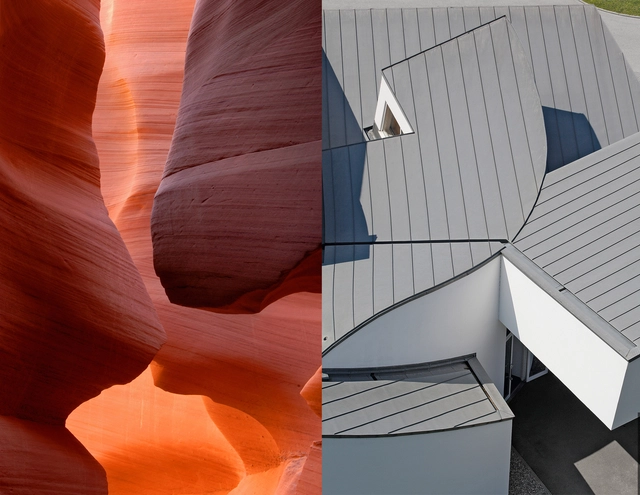
Antelope Canyon (USA) / Vitra Design Museum (Deutschland). Image Courtesy of Rheinzink
Nature is always to be found in things and architecture - and it is exciting, aesthetic, and astonishing. This is especially apparent in the exhibition of Gerhard Schönnenbeck's photographs of landscape shots, juxtaposed with architecturally impressive objects that were perfectly staged with zinc cladding panels developed by RHEINZINK.
In their series “Inspired by nature,” RHEINZINK presents these reflections that Gerhard Schönnenbeck captured so well with his camera.
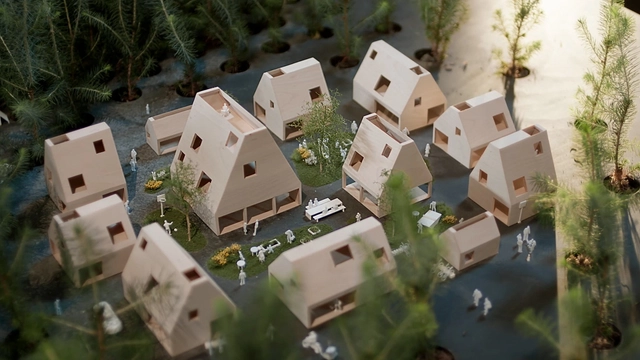
Superscape is a biannual prize that seeks to encourage innovative and visionary architectural concepts that explore new models of living and strategies for inhabiting an urban context over a broad expanse of 30 years. Reflecting processes of change, Superscape opens a creative space for unconventional ideas meant to deliver new impulses to real-life architectural output and urban development.