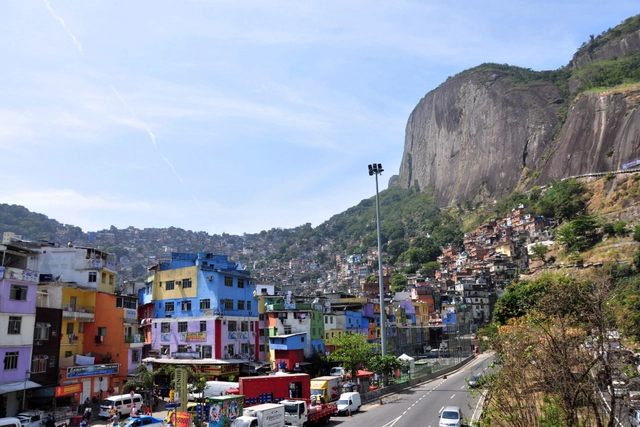
Rocinha, Rio de Janeiro. Image: Alexandre Macieira/Riotur
The future of urban planning may lie in Brazil's second-largest city: Rio de Janeiro. But it is not along the glittering waterfront of Ipanema, overlooked because it houses some of the most expensive real estate in Latin America. Nor is it in the city center, renovated for the 2016 Olympics and now the focus of a major urban revitalization plan. To glimpse the future of cities, one must pass by the Rodrigo de Freitas Lagoon to the Jardim Botânico neighborhood and then look up at the hills, where the immense neighborhood of Rocinha is perilously perched on the slopes.
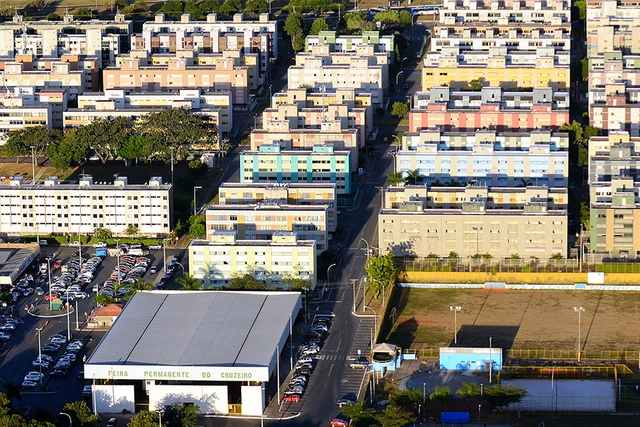
Over 60 years ago, Brasília emerged from the Brazilian interior. Developed in a desolate cerrado between 1956 and 1960, the city that replaced Rio de Janeiro as the nation's capital was a joint creation of urban planner Lúcio Costa and architect Oscar Niemeyer.
With its winged shape, Brasília became a powerful symbol, representing one of the purest embodiments of the hope, splendor, and ingenuity of 20th-century architecture.
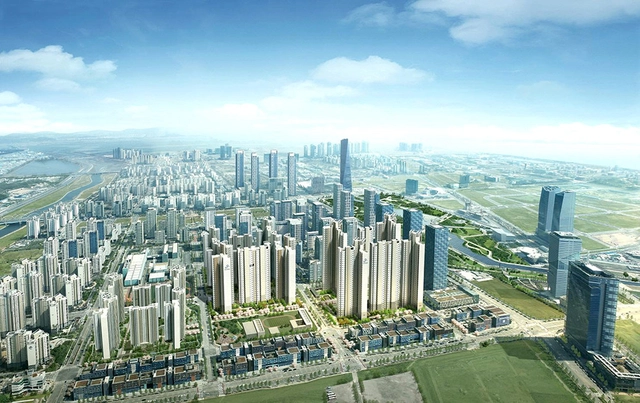
Songdo In South Korea is a brand new city founded on smart city principles. Image Courtesy of Cisco
This article by Carlo Ratti originally appeared in The European titled "The Sense-able City". Ratti outlines the driving forces behind the Smart Cities movement and explain why we may be best off focusing on retrofitting existing cities with new technologies rather than building new ones.
What was empty space just a few years ago is now becoming New Songdo in Korea, Masdar in the United Arab Emirates or PlanIT in Portugal — new “smart cities”, built from scratch, are sprouting across the planet and traditional actors like governments, urban planners and real estate developers, are, for the first time, working alongside large IT firms — the likes of IBM, Cisco, and Microsoft.
The resulting cities are based on the idea of becoming “living labs” for new technologies at the urban scale, blurring the boundary between bits and atoms, habitation and telemetry. If 20th century French architect Le Corbusier advanced the concept of the house as a “machine for living in”, these cities could be imagined as inhabitable microchips, or “computers in open air”.