Most spaces for the performing arts (drama, music theatre, dance, concerts and other forms) are housed in specialized buildings, built for the purpose.


Most spaces for the performing arts (drama, music theatre, dance, concerts and other forms) are housed in specialized buildings, built for the purpose.

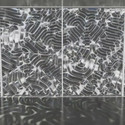
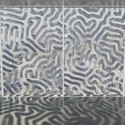
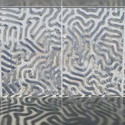
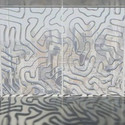
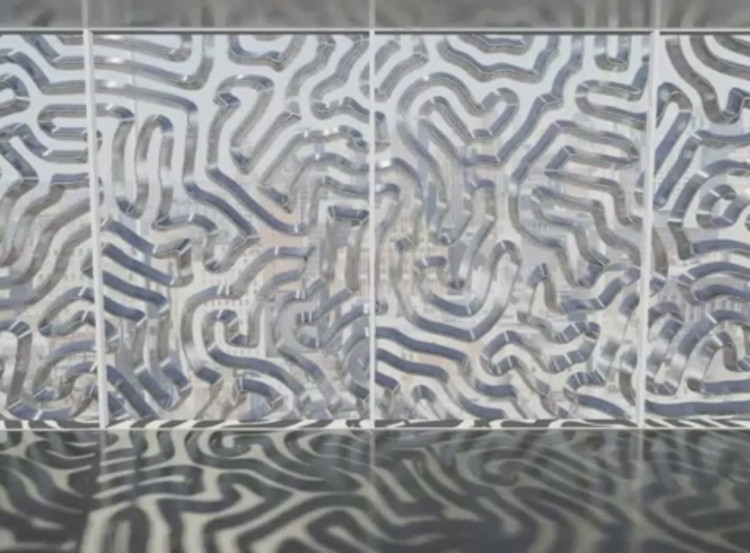
This prototype system, Homeostatic Facade, is the latest in green building design. The line maze like facade consists of material that flexes and bends as an artificial muscle fighting solar heat gain by changing shape on its own. No computer programing or physical adjustments required. The system regulates a buildings climate by auto responding to environmental conditions and has an advantage over other systems because of its low power consumption and localized control.
Check out the video of the moving Homeostatic Facade following the break.

The Architectural Association (AA) visiting school Mittelmeerland, a program of AA’s School of Architecture, is seeking architecture students and young professionals to participate in the 10-day architectural research workshop in Dubrovnik, Croatia from January 31st – February 10th. Mittelmeerland will investigate the future of the Mediterranean as a territory and sustainable waterfronts.
The deadline for application is January 10th 2011.
More information after the break.
During the AIA Convention we had the opportunity to talk with Peter Bohlin (FAIA), founding principal of Bohlin Cywinski Jackson and one of the most renowned architects in the US.

I was asking myself this question a few minutes ago, so went online to do some quick research and Googled “How much do architects earn per hour?”.

This competition is a call for ideas to design a building block of an inclusive school environment that will uniquely enhance the quality of life for teens and adults with disabilities who participate in the Easter Seals VIP Academy.

The proposed extension to the Central University Library by EXHIBIT Architectura in Cluj Napoca, Romania is an exercise in the design of a contemporary civic, monumental structure among historic, and grandiose institutional buildings. The proposal is an extension, as well as a link between the existing library storehouse and the new building, while creating an outdoor room, or plaza, between the two structures.
More on this project after the break.

This week the Architecture City Guide series heads south to warm up a bit, featuring Atlanta. We’re looking forward to hearing from you, what are your can’t miss Atlanta buildings? Add them to the comment section below.
Follow the break for our Atlanta list and a corresponding map!
Back in 2009, over 150 firms across the world entered the Glasgow School of Art competition which was seeking an architect-led team to create a building opposite Mackintosh’s masterpiece. Steven Holl, in collaboration with Glasgow-based JM Architects, proposed a submission that capitalized on the changing quality of light throughout the spaces. Holl’s vision responds to Mackintosh’s sectional emphasis by implementing large voids of light – the “circuit of connection ” – that slice through the spaces to “encourage the creative contact central to the workings of the school.”
When we visited Holl’s office, we talked Senior Partner Chris McVoy about the importance of the section for this particular project (we also chatted about their latest Shan-Shui master plan). One hundred years have passed since Mackintosh’s building opened for the School of Art, yet, as McVoy explains, although the structures represent completely different times, their attention to architectural elements, such as light, materiality and proportion, will create a relationship between the two.
Enjoy the video! Credits after the break.

For the first Round Up of the year, we have five great industrial projects previously featured in ArchDaily. Enjoy them all after the break.
Argos, Building for an Electrical Generator at a Cement Factory / Felipe Gonzalez-Pacheco In July 2006, the project is the winner of an architectural contest, for the resolution of a “skin” for a technical building containing an self generation electrical plant for cement factory. The Factory wanted to generate also a corporative image with the building. Their purpose became a mutual opportunity to generate an experimentation laboratory of technical possibilities with the material they produce, with very low density concretes (read more…)

Excavating Innovation: The History and Future of Drylands Design examines the role of water engineering in shaping public space and city form, by using arid and semi-arid sites in India, the Middle East, the Mediterranean, and the New World to explore how dryland water systems throughout history have formed and been formed by ritual, hygiene, gender, technology, governance, markets, and, perhaps above all, power.

Architects: Bevk Perovic arhitekti, Dekleva Gregoric arhitekti, OFIS arhitekti, Sadar Vuga arhitekti Location: Vitanje, Slovenia Noordung Space Technologies Center concept & producer: Dragan Zivadinov, Miha Tursic Graphic design: Atelje Balant Client / project coordinator: Vitanje Community (for /Srecko Fijavz) Project Year: 2008-2011 Images & Photographs: Courtesy of OFIS architekti

For the occasion of the first Festival of Ideas for a New City in New York City, Storefront for Art and Architecture jointly with the New Museum and New York City’s Department of Transportation (NYCDOT) are launching the StreetFest Competition for the design, management, and construction of temporary outdoor spaces that produce new ways for collective gathering and city engagement. On Saturday, May 7, 2011, one winning entry will occupy designated outdoor spaces along the Bowery and the surrounding streets of the New Museum during the Festival. We envision fabricating a minimum of fifteen structures that will cover approximately 2,000 square feet.

The Warming Huts competition called for a collaboration between artists, architects and designers to put forward ideas for shelter and to be constructed along the Assiniboine River in Winnipeg, Manitoba, Canada. Noa Biran and Roy Talman submitted the Woodpile, an interactive and practical shelter, that responds to both the needs required by the climate and its users.
More on this project after the break.
In a video by Studio Banana, Copenhagen-based BIG's founder Bjarke Ingels speaks to the firm’s design ethos and development. Known for their experimentation with bold and playful forms, the firm has produced some of the most recognizable works of the last decade including the 8 House complex in Denmark and Via 57 West in New York. In the video, Ingels points to communication as the key to success in the field, calling its power analogous to an artist's hammer and chisel. He also draws comparison to Darwinian concepts of evolution, noting that BIG's migration of ideas and iterative design development reflects a similar selection process. He applies this notion, along with another important principle to the firm--sustainability, to discuss works such as their Danish Pavilion at the 2010 Shanghai Design Expo that examines sustainability and experiential architecture.
Taking inspiration from the behavior and volume of an idealized cloud, Dan Goods, Nik Hafermaas, and Aaron Koblin created eCloud an interactive sculpture for the San Jose International Airport. The dynamic liquid crystal scultpure hangs from the ceiling displaying weather data from the National Oceanic and Atmospheric Administration. eCloud is constructed from polycarbonate tiles appearing as transparent and opaque depending on the pattern which is in constant motion transforming every 20 seconds.

With Christmas and New Year’s, many of you may have missed some of the great posts que featured last week. Check our small selection of the best after the break.
BR House / Marcio Kogan In terms of an architectural proposition, the BR House located in the countryside could not be more intriguing: situated within the dense and impressive Rain Forest, circumscribing and penetrating the area, dominates all senses. The circumstances, from the inception, forces fundamental questions for architecture: how can architecture present itself and, if making itself present, how can it deliberately show itself as construction? (read more…)

De Leon & Primmer Architecture Workshop were challenged with the residential interior renovation of an existing 1970 4,200 sqf home. The owners, a young couple interested in collecting contemporary art, asked the architects to transform the character of the existing interior creating a balanced home and gallery with warmth and neutrality.
Follow the break to see more photographs and drawings of Art House, an AIA Kentucky Merit Award winner.
Architects: De Leon & Primmer Architecture Workshop Location: Louisville, Kentucky, USA Project Area: 4,200 sqf Project Year: 2009 Photographs: Roberto de Leon

Few design competitions ever focus on truly traumatic life experiences, the kind of situations that force men, women and children into their primal survival tendencies. Luckily, in 2010 this gaping hole in architectural design was finally addressed. The 2010 Zombie Apocalypse Safe House Competition posed the task to designers to find solutions to the the very real threat of having to defend yourself against hoards of brain hungry zombies as the end of mankind grows near. Follow after the jump to read about this lighthearted design competition, the entries and their presentation boards.

Today OMA announced the appointment of Iyad Alsaka and David Gianotten as new partners in the company. Architectural and research projects in North Africa, the Middle East and Asia have been increasing for OMA and this recent appointment signifies their investment to grow and develop projects within these regions.

Brooklyn-based Popular Architecture shared with us their proposal for the Downtown Fargo Urban Infill Competition. More images and architect’s description after the break.

The Seattle based landscape architecture practice Gustafson Guthrie Nichol has recently worked on the submittal for the Downtown Cleveland Plan and we are fortunate enough to share their material with our readers. Read after the break for a architects description and additional images.
During the 2010 AIA Convention in Miami we had the opportunity to interview Todd Walker (FAIA) and Barry Alan Yoakum (FAIA), founders of the architecture/design collective Archimania.
Founded in 1995, Archimania has won over 100 awards, including national, regional and local recognition. More importantly though is how the firm has distinguished themselves by their collaborative design approach, no project to big or to small, relationship with their clients, and innovative solutions to creating real value in their architecture.
Featuring a diverse portfolio that pushes the envelope, Archimania is known for their unique client architect relationship. The firm truly emphases teamwork, focusing on an active listening role with clients, resulting in their Visioning Charrette, a design process that is collaborative – creating places that reflect vision.
Archimania is dedicated to their home state of Tennessee, often utilizing local materials in their designs. Setting themselves apart from the crowd, the firm sees each project as a way of further expanding the community’s ideas about the built environment, recognizing the role of an architect within the community not as a passive one, but rather one as a local leader.
Archimania projects at ArchDaily:
More info on their projects after the break:

For their latest residence, Japan-based TSC Architects have designed a minimalistic house situated in Hinomiya. Similar to their House in Mukouyama, featured previously on AD, this residence shares the same strategy of a softened aesthetic thanks to a limited, yet thoughtful, material selection and color palette.
More about the house after the break.
But you can browse the last one: 417