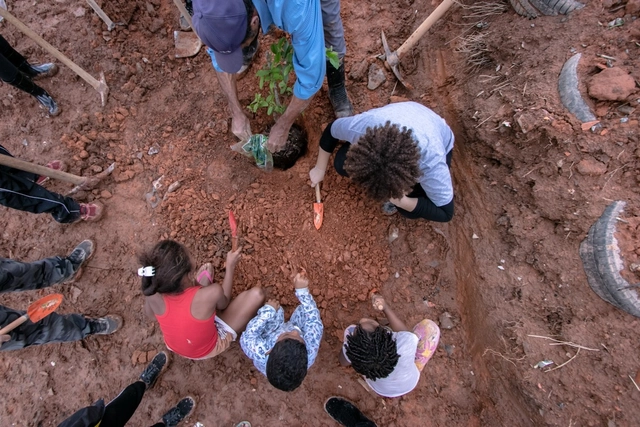
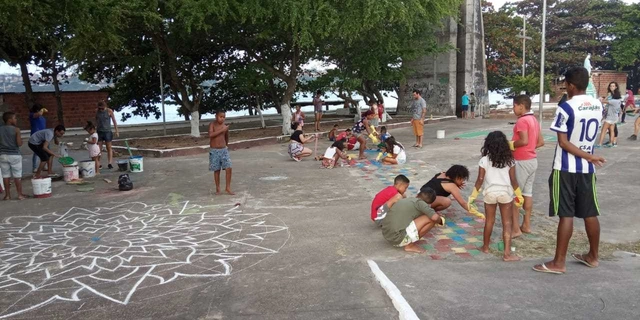
Workshop in Osasco in the Esperança community, planting seedlings for the future plaza. Image: Alberto Ricci, May 2019.
According to data released by the United Nations (UN, 2017), the global population has reached 7.6 billion, with more than half (54%) living in urban areas. In Brazil, according to data from the Brazilian Institute of Geography and Statistics (IBGE, 2010), 84.4% of the population lives in cities.
https://www.archdaily.com/1122284/designing-for-whom-a-necessary-reflectionDébora Sanches e Viviane Manzione Rubio
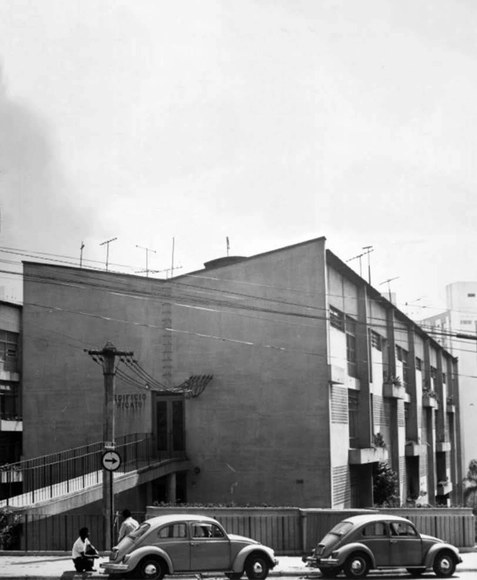
REGINO, A.; PERRONE, R. Eduardo Augusto Kneese de Mello: sua contribuição para habitação coletiva em São Paulo. Risco: Revista de Pesquisa em Arquitetura e Urbanismo (Online), n. 9, p. 56-97, 1 jan. 2009 - Editada.. Image Cortesia de PC3 - Pensamento Crítico e Cidade Contemporânea
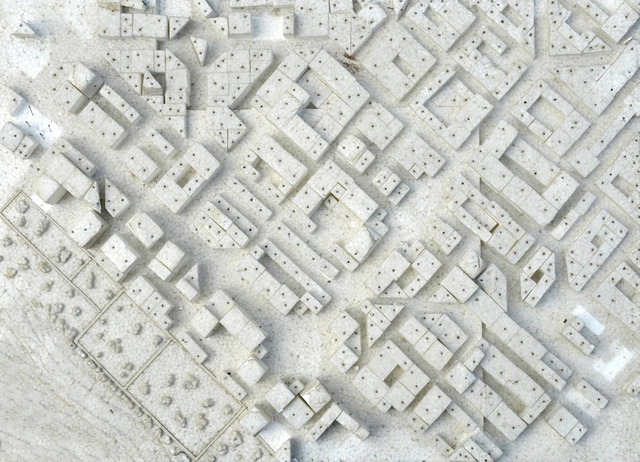
Conceived as a large-scale residential development in an expansion zone of São Paulo, the Jardim Ana Rosa Residential Complex began its subdivision design in 1950, in the Vila Mariana neighborhood, facing Largo Ana Rosa. The development, carried out by the Banco Hipotecário Lar Brasileiro, featured the participation of several prominent São Paulo architects of the time, such as Abelardo de Souza, Plínio Croce, Roberto Aflalo, and Salvador Cândia. In its initial version, the project planned for a few buildings bordering Vergueiro Avenue, with most of the area designated for single-family homes.
https://www.archdaily.com/1122290/rationality-of-modulation-and-repetition-in-housing-design-guarapira-and-hicatu-buildingsPC3 - Pensamento Crítico e Cidade Contemporânea
The work of the Catalan firm Barozzi Veiga is explored through the tension between tradition and invention in architecture in this article by João Paulo Rapagão, published in partnership with AMAG.
https://www.archdaily.com/1122258/evoking-quatremere-de-quincy-between-tradition-and-the-invention-of-architectureJoão Paulo Rapagão
The city in the construction of the environment: "A place for strangers" or a place that only ceases to be neutral and abstract when painted by each of us? Image by Paulo Pacheco
There is perhaps no concept so generic and comprehensive, yet at once so impersonal and difficult to reach consensus on, as that of the environment (focusing on the United Nations Conference's own definition of environment—the environment as the set of physical, chemical, biological, and social components capable of causing direct or indirect effects, in the short or long term, on living beings and human activities—we immediately find that establishing a stable, common, and assertive conceptual foundation is highly difficult to achieve, let alone universally recognize...)
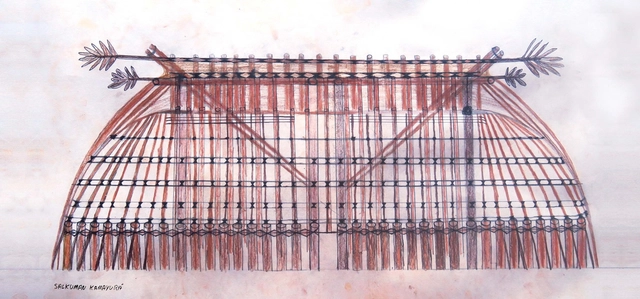
In July 2019, the habita-cidade Platform [1] organized the "Ways of Dwelling: Traditional Architectures" Travel-Workshop, which brought students and professors to the Ypawu Village in Kamayurá territory, in the Upper Xingu. The general objective of the "Ways of Dwelling" Travel-Workshops is to foster constructive reflection on the diverse forms of human habitat across the planet. This year, responding to a request from Kamayurá master builders to produce a manual on local architecture, the Travel-Workshop was designed so that the visiting group could support this important endeavor. The idea for the Kamayurá Architecture Manual was first proposed by Kanawayuri L. Marcello Kamaiurá (a local leader) to architect Clarissa Morgenroth (a graduate of Escola da Cidade) and theater director Cibele Forjaz. Escola da Cidade was then invited to join the project, which was taken on by the habita-cidade Platform, an initiative linked to the *lato sensu* postgraduate program "Housing and City."
https://www.archdaily.com/1122239/kamayura-architecture-manualLuis Octavio de Faria e Silva
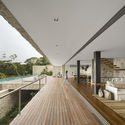
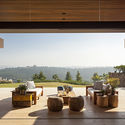
The veranda is one of the architectural elements that most powerfully fosters the connection between interior and exterior spaces. Its precise origins are difficult to pinpoint, as it can be found in vernacular architecture across the East, the Arab world, Europe, and, with particular prominence, Brazil.
Image: Ivo Gonçalves – Prefeitura de Porto Alegre/Flickr, license CC BY-NC-SA 2.0
The Master Plan is the basic instrument for defining a municipality's development model. It establishes guidelines and strategies for executing plans, programs, and projects, seeking to emphasize public participation as well as economic, social, and environmental sustainability. Yet, its influence on the city goes far beyond what is commonly imagined: it ultimately dictates the volume and form of every new building.
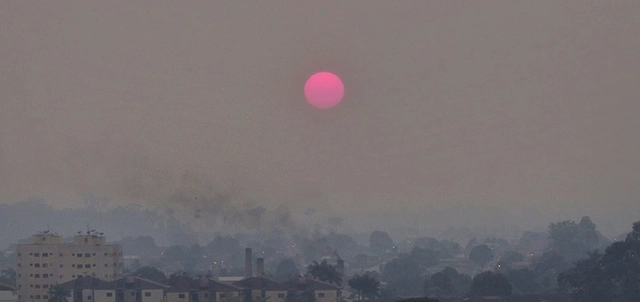
Smoke in Porto Velho, Rondônia, at dawn. Photo: Renata Silva/Personal Archive
Since the beginning of the month, thousands of fire outbreaks have been recorded in Brazil's northern states, spreading through Acre, Rondônia, Mato Grosso, and Mato Grosso do Sul, and reaching the triple border of Brazil, Bolivia, and Paraguay. According to the National Institute for Space Research (INPE), the country is experiencing its worst wave of wildfires in five years.
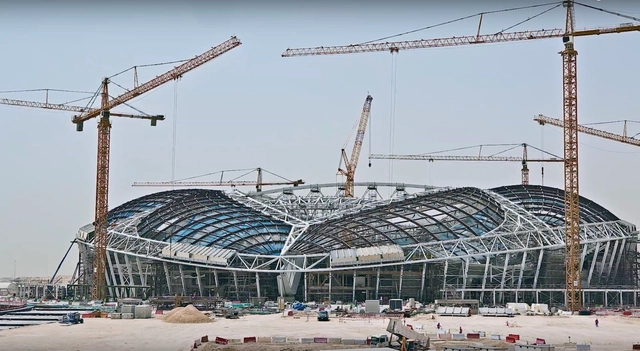
Construção do estádio Al Wakrah. Image Cortesia de Supreme Committee for Delivery and Legacy’
The year is 2010. As the first Arab country selected to host the 2022 FIFA World Cup, Qatar is already ramping up its preparations to host this highly anticipated and costly event 12 years down the line. Extensive construction and reconstruction efforts are being launched, targeting not only the facilities directly demanded by FIFA, but also, more broadly, the urban infrastructure systems of the country's major cities.
The search for the ideal city has always permeated human history, constituting a utopia pursued by rulers, artists, philosophers, and, in more recent history, by us, urban planners. Since the 19th century, various models of ideal cities have been proposed—and, at times, built—ranging from Howard's garden cities to mechanized, radial, and walking cities (like those of the Archigram group), to nomadic ones like Constant Nieuwenhuis's New Babylon, and modernist cities, among others.
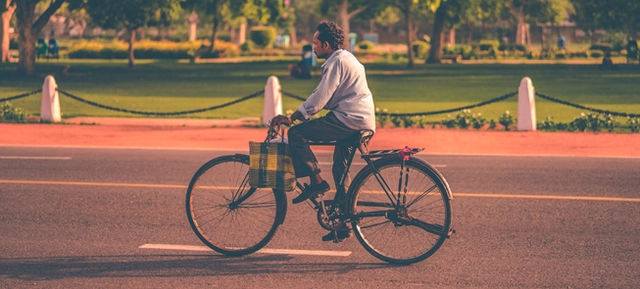
When driving alongside a bike lane, it is hard to escape comments like “it’s always empty,” “it takes away space from cars,” or “businesses lose customers.” But is there any truth to these claims? Here are some of the most common myths about bike lanes – and the reality behind them.
“Writing is like a city, for which words are a thousand gates.” - Walter Benjamin
No roads or maps lead to them. Yet, many of the cities imagined in literature feel more tangible than real ones, capturing the human imagination with their fantastical sparks. The rich geographical, cultural, and social detail of cities like the famous Macondo, from One Hundred Years of Solitude, frequently places a magnifying glass over the relationship between territory and its inhabitants.
As a result of three months of training in local engagement within the pioneering COURB Ambassadors Program, mobilizers from various Brazilian cities promoted actions in their territories. Aiming for the collaborative construction of inclusive cities, the Articulation Journey—a highly collaborative effort—took place between August and September and featured three types of actions: roundtables, territorial interventions, and collective proposals. The ambassadors mapped and engaged more than 150 institutions in the program, including city halls, universities, collectives, businesses, and organizations.
https://www.archdaily.com/1122586/three-ways-to-activate-urban-space-courb-articulation-journeyCOURB Brasil
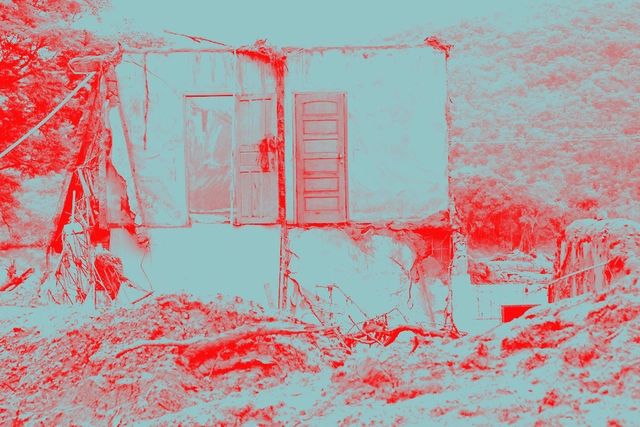
Economic and urban processes are known to drive major modifications in the urban structure. In light of the events of January 25, 2019, with the collapse of the Brumadinho dam, it is clear that environmental negligence by major mining corporations also has the power to produce profound consequences and alter the ways in which people inhabit and utilize the territory.
https://www.archdaily.com/1122572/the-importance-of-the-urban-planner-in-territorial-intervention-the-case-of-marianaAryane Diaz e Sérgio Lessa
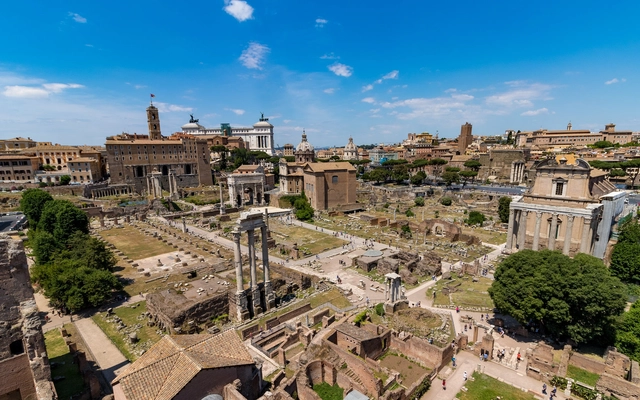
Ruins of the Roman Forum. Photo: hl_1001 on Visual Hunt / CC BY-NC
Metropolis is a word derived from the Greek metropolis, a combination of meter (mother or womb) and polis (city). Thus, the metropolis is the mother city, the most important within a context where several interconnected cities depend on one another to fully function. In most cases, metropolises feature conurbations of multiple urban clusters.
https://www.archdaily.com/1122579/what-does-ancient-rome-have-to-teach-brazilian-metropolisesPaulo Sa Vale
Have you already crossed the street out of fear today? As a woman, what is your greatest fear when walking down the street? How would you feel safer? With the goal of reflecting on how we can plan more egalitarian cities for everyone, the firm amb ateliê, in partnership with architects Fernanda Linero and Beatriz Teixeira, launched this initiative across various neighborhoods in Curitiba. The project ci.da.de; substantivo feminino (city; feminine noun) is part of the 3rd Biennial Architecture Exhibition for Curitiba.
In May of this year, *The Guardian* recommended in its style guide that journalists and contributors heighten their language when discussing climate change or global warming. Now, the British newspaper announced, it is a climate crisis, emergency, or climate breakdown.
https://www.archdaily.com/1122551/climate-crisis-and-the-right-to-the-cityTama Savaget e Henrique Frota
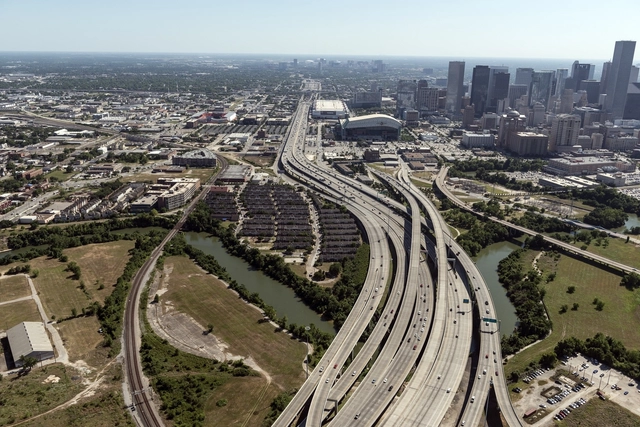
Aerial view of Houston. Courtesy of Caos Planejado
While conventional American urbanism is known to drive excessive sprawl, it is worth remembering that, ultimately, the true extent of a city's horizontal expansion lies far beyond the reach of urban planning controls.
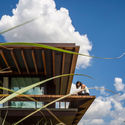
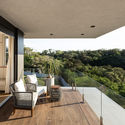
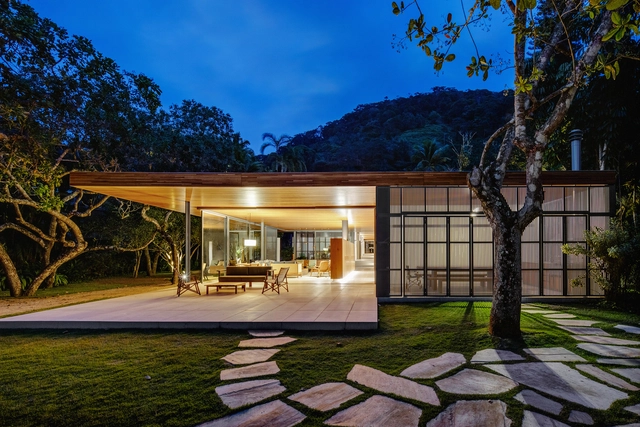
In architectural discourse, much is discussed regarding the influence of the site where a building is situated, whether through the incorporation of surrounding elements during the design process, or through the negation or overcoming of its undesirable characteristics. Some situations make this negotiation more evident than others, especially when the natural environment is dominant. In these cases, one constantly observes the tension between natural preexistence and human intervention, as well as the possible ways to achieve harmony between the two.
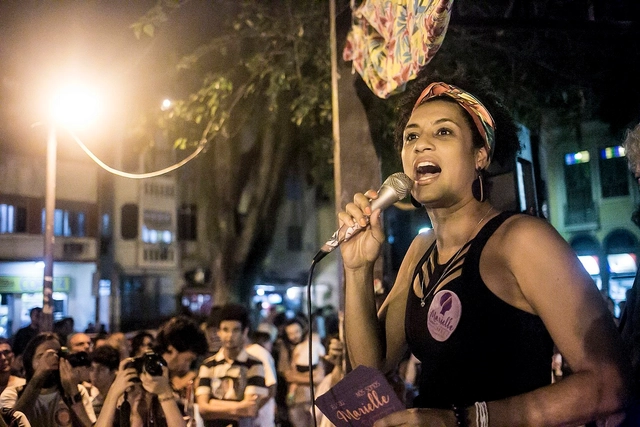
Today marks one year since the brutal assassination of Rio de Janeiro sociologist and city councilwoman Marielle Franco. The week before her death, Marielle took part in a series of debates organized by CAU/RJ called "Architecture - Feminine Noun," aimed at strengthening mobilizations for International Women's Day.
https://www.archdaily.com/1122060/watch-marielle-franco-in-the-debate-architecture-feminine-nounPedro Vada
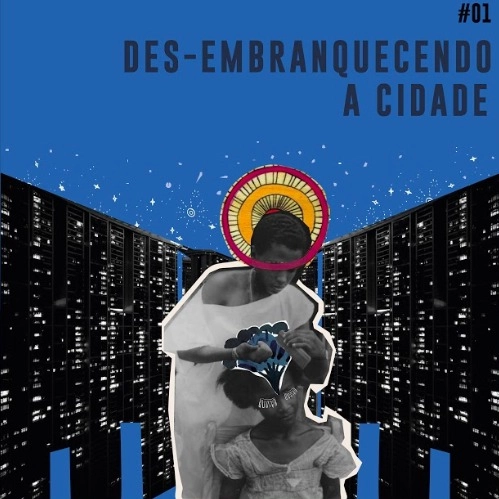
The “De-whitening the City” Podcast is a space invented from the desire of five Black women residing in Salvador, São Paulo, Rio de Janeiro, and Belo Horizonte to circumvent geographic distance in order to foster and celebrate connection. Emmily Leandro, Gabriela Gaia, Luciana Mayrink, Malu de Barros, and Natalia Alves make up the Terra Preta collective, giving shape and voice to this exercise in creating a shared virtual territory—both a political and aesthetic commitment—now made public for the first time.
https://www.archdaily.com/1122076/de-whitening-the-cityTerra Preta Cidade
Projeto Tercer Sonido, Madri, Espanha. Image Cortesia de CicloVivo
C40 Cities, a global coalition of cities, launched a competition to select the best solutions for transforming underutilized urban spaces into resilient, carbon-neutral developments. Named Reinventing Cities, the competition selected 15 innovative ideas poised to "reinvent" the future of cities.
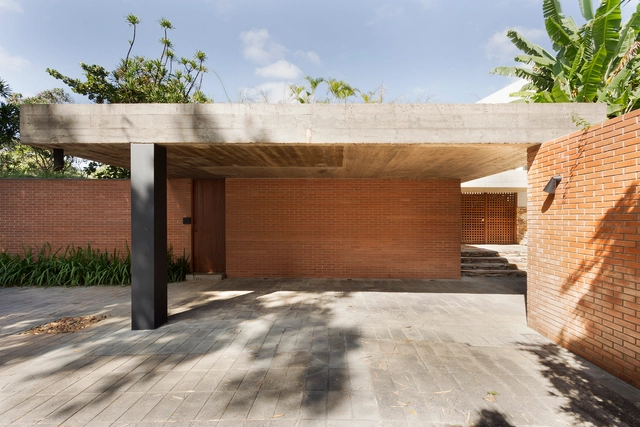
Masonry is undoubtedly one of the most widespread construction techniques in Brazil. Brick, which can serve as both structural support and building enclosure, is an expressive and highly versatile material, easy to use due to its widespread production and the general availability of labor across the country.
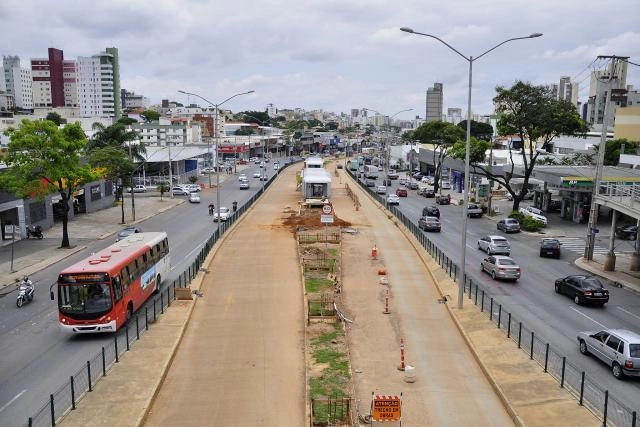
Accessibility is still a challenge for Belo Horizonte's BRT. In the image, the system is still under construction. Photo: Mariana Gil/WRI Brasil
Improving public transit requires close attention not only to vehicles and routes, but to how people access and exit them. All too often, urban planning fails to account for the diverse needs of all individuals and how they navigate a transit system.
https://www.archdaily.com/1121928/a-section-of-belo-horizontes-brt-highlights-the-importance-of-accessibilityPaula Manoela dos Santos



.jpg?1546956437&format=webp&width=640&height=580)
.jpg?1546956437)




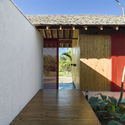
.jpg?1562845563 "House in Prumirim Beach / brro arquitetos. Image: © André Scarpa")

_(Custom).jpg?1559915700&format=webp&width=640&height=580)