1. ArchDaily
  2. Articles

Articles

XV Architecture Week pays tribute to Francisco Javier Sáenz de Oiza on his centennial

Subscriber Access | 

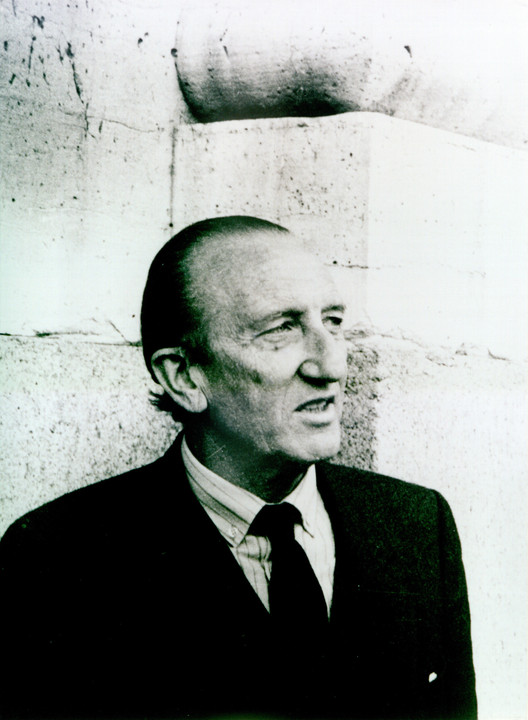
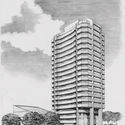
Architect Francisco Javier Sáenz de Oiza is undoubtedly a pivotal figure in 20th-century Spanish architecture. Designer of iconic works like Torres Blancas and the current Castellana 81, Sáenz de Oiza was twice awarded the National Architecture Award (1946 and 1954), served as Director of the Madrid School of Architecture (1981–1983), and was a figure whose work and theoretical reflections shaped the course of the Modern Movement in Spain.

This year marks the centenary of his birth in the town of Cáseda (Navarra). To celebrate this milestone, the 15th Architecture Week will pay tribute to him with a major exhibition charting his entire career. Titled Centenario Sáenz de Oiza. 1918-2018 (Sáenz de Oiza Centenary. 1918-2018), the exhibition is organized by the COAM Architecture Foundation in partnership with the Directorate-General for Architecture of the Ministry of Development, and curated by his children, architects Vicente, Javier, and Marisa Sáenz Guerra.
XV Architecture Week pays tribute to Francisco Javier Sáenz de Oiza on his centennial - Imagen 1 de 4XV Architecture Week pays tribute to Francisco Javier Sáenz de Oiza on his centennial - Imagen 2 de 4XV Architecture Week pays tribute to Francisco Javier Sáenz de Oiza on his centennial - Imagen 3 de 4XV Architecture Week pays tribute to Francisco Javier Sáenz de Oiza on his centennial - Imagen 4 de 4XV Architecture Week pays tribute to Francisco Javier Sáenz de Oiza on his centennial - More Images+ 5

Rafael Vélez Calisto, an icon of Quito's contemporary and cosmopolitan image

Subscriber Access | 

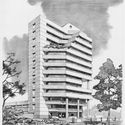
The 1970s and 1980s witnessed a new urban image in the Ecuadorian capital. Rafael Vélez Calisto graduated in 1970, going on to become one of its most prominent and prolific architects. He expressed his architecture for a thriving country and capital that offered unique opportunities to professionals, driven by oil exploitation, the growth of the public and private sectors, and rapid urban expansion.

The capital shifted the profile of its main corridors, gradually shaping itself as a vertical city. Along Quito's Avenida Amazonas, the dominant presence of large, still-functional estates gradually disappeared, replaced by high-rise buildings (1)—an urban landscape that continued to spread along new arteries toward the north.

In these areas, several of his notable, contemporary, and cosmopolitan buildings stand out.

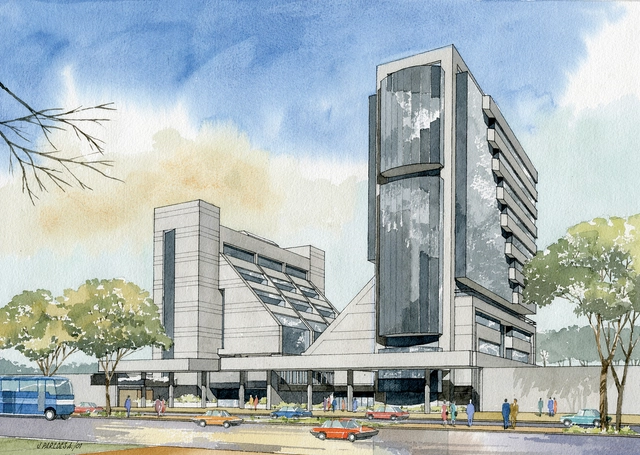
Rafael Vélez Calisto, an icon of Quito's contemporary and cosmopolitan image - 1 的图像 4Rafael Vélez Calisto, an icon of Quito's contemporary and cosmopolitan image - 2 的图像 4Rafael Vélez Calisto, an icon of Quito's contemporary and cosmopolitan image - 7 的图像 4Rafael Vélez Calisto, an icon of Quito's contemporary and cosmopolitan image - 11 的图像 4Rafael Vélez Calisto, an icon of Quito's contemporary and cosmopolitan image - More Images+ 7

Equipo Mazzanti reclaims a rift in Bogotá's urban fabric with these gardens.

Subscriber Access | 

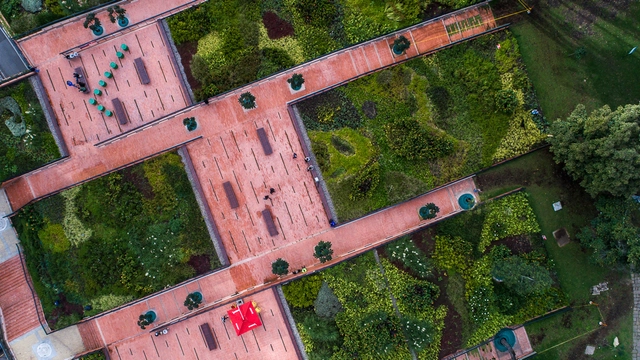
Originally published in Metropolis Magazine as El Equipo Mazzanti Heals a Gash in Bogotá’s Urban Fabric. With a Patchwork of Verdant Gardens, Anna Fixsen writes about Bicentennial Park in Bogotá. "Once a lightning rod for controversy, the innovative park now reconnects two areas at the heart of the city's historic center," she writes.

It is impossible to experience Bogotá without encountering the aura of Rogelio Salmona. Perhaps more than any other architect, Salmona shaped the urban identity of this Andean city through civic and poetic buildings. From a small balcony in his last office—located at the top of a tower he designed himself—a tableau of Salmona's legacy unfolds: directly ahead, the massive volumes of the Torres del Parque, a three-tower residential complex completed in 1970; and to the south, MAMBO, the Museum of Modern Art of Bogotá.

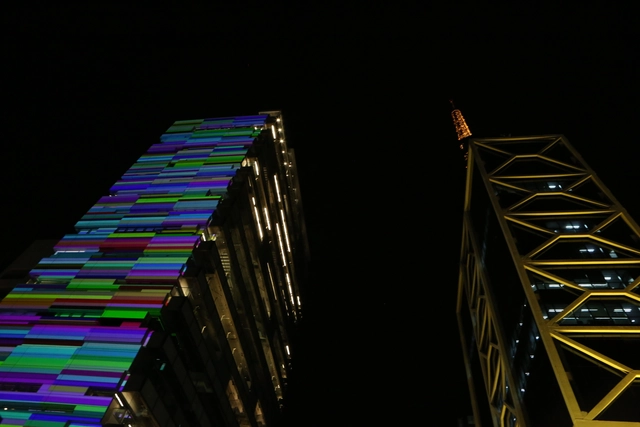
Facade of the new Sesc Avenida Paulista features projection mapping by VJ Spetto

Subscriber Access | 

Located on São Paulo's most iconic avenue, after eight years of construction, the new Sesc Avenida Paulista branch finally opened its doors last Sunday, April 29. Guided by the triad “Art, Body, and Technology,” the institution—which expects approximately 18,000 visitors per week—has already seen these expectations begin to materialize.

New digital tools help urban leaders turn ideas into action

Subscriber Access | 

By 2050, more than two-thirds of the world's population will live in cities – hubs that catalyze economic, cultural, and political progress, but also consume vast resources and account for 70% of global greenhouse gas emissions. To avoid catastrophic climate change while ensuring a prosperous and sustainable future, we must act quickly.

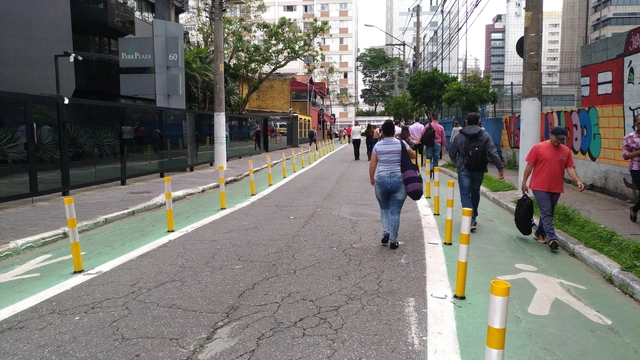
What is the impact of the first Complete Street in São Paulo?

Subscriber Access | 
What is the impact of the first Complete Street in São Paulo? - Image 5 of 4

The concept of Complete Streets has gained prominence in recent years and has arrived in Brazil bringing the vision that streets must be planned, designed, operated, and maintained to allow safe, convenient, and comfortable travel for all users, regardless of age, ability, or mode of transportation.

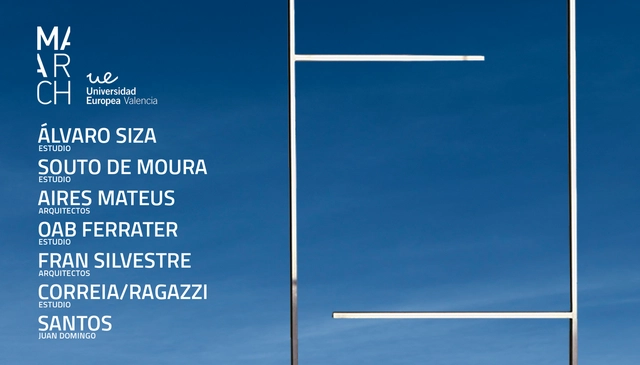
Study in Valencia, Barcelona, Porto, and Milan and travel the world with the Master's in Architecture, Design, and Innovation

Based at the Universidad Europea de Valencia, MArch. Architecture, Design and Innovation offers postgraduate training in Architecture and Design through three educational programs.

Argentine Representation at the 2018 Venice Biennale: 46 Projects Exploring the Collective and Democratic

Subscriber Access | 

Starting in May, Argentina reaffirms its presence at the Venice Biennale with an invitation to critically rethink the territory.

The "Imagined Lines" exhibition in the Argentine Pavilion, Horizontal Vertigo, curated by architects Javier Mendiondo, Pablo Anzilutti, Francisco Garrido, and Federico Cairoli, is a proposal to rediscover the territory as a collective construction—based on the potential of the relationship we perceive between territory and society—understanding architecture through its capacity to spark unexpected possibilities in each project.

Explore the selected projects and a statement from the curators below.

The Residences of Eduardo Longo: Utopia and Experimentation

Subscriber Access | 

Describing the work of an architect is sometimes an arduous task. Categorizing a production based on the various criteria to which a body of work is tied often subjects it to the constraints of its historical context. Eduardo Longo, however, represents a clear exception, as his work actively rejected the prevailing principles of his time in pursuit of continuous experimentation. Entering the School of Architecture and Urbanism at Universidade Presbiteriana Mackenzie in São Paulo in 1961, he encountered a unique moment in Brazilian architecture: the formation of the so-called “Escola Paulista” (São Paulo School) alongside national political instability, marked by the onset of the military dictatorship and the construction of the new federal capital, Brasília.

As a student, he distanced himself from the canons of the Escola Paulista, seeking instead to experiment and foster new architectural discourse. Against this backdrop, during his fourth year of university, Longo designed the Mar Casado beach house. Intended for his aunt and uncle, the project was heavily criticized by both faculty and peers due to its “independent way of interpreting architecture” [1] and its structural configuration—which featured a non-orthogonal design with acute and obtuse angles beneath a multifaceted roof—openly defying Paulista Brutalism. Despite the backlash, the house was built and eventually gained recognition: art critic Pietro Maria Bardi praised its relevance in 1967, followed by a feature in *Domus* magazine in 1968 and its inclusion in Yves Bruand’s seminal 1981 book [2].

9 Portuguese-language podcasts about architecture and cities

Subscriber Access | 

Media and technology have been revolutionizing content creation across diverse niches, and architecture is no exception. YouTube channels, television shows, and specialized playlists on architecture and urbanism are just a few examples. Over the last few years, however, podcasts have emerged as a powerful alternative. Unlike other media, podcasts are an audio-only format shared across a wide range of platforms—from specialized websites to blogs. Today, there are countless listening options available, both Brazilian (as listed below) and international, as previously published by ArchDaily.

Finding specialized podcasts can be a daunting task. To help, we have gathered a list of nine Brazilian podcast channels for you to listen to. Put on your headphones and check them out:

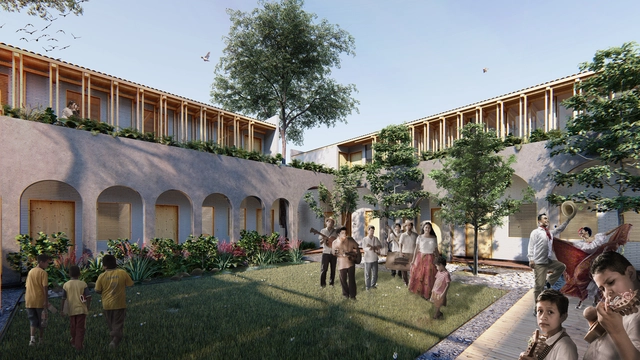
After 19S: New Jarocho Documentation Center / RA!

Subscriber Access | 

After 19S: New Jarocho Documentation Center / RA! - Imagen 1 de 4After 19S: New Jarocho Documentation Center / RA! - Imagen 2 de 4After 19S: New Jarocho Documentation Center / RA! - Imagen 3 de 4After 19S: New Jarocho Documentation Center / RA! - Imagen 4 de 4After 19S: New Jarocho Documentation Center / RA! - More Images+ 13

The Son Jarocho Documentation Center is a cultural venue in the city of Jáltipan de Morelos. Dating back to 1998, its former headquarters suffered severe structural damage during the 2017 earthquakes in Mexico, which affected several regions. As a result, municipal authorities determined that it was necessary to rebuild the facility.

Bringing this project to fruition required the involvement of various institutions and fundraising events. Among these was a campaign led by Mexican singer Natalia Lafourcade titled 'Un Canto por México' in Anaheim, California.

3 Challenges for Sustainable Mobility in Brazilian Cities

Subscriber Access | 

Brazil's National Urban Mobility Policy (PNMU), the requirement for municipal mobility plans, investments in cycling infrastructure, not to mention the new mobility services that hit the streets every day—the sector has undoubtedly made significant strides in recent years. Nevertheless, numerous challenges remain.

Cologne Architecture Guide: 10 Sites Every Architect Should Visit

Subscriber Access | 

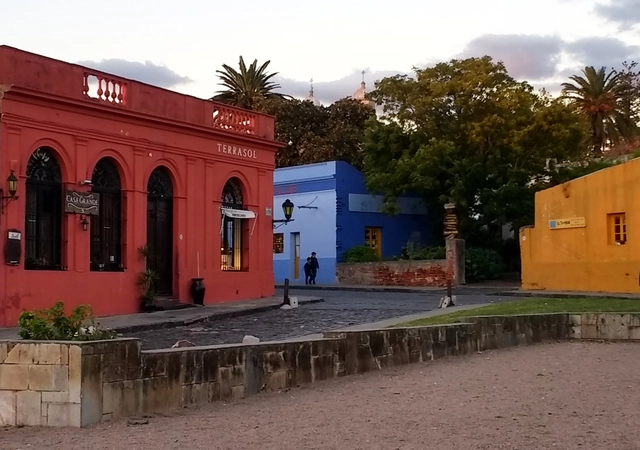
Colonia del Sacramento, on the shores of the Río de la Plata in southern Uruguay. From the ferry—if arriving from Buenos Aires—one can spot the famous lighthouse rising above a cluster of historic stone houses and cobblestone streets; a historic center declared a UNESCO World Heritage Site, which features not only a colonial and post-colonial architecture blending Spanish and Portuguese influences, but also compelling restoration and renovation projects that demonstrate a thoughtful embrace of Uruguayan memory.

Its architectural landmarks emerge naturally from an atmosphere frozen in time as you explore the city on foot along its waterfront and green spaces. Below, discover a list of 10 sites you should visit.

San Rosendo Railway Workshop, an abandoned structure in Chile that deserves protection

Subscriber Access | 

Together with an archaeologist and a visual artist, the team led by architect and University of Chile academic Claudia Torres has documented a series of industrial ruins in rural areas throughout Chile for the project “From Noise to Silence: Valuing Industrial Ruins in Rural Areas,” a research project funded by Fondart 2017.

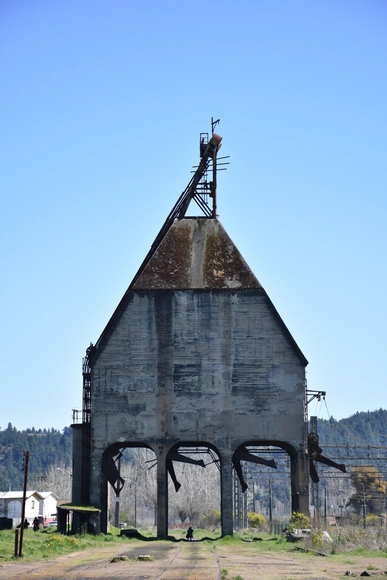
With a diameter of 100 meters and the capacity to service 36 steam locomotives simultaneously, the authors of this article—Claudia Torres, Sandro Maino, Ricardo Labra, Valentina Soto, and Laura Gallardo—argue that the San Rosendo railway workshops must be declared a Historical Monument in Chile.

From the viewpoints of the town of San Rosendo (Chile), the railway workshop complex can be appreciated in all its splendor, situated at the foot of the town, on the banks of the Biobío River, and connected to the imposing railway bridge that crosses the Laja River.

San Rosendo Railway Workshop, an abandoned structure in Chile that deserves protection - Imagem 6 de 4San Rosendo Railway Workshop, an abandoned structure in Chile that deserves protection - Imagem 7 de 4San Rosendo Railway Workshop, an abandoned structure in Chile that deserves protection - Imagem 8 de 4San Rosendo Railway Workshop, an abandoned structure in Chile that deserves protection - Imagem 13 de 4San Rosendo Railway Workshop, an abandoned structure in Chile that deserves protection - More Images+ 10

Considerations on Responsive School Architecture

Subscriber Access | 

Over 469 years after the construction of the first Brazilian school—built in Salvador, Bahia, by Jesuits who taught reading, writing, arithmetic, and Catholic doctrine—school architecture remains indistinguishable within the urban fabric of most Brazilian cities. Characterless and rigid buildings, unable to connect with their surroundings due to enclosing walls, were once described by architect Mayumi Souza Lima as "structures [that] could just as easily be meant for children, bags of beans, or cars, since they are merely covered areas, with a ceiling and a floor."

How we celebrated the 3rd anniversary of ArchDaily Colombia in Bogotá

Subscriber Access | 

On Thursday, October 25, we celebrated the first three years of ArchDaily Colombia in Bogotá. The Lamazone Gallery served as the setting for some of the local scene's most influential architects to connect with the ArchDaily Colombia team.

During his presentation, David Basulto, CEO of ArchDaily, highlighted the key milestones of ArchDaily Colombia's first three years, before moving on to an insightful analysis of Colombian architecture driven by the big data generated by our readers worldwide.

Urban Syllogisms: A Graphic Essay on Chapultepec Heights + Hipódromo in Mexico

Subscriber Access | 

Urban Syllogisms: A Graphic Essay on Chapultepec Heights + Hipódromo in Mexico - Featured ImageUrban Syllogisms: A Graphic Essay on Chapultepec Heights + Hipódromo in Mexico - Image 1 of 4Urban Syllogisms: A Graphic Essay on Chapultepec Heights + Hipódromo in Mexico - Image 2 of 4Urban Syllogisms: A Graphic Essay on Chapultepec Heights + Hipódromo in Mexico - Image 3 of 4Urban Syllogisms: A Graphic Essay on Chapultepec Heights + Hipódromo in Mexico - More Images+ 3

'Syllogisms' is an architecture and illustration project that draws its research from archives, publications, and photographs concerning the history of modern construction in Mexico. It presents a graphic narrative on the continuity and transformation of seminal 20th-century works through the synthesis, interpretation, and juxtaposition of their ideals. These pairings confront thought and form with deductive inferences. The sum of their parts foreshadows critical meanings and architectural motifs for future reconstruction.

Dance collective breaks boundaries, dancing through architecture

Subscriber Access | 

What do dance and architecture have in common? It is difficult to explain how our experience of dance is stored in our bodily memory, yet our core recollection of a performance is often inseparable from the architectural space in which it unfolded. While the dance itself may be the focus, the venue remains integral to the experience. Ultimately, as we explore how cities and urban spaces are conceived and created, both dance and architecture serve as fundamental coordinates.

Unsurprisingly, many choreographers are exploring the intersection of these two disciplines. These works explore how our bodies navigate the built environment. This is far from a purely theoretical pursuit; instead, it engages specific communities and cultural groups through embodied movement. In the words of philosopher Marina Garcés: “The body no longer confines us to a single place, but instead integrates into and becomes part of the environment of every place. It is the zero point from which we can experience all space, enriching ourselves both materially and spiritually.”

Building Forward: How Vernacular Knowledge Is Shaping Contemporary Architecture

Subscriber Access | 
Audio available

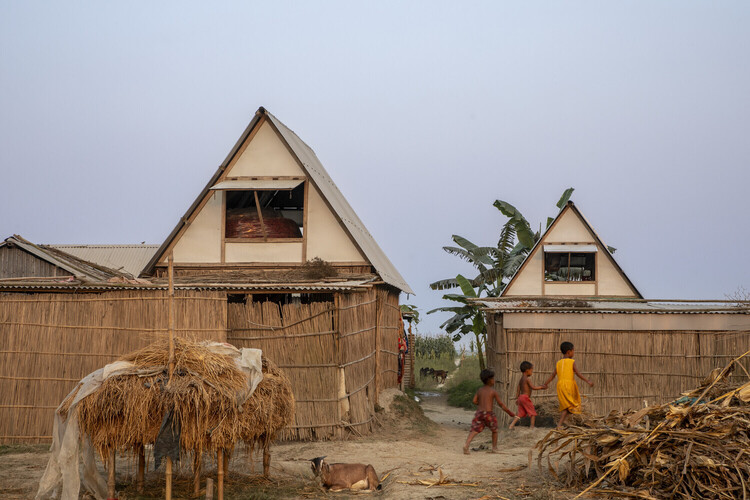
Across different climates and building cultures, many contemporary projects are working with local ways of building in new ways. Earth walls, bamboo structures, shaded thresholds, and collective construction processes are being reconsidered not as references, but as tools for the conditions architecture is facing now and will continue to face.

In these projects, vernacular knowledge appears through practical decisions: how to cool a building without machines, how to build with what is nearby, how to make a structure easier to repair, and how to keep construction knowledge within the community that will use it. The conditions making this knowledge necessary are not coming. They are already here.

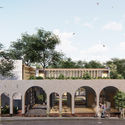
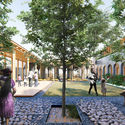
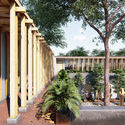
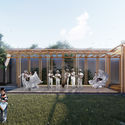
Building Forward: How Vernacular Knowledge Is Shaping Contemporary Architecture - Image 1 of 4Building Forward: How Vernacular Knowledge Is Shaping Contemporary Architecture - Image 2 of 4Building Forward: How Vernacular Knowledge Is Shaping Contemporary Architecture - Image 3 of 4Building Forward: How Vernacular Knowledge Is Shaping Contemporary Architecture - Image 4 of 4Building Forward: How Vernacular Knowledge Is Shaping Contemporary Architecture - More Images+ 17

A Beating and Bleeding Heart: Bodies, Streets, and the Politics of Care in Bogotá

Subscriber Access | 
Audio available

This article is the winning entry of the Epistle Writing Prize 2025, an annual competition dedicated to recognizing outstanding writing on design, architecture, and the environment.

It's wet season, but this morning's downpour does little to deter the rhythm along La Carrera Séptima. Cyclists and pedestrians weave past ambulatory vendors with carts of avocados, ginger sweets, and phone cases. Toy cars, lightbulbs, and hand-beaded jewelry glisten with raindrops, arranged neatly on tarps that demarcate vendors' territories. Police officers approach a recycler gathering bottles; a tourist bargains for a jacket; two women find each other in the middle of the road, embracing as their coats grow heavy with rain.

La Séptima, or Bogotá's Seventh Avenue, is the most emblematic road in Bogotá, traversed by more than two million people every day. Along this single road — part marketplace, part protest route, part transportation hub — Bogotá's history unfolds. For nearly a year, I traced its rhythms as a pedestrian, commuter, inhabitant, and researcher. In all these moments and their historical incarnations, one image endured: the road is a living body. It is imagined as Bogotá's backbone, its vital artery, its heart. It bleeds, bears scars, and demands care.

Re:Living: How Can We Make Renovation Scale?

 | Sponsored Content
Audio available

Most of Europe's future housing already exists, yet renovation continues to happen too slowly to address climate, housing, health and resource challenges at the scale required. Re:Living explores how renovation can move from isolated projects to a scalable approach for transforming existing buildings. At the heart of the initiative is a new research project, The Housing We Need for the Future We Want, which examines how better use of the existing building stock can unlock new opportunities for architects, cities and communities.

Mexico City Architecture City Guide: 38 Projects From Tenochtitlan to the 21st Century

Subscriber Access | 

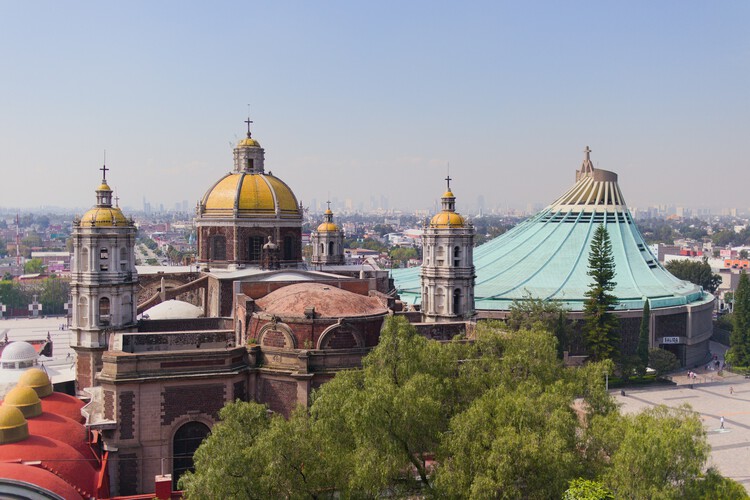
Mexico City is a sprawling metropolis of layered temporalities, where architecture operates as a continuous negotiation between deep-seated history and intense urban mutation. Built over the aquatic traces of Tenochtitlan, the city's fabric is an ongoing dialogue between eras: the monumental scale of the Pre-Hispanic Templo Mayor and the Viceroyalty architecture of the Catedral Metropolitana coexist with the modern and contemporary impulses that define its skyline. This dense juxtaposition creates a unique urban canvas where sacred geography, colonial imposition, and 20th-century ambition intersect.

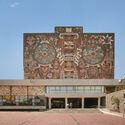
The mid-century marked a definitive era of experimentation, forging a Mexican Modernism that masterfully synthesized international structural rationalism with local identity and materiality. This synthesis is epitomized by the sweeping, plastic integration of art and architecture at the Ciudad Universitaria, the structural poetry of Félix Candela's hyper-parabolic shells, and the raw, monumental brutalism of Teodoro González de León and Abraham Zabludovsky. Parallel to this, the intimate, introspective mastery of Luis Barragán and Juan O'Gorman redefined domestic space, experimenting with light, vernacular color, and tectonic honesty to create spaces of profound spatial stillness.

Mexico City Architecture City Guide: 38 Projects From Tenochtitlan to the 21st Century - Image 1 of 4Mexico City Architecture City Guide: 38 Projects From Tenochtitlan to the 21st Century - Image 2 of 4Mexico City Architecture City Guide: 38 Projects From Tenochtitlan to the 21st Century - Image 3 of 4Mexico City Architecture City Guide: 38 Projects From Tenochtitlan to the 21st Century - Image 4 of 4Mexico City Architecture City Guide: 38 Projects From Tenochtitlan to the 21st Century - More Images+ 53

Beyond the Visual: Reframing Architecture Through the Senses

 | Sponsored Content
Audio available

An experiential rebellion takes center stage in the fourth episode of the Room For Dreams podcast, hitting directly at the heart of today's screen-deep, image-obsessed design culture. Recorded live at Milan Design Week 2026 in cooperation with INDX|GLOBAL, host Claire Broadka sits down with four Indian architectural voices — Indrajit Kembhavi, Manish Gulati, Sanjay Singh, and Sidhartha Talwar — to explore a critical question: have we sacrificed the soul of architecture for the sake of a picture-perfect Instagram post?

Dreaming in the Ruins: How a Sleeping Ritual in Logroño Proposes a New Civic Architecture

Subscriber Access | 
Audio available

Cities are increasingly designed to mitigate risk, and by doing so, need to collect data on climate, infrastructure, biodiversity, and social fragmentation so that the language of resilience becomes a fixture of planning. Yet the underlying conditions that produce polarization, civic disengagement, and ecological breakdown often remain unquestioned. The tools that dominate urban practice tend to address only one register of human experience, while the emotional and imaginative dimensions of transformation are not treated as reliable solutions.

Philosopher Felix Guattari proposed that sustained ecological transformation depends on simultaneous attention to three distinct ecologies: the ecology of the mind, the ecology of society, and the ecology of the environment. Mainstream environmental politics tends to concentrate on one or two of the three, flattening a complex condition into a defined problem with a clear answer. Ancient rituals remind us that transformation depends on practices that simultaneously engage the body, the community, and the environment.

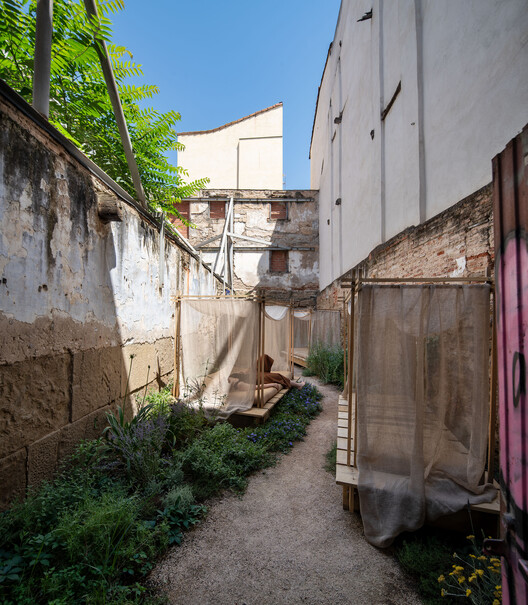
Dreaming in the Ruins: How a Sleeping Ritual in Logroño Proposes a New Civic Architecture - Image 1 of 4Dreaming in the Ruins: How a Sleeping Ritual in Logroño Proposes a New Civic Architecture - Image 2 of 4Dreaming in the Ruins: How a Sleeping Ritual in Logroño Proposes a New Civic Architecture - Image 3 of 4Dreaming in the Ruins: How a Sleeping Ritual in Logroño Proposes a New Civic Architecture - Image 4 of 4Dreaming in the Ruins: How a Sleeping Ritual in Logroño Proposes a New Civic Architecture - More Images+ 27

You've started following your first account!

Did you know?

You'll now receive updates based on what you follow! Personalize your stream and start following your favorite authors, offices and users.