1. ArchDaily
  2. Articles

Articles

Otrocafé: A Space to Linger and Contemplate the Historic Center of Mexico City

Subscriber Access | 

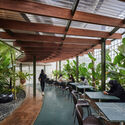
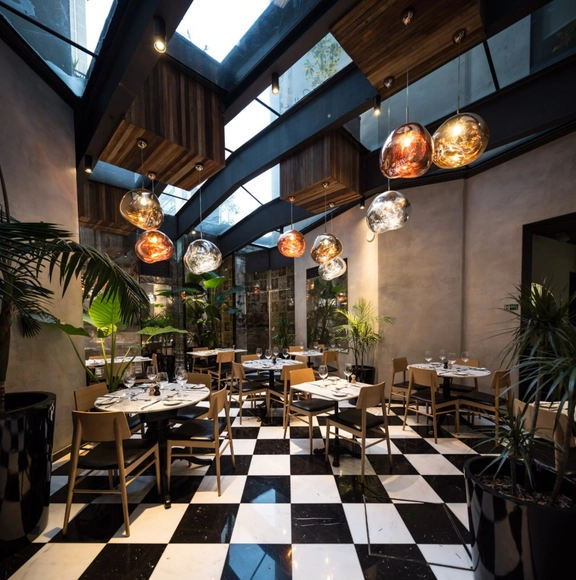
OTROCAFÉ is located on the ground floor of the iconic YWCA building, in the heart of Mexico City's Historic Center—a space steeped in over a century of history. The project was conceived as an integrated architecture and design proposal, a vision reflected in its creative framework. The cafe's design combines several key elements: subtle red accents, wood featured in both the custom furniture and as a continuous envelope wrapping the space, raw walls pigmented with a lime-based plaster, and soft, warm lighting that completes the atmosphere.

Ecological Design: Green Infrastructure and Public Space in Latin America and the Caribbean

Subscriber Access | 

'Ecological Design: Strategies for the Vulnerable City' is a publication series produced by the Inter-American Development Bank (IDB) to assess the impacts of the climate crisis on the most underserved areas of our cities, while exploring initiatives to improve their spatial and environmental quality. The first volume, launched in early 2021, recognized the challenges of adapting vulnerable areas of Latin America and the Caribbean to climate change, and the second, released in late 2022, built upon this by presenting urban policies, strategies, and case studies to enhance public space through green infrastructure and nature-based solutions.

In Barranquilla, Colombia, urban parks revitalized a declining city

Subscriber Access | 

Samira Perez, a longtime resident of Barranquilla, Colombia, used to spend time and money on taxis to take her children to local shopping malls after school and on weekends. There, they would pass the time window-shopping at high-end stores, watching shows, and eating at restaurants.

The central role of the shopping mall in the lives of the Perez family is common in rapidly urbanizing Latin American cities, where, in the absence of accessible outdoor alternatives, malls often provide safe, clean social spaces. In Barranquilla, where malls are ubiquitous, a 2009 perception survey showed that 90% of residents were dissatisfied with the city's green and public spaces.

Social and sustainable architecture as a medium for urban remediation at the 2023 Colombian Congress of Architecture and Urbanism

Subscriber Access | 

Every year, the Colombian Society of Architects convenes representatives, experts, and special guests to address pressing issues related to everyday architecture. At this year's Colombian Congress of Architecture and Urbanism, the overarching framework was defined by the concept of "social architecture."

The Mugak Biennale 2023 opens in San Sebastián alongside Pritzker Laureate Wang Shu and the exhibition "Inhabiting Change"

Subscriber Access | 

In October 2023, the Mugak International Architecture Biennial of the Basque Country opened its fourth central exhibition in the city of San Sebastián, Spain, the result of a collective dialogue between key figures from the architectural and artistic worlds. Positioned as one of the leading architectural events of the Atlantic Arc, this public meeting point engages with the trends and concerns of our time.

Running through February 2024 with free admission at the Basque Country Architecture Institute, the reflective exhibition "Habitar el Cambio" (Inhabiting Change) is structured around the concepts of "rebuilding, rehabilitating, and rethinking," responding to the current climate of complexity and crisis across economic, health, ecological, and social spheres.

Solano Benítez on the City of the Future in Mendoza: "To build with the least amount of matter and energy"

Subscriber Access | 

As perimeter walls are dismantled, a new layout is taking shape on the runway of Mendoza's former airfield. This adaptive reuse initiative, driven by the Inter-American Development Bank (IDB) and the municipal government, seeks to repurpose the vacant 72-hectare site to explore and develop a more open, inclusive, and carbon-neutral city. The master plan focuses on strategies addressing environmental and climate sustainability, efficient energy, water, and sanitation management, housing, mobility, and accessible public spaces, alongside social inclusion and local development. The plan envisions the integration of infrastructure, parks, green spaces, commercial and dining uses, a technology and innovation hub, and the development of new single-family and collective housing models: "the housing of the future."  

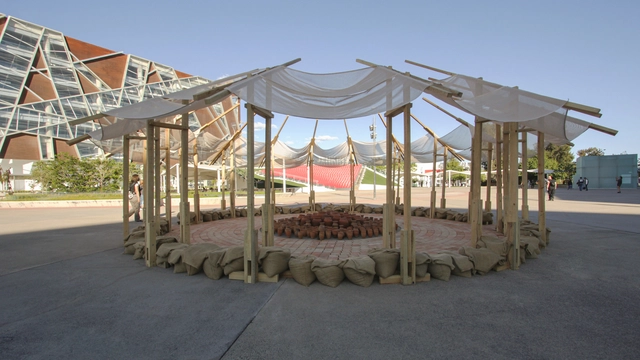
The official presentation of the project to Mendoza government authorities, IDB representatives, students, and other guests took place on the site of the former airfield. For this occasion, renowned Paraguayan architect Solano Benítez was invited to design and construct an entrance pergola for the "city of the future." The structure aligns with the urban project's circular economy framework, blending craftsmanship and prefabrication to "transition from traditional construction dependent on high-embodied-energy systems toward reusing materials with lower energy expenditure," according to IDB architects and urban planners Felipe Vera and Matías Lince. Grounded in exploring the tectonic potential of brick—the quintessential material of Paraguayan construction—Benítez's work focuses on delivering efficient, local architectural solutions that prioritize the intelligent use of materials. 

Jobs in Beijing | PILLS Studio: Architect, Interior / Exhibition Designer, Business Operations Manager (Deputy General Manager), Brand & Operations Specialist, Artwork / Installation R&D Specialist, Interns (Architecture / Exhibition / Interior Design)

Subscriber Access | 

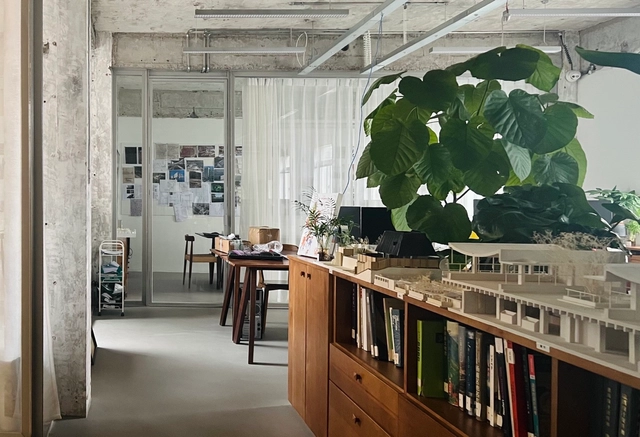
PILLS is a Beijing-based research studio for architecture. Our practice primarily encompasses speculative endeavors in architectural and interior design, installation and exhibition design, urban and landscape design, as well as cross-media production and cultural dissemination. Spanning installations to public buildings, and cultural projects to commercial developments, PILLS actively delivers diverse urban and architectural design services while simultaneously leveraging various media to drive the production of contemporary architectural culture.

The studio’s architectural, research, and art projects are widely recognized within the discipline. Our work has been showcased at major international exhibitions, including the Venice Biennale of Architecture, Lisbon Architecture Triennale, Oslo Architecture Triennale, Seoul Biennale of Architecture and Urbanism, Helsinki Design Week, Shenzhen-Hong Kong Bi-City Biennale of Urbanism\Architecture (UABB), Shanghai Urban Space Art Season (SUSAS), Beijing Art Biennale, National Exhibition of Fine Arts, Shanghai Power Station of Art (PSA) Emerging Curators Project, Hyundai Motorstudio Beijing Youth Curator Program, Get It Louder, the "Nine-Tiered Pagoda" exhibition at Shenzhen Pingshan Art Museum, and "A New Generation of Working Methods" at the Synaesthetic Museum. The studio’s projects have also won numerous accolades, including First Prize in the Fairytales Competition, First Prize in the Jacques Rougerie Competition, and the Academic Committee Award at the Shenzhen-Hong Kong Bi-City Biennale of Urbanism\Architecture (UABB).

NASA study shows which countries emit the most CO2 in the world

Subscriber Access | 

To calculate the amount of CO2 emitted by each country, the traditional method considers emissions from each sector of a nation's economy using a “bottom-up” approach, relying on data collected on the ground. However, a new approach to answering this question utilizes satellite data from NASA.

Architecture of engagement: representation and publicization in the era of social media

Subscriber Access | 

The relationship between architecture and its various mediums of representation, reproduction, and publicity is nothing new. Drawings, blueprints, and photographs published in books, magazines, and newspapers have historically been an integral part of the profession's trajectory. Over the last decade, with the rise of social media—particularly platforms centered on visual communication—architects have adopted these tools in myriad ways, incorporating them into their professional practice. Yet while these networks can produce and popularize content for diverse audiences, does architecture risk becoming a hostage to its own representation in this era of engagement?

Shanghai Jobs | Verse Design: Lead Architect, Project Architect, Architect, Assistant Architect, Interior Design Director, Interior Designer, Architectural Intern

Subscriber Access | 

Founded in 2002 by a group of architects with diverse academic backgrounds from both China and abroad, Verse Design has been deeply engaged in exploring various scales of design for over twenty years, including urban design, architectural design, community making, and residential product systems. Through years of practice, the firm has developed a systematic and continuous design logic and methodology. From programming and planning to urban design, and from schematic design to detail control, a "craftsman's spirit" permeates every phase of our work. We are dedicated to the process of identifying problems, refining solutions, and executing them, maintaining an exceptionally high standard for project implementation and completion. Our primary project types include cultural tourism resort towns, resort hotels, as well as cultural and community lifestyle amenities.

Verse Design maintains a boutique team size and a flat management structure, offering architects a highly autonomous working atmosphere. Here, you will engage in multi-dimensional, full-lifecycle projects ranging from early-stage programming and urban design to architectural design and detailing. We look forward to welcoming like-minded, exceptional architects to join us and grow together with Verse Design.

The firm's office is located in a historic garden villa at the intersection of Zhaojiabang Road and Wulumuqi Road in Shanghai. It is conveniently situated just 50 meters on foot from Zhaojiabang Road Station (Metro Lines 7 and 9), offering an easily accessible and comfortable working environment.

Building Without Water: A Debate on the Water Footprint (and Rainwater as a New Material)

Subscriber Access | 

Can we construct buildings using less water? Throughout June, ArchDaily opened the debate on water resources in architecture, inviting our readers to join the discussion.

Global water use data is discouraging, and the construction process accounts for a significant portion of this consumption. It was time to think about how to reduce this impact. The need to design buildings that do not require water offered a unique opportunity to explore innovative and sustainable alternatives to minimize or even completely eliminate water use in construction.

How can cities transition toward a circular economy?

Subscriber Access | 

With 55% of the world's population living in cities, the concept of circular economy is increasingly prominent in discussions on architecture and urbanism. The goal of circularity is to reduce the environmental impact of the current production and consumption model through the efficient use of material resources and waste reduction. But how can this idea actually be applied to cities?

Architecture and Ecology: On Restoring (and Creating) Wetlands

Subscriber Access | 

This February 2 marks another World Wetlands Day, held under the theme revitalize and restore degraded wetlands. The 2023 theme highlights that "if done correctly, these sites can offer the same benefits as the original natural wetland."
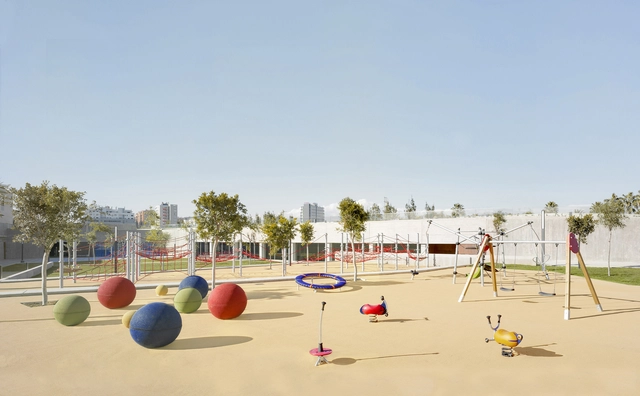
Discover the Winners of the 2023 Arquisur Awards
Subscriber Access | 

As part of the XXVI Arquisur Congress “Turns of Architecture,” held from October 11 to 13 at the Faculty of Architecture, Design and Urbanism of the University of the Republic of Uruguay, the winners of the 2023 edition of the Arq. José Miguel Aroztegui Award for Architecture Students, the Arquisur Research Award, and the Arquisur Outreach Award were announced.
System combines solar energy and hydroponics on green roofs

Subscriber Access | 

Bringing greenery and, in many cases, vegetable cultivation into urban areas yields countless benefits for city dwellers. Green roofs offer a solution for transforming underutilized areas into true natural oases, helping to mitigate urban heat islands, absorb rainwater, improve air quality, control noise levels, and attract biodiversity.

System combines solar energy and hydroponics on green roofs - 1 的图像 4System combines solar energy and hydroponics on green roofs - 2 的图像 4System combines solar energy and hydroponics on green roofs - 3 的图像 4System combines solar energy and hydroponics on green roofs - 4 的图像 4System combines solar energy and hydroponics on green roofs - More Images

Jundiaí inaugurates a complete street with an area dedicated to early childhood

Subscriber Access | 

Jundiaí (SP) has implemented its first pilot complete street project as part of the creation of an Early Childhood Area. The intervention redistributed space on Lacerda Franco Street more democratically among its various users, incorporating a bike lane, sidewalk extensions, and other traffic-calming measures. As a result, it expanded communal spaces and increased safety for children from several local schools in the area.

Habitat X: A small habitat and laboratory for the multidisciplinary researcher

Subscriber Access | 

Habitat X is part of an ongoing research initiative developed over more than 12 years, led by Argentine architect Alejandro Borrachia, involving over 100 professors, students, and graduates from the University of Morón – School of Architecture and Design (UM-ESAD) alongside multidisciplinary actors and strategic partners from both the private and public sectors. Focusing on theoretical inquiry and the physical realization of a series of prototypes, the project engages with a specific program based on contemporary societal concerns and needs, connecting with processes, hypotheses, and case studies that spark unprecedented disciplinary shifts.

How forests benefit people living in cities

Subscriber Access | 

A resident of Vitória might not think of the Jucu River Basin forests when pouring a glass of water. Uruguayans likely do not think of the Amazon Rainforest when they watch rain fall on city parks. And residents of Addis Ababa are probably not thinking of the Congo Basin when they eat injera, a traditional Ethiopian staple made from teff grain.

Yet, forests near and far affect the daily lives of these people more than they realize.

Sustainable Clay Pavers: Endicott Clay Products

Subscriber Access | 

Composed of extremely fine mineral particles and formed through the long-term weathering and erosion of rock, clay possesses unique properties that make it highly versatile. When wet, it becomes highly plastic and malleable, allowing it to be molded into virtually any shape. Once dried and fired, it becomes hard and durable, leading to its widespread use in construction and ceramics. In outdoor applications, clay pavers are particularly common, favored for their durability, resistance to weathering and traffic, natural earthy tones, and ease of installation.

Manufacturing Materials from Waste: Investigating Growable Components to Replace Petroleum Derivatives in Argentina

Subscriber Access | 

This research on cultivable components as a replacement for petroleum derivatives in products used to manufacture materials from waste is carried out within a UBACyT Project directed by architect Marta Yajnes, within the framework of the Centro Experimental de la Producción (CEP) of the School of Architecture, Design, and Urbanism at the University of Buenos Aires.

São Paulo needs a congestion charge

Subscriber Access | 

Over the last two decades, the reach of public transit and ridership in one of the world's largest cities, São Paulo, have grown, reducing the share of trips made by car. Yet, despite exceptionally strict restrictions on certain cars and trucks during business hours, congestion—as conventionally understood—remains virtually unabated.

Upkeep of public spaces: is the solution to rent out Brazil?

Subscriber Access | 

A few days ago, on a beautiful, sunny Sunday in the middle of winter, my wife and I decided to take our two young children to visit Villa-Lobos Park, in the far west of the city of São Paulo, nearly on the border with Osasco.

It is not a park we visit often nowadays, but it undoubtedly holds a special place in our personal history. She grew up in Cotia; I, in Osasco. Both cities lie in the western part of the São Paulo Metropolitan Area, and the park was perhaps the main public space relatively close to our homes during our childhood and youth. We even have photos from when we first started dating in 2013, capturing idle moments—sometimes stretched out on a broad green lawn, other times embracing under a blossoming tree.

Unscrambling Madrid: Describing the Urban Mix Before Degrowth

Subscriber Access | 

As if dealing with a culinary recipe, Cedric Price compared the evolution of cities to the multiple ways of cooking an egg, showing how the relationship between the yolk and the white (inherent to each preparation) resembled the configuration of different urban models that have emerged over the last couple of millennia. This evolutionary description moves from the almost perfect hard-boiled egg embodied by ancient cities (the result of walled settlements) to scrambled eggs, comparable to modern cities (sprawling shapelessly across the vast territory). It is a metaphor that exemplifies how, so often, the elements that make up the city resemble one another (like the yolk and the white) and yet, the way these ingredients intermingle is key to the final recipe—that which characterizes and explains them.

The 15-Minute City: The Paris Vision That Has Inspired a Global Movement

Subscriber Access | 

Until a few years ago, the right bank of the Seine River in Paris was a high-speed thoroughfare carrying more than 40,000 vehicles every day. Despite being designated a UNESCO World Heritage Site, the roadway was routinely gridlocked during rush hours or used as a speedway for cars. Consequently, it contributed to the city's air pollution levels—which frequently exceeded European Union limits—and to thousands of premature deaths in the French capital each year.

You've started following your first account!

Did you know?

You'll now receive updates based on what you follow! Personalize your stream and start following your favorite authors, offices and users.