The Center for Architecture, in collaboration with CONSTRUCTO, will present the exhibition EXTRA-ORDINARY: New Practices in Chilean Architecture, opening on Wednesday, June 22 at 5:30 pm, curated by CONSTRUCTO foundersJeannette Plaut and Marcelo Sarovic. The opening will begin with a roundtable discussion between Plaut, Sarovic and MoMA Director Glenn Lowry and will be followed by a presentation by architect Smiljan Radic.
Student collective Global Architecture Profiling (GAP) launches its seventh annual architectural exhibition at The University of Melbourne, Faculty of Architecture, Building, and Planning.
This year the exhibition presents contemporary architectural production in the world heritage listed Mexican city of Puebla.
The exhibition celebrates the imagery of Forbes Massie Studio by presenting a collection of their latest commissions with renowned UK and international architectural practices, on exceptional and high profile projects. Entitled 'Seduction of Light', the collection emphasizes the Studio's approach to image making, focusing particular attention to Composition, Light, Materiality and Atmosphere.
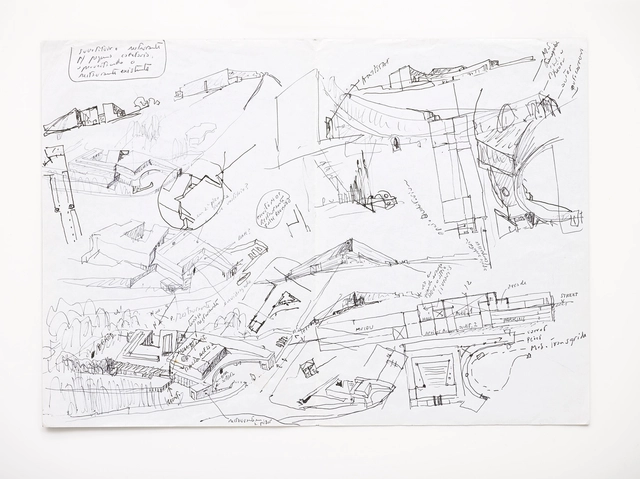
Álvaro Siza, Serralves Museum, Porto, 1991-1999. First sketches for the projetc, [1991] 29,7 x 42,0 cm. [ASV/FS 25]
Description from The Serralves Museum of Contemporary Art: The first of a developing programme at the Serralves Museum of Contemporary Art of exhibitions talks and events dedicated to contemporary architecture, ‘Raw Material’ presents plans, sketches, correspondence and photographs that offer a fuller understanding of the process of architectural design, beyond the self-sufficiency of the realized project. This will be the first exhibition to draw upon the recent gift to the Fundação de Serralves of 40 projects from the archive of Álvaro Siza as part of a collaboration between Fundação de Serralves, the Canadian Centre for Architecture in Montreal and Fundação Calouste Gulbenkian in Lisbon.
Álvaro Siza’s practice is distinguished by his use of drawing as a working instrument in the prefiguration of forms and spaces within the process that brings him successively closer to the desired result. But an archive is more than just a set of drawings. The architect’s correspondence with his clients, the photographic record of the places where the works are to be built, relations with regulatory authorities and the opinions of the multiple actors involved in the construction processes, the models that support the perception of the proposals, the minutes of meetings and reports of the tensions arising at the building sites are documents that record an infinite number of episodes that remain invisible in the finished work. Offering insight into their contingent processes, the exhibition also offers invaluable understanding of the processes associated with the inventory, classification, and conservation of Siza’s archive, which will serve as a focus for future research and discussion about the role of architecture in contemporary society.
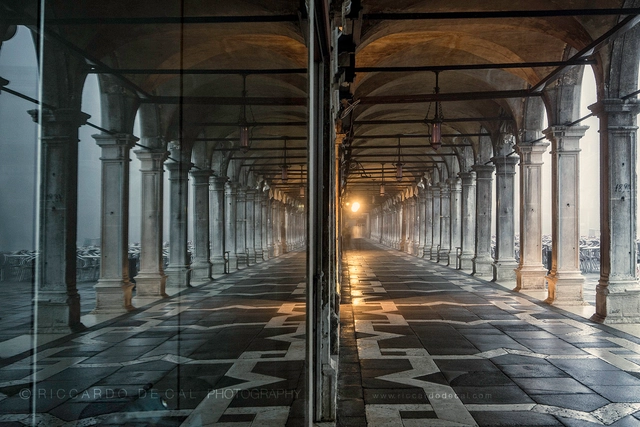
Riccardo De Cal presents his exhibition Into the Labyrinth at Fondazione Querini Stampalia in Venice, Italy. The exhibition will include 20 photographs, primarily selected from De Cal's new publication Dream of Venice Architecture. Inspired by novelist Jorge Luis Borges's statement that the maze, "is a building built to confuse people," De Cal has created an interior environment of metal armatures, audio recordings and photography. Designed by Melissa Siben, the exhibit is a modern three-dimensional representation of the labyrinthine structure of the city of Venice.
In partnership with Le Grand Café Contemporary Art Centre in Saint-Nazaire, LiFE presents, from 3 June to 9 October, Neocodomousse, an exhibition by raumlaborberlin, a Berlin based network-collective of nine trained architects. Raumlaborberlin is a collective of nine architects, city planners and artists. Their name could translate as both space and laboratory: a neologism referencing to experimentation and empirical research, guided by a community manufacturing process.
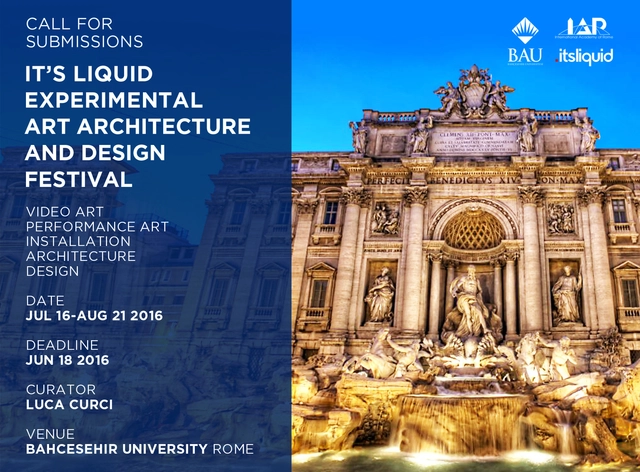
It’s LIQUID Group, in collaboration with International ArtExpo, is selecting all interesting video art and performance art works, architectural and design’s projects to include in the next 2016 festival. During the event an amazing programme of video art screenings, live performances, architectural, design projects and installation/sculpture will be presented. Artists, filmmakers, video makers, associate groups and studios, performers, architects and designers are invited to submit their works of video art, performance art, installation/sculpture and their architectural and design projects.
An installation of nearly 100 books in the James Stirling-designed Book Pavilion at the Venice Biennale serves as a collection of documents that asks us to consider how climate intersects with architectural ideas.
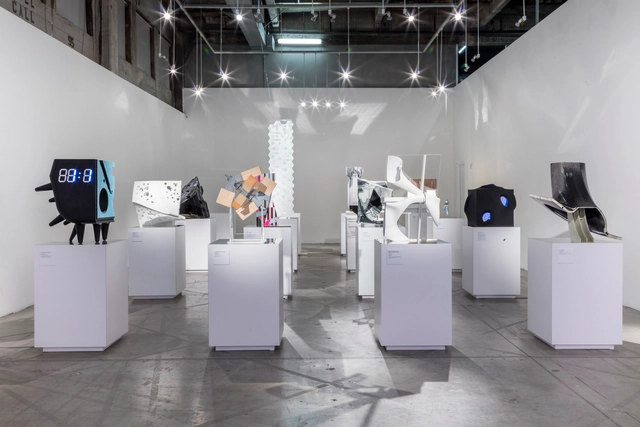
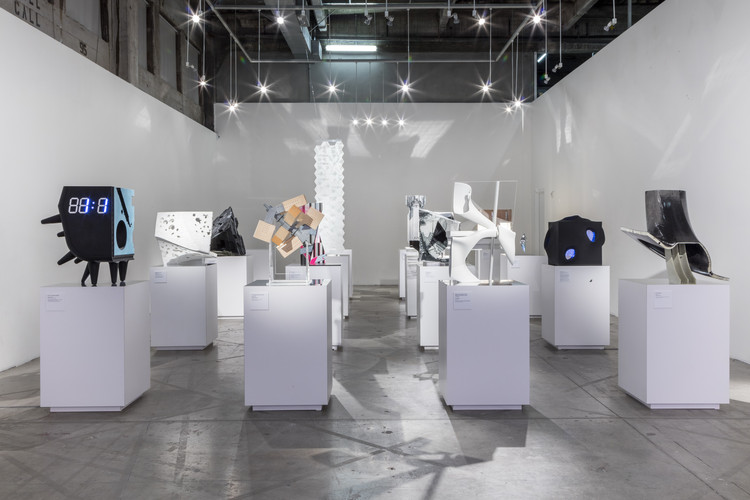
SCI-Arc’s “Close-up” exhibition is currently on display at the SCI-Arc gallery, featuring architectural details designed with the use of digital technology by top architects in the field. The exhibit, curated by Hernan Diaz Alonso and David Ruy, seeks to explore the impact of new computational tools not only on large-scale building analysis, but also on the “traditions of tectonic expression” associated with architectural detail.
“Out of the many critical shifts that the discipline has gone through in the last 25 years with the explosion of new technologies and digital means of production, the notion of the construction detail has been largely overlooked,” Diaz Alonso said. “This show attempts to shed light on the subject of tectonic details by employing a fluid and dynamic movement of zooming in and zooming out in the totality of the design.”
The 16 exhibitors include architecture firms like Morphosis, Gehry Partners and UN Studio – see preview images of them all after the break.
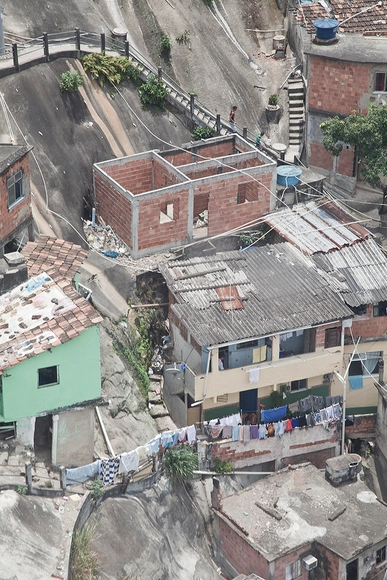
FAVELAS, named after the Brazilian creeping plant ’favela’ have existed in Brazil since the late 19th century. Wretched areas of closely packed dwellings were planted in the cities, on the outskirts of the cities, and continued to spread rampantly, growing out of all control. The problem became worse around 1950 when the industrialization of Brazil led to mass migration from rural areas to the big cities. At first the municipal administration tried to resolve this problem by building social housing. Some of the favelas were bulldozed and their inhabitants were forced to resettle elsewhere. But areas of informal settlements have continued to grow. According to the Secretaria Municipal de Habitação the slum’s residents are already 22% of the population in Rio.
At Home in Britain re-examines how we live and speculates on the future of housing in Britain. Taking the cottage, the terraced house and the flat as a starting point and using RIBA Collections as stimulus, six newly commissioned works from contemporary architecture practices Jamie Fobert Architects, Mae, Maison Edouard François, Mecanoo, Studio Weave and vPPR transform these three familiar housing types to reflect the way we live and work in the 21st century.
The season will be accompanied by a three- part BBC4 television series, presented by Dan Cruickshank, looking at the history of the cottage, terrace and flat.
For one week each spring at Columbia GSAPP, the entire school is on display. The studios, seminar rooms, hallways, and stairwells of Avery, Fayerweather, and Buell Halls are transformed into temporary exhibition spaces for the End of Year Show. The exhibition organizes the work of students across all programs into a comprehensive image of the school’s current research interests, design approaches, conceptual orientations, and representation strategies.
Lina Bo Bardi: Together, will be on display at the Miami Center for Architecture and Design from May 13 - July 29th. The exhibition celebrates and explores the vision of Brazilian modernist Lina Bo Bardi. Curated by Noemi Blager, Together reveals Bo Bardi's legacy in social design both through her own works, and with new works by artists who share her philosophy.
Bruton Parish Church Pilaster Section and Capital (c. 1752), pine, possibly carved in England. AF-21.1.2. Courtesy of the Art Museums of Colonial Williamsburg
How were buildings constructed in the 18th- and early 19th-centuries in Virginia? What did the builders use? What can the collecting habits of 85 generations of rats reveal? Valuable clues and answers can be found in the architectural objects and fragments from both surviving and demolished buildings and will be revealed in Architectural Clues to 18th-Century Williamsburg, which opens on May 28, 2016, and will remain on view indefinitely at the DeWitt Wallace Decorative Arts Museum, one of the Art Museums of Colonial Williamsburg.
The Hong Kong Exhibition at the 15th International Architecture Exhibition – La Biennale di Venezia (Venice Biennale) will have its Opening Ceremony on 28th May 2016 in Venice (Preview period from 26th to 27th May). Mr. Stanley SIU is the Chief Curator of the Hong Kong Exhibition, together with his team of 16 young architects and artists for this initiative.
In response to the title of the 15th Venice Biennale International Architecture Exhibition ‘REPORTING FROM THE FRONT’, the theme of the Hong Kong Exhibition is inspired by the Chinese Classic “Thirty-Six Stratagems”.
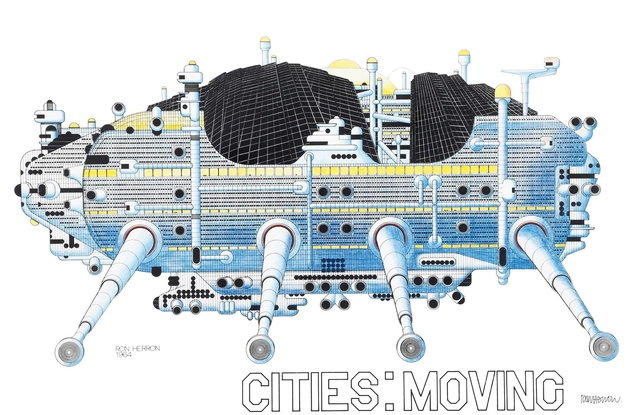
The exhibition “Yesterday's Future” juxtaposes utopias by Future Systems and Archigram. It presents extraordinary utopias created by the teams of architects at Future Systems and Archigram. It focuses on detailed technical drawings, brightly coloured collages and filigree original models.
The works by Czech architect and founder of Future Systems Jan Kaplický, who emigrated to London in 1968, date from the 1980s and 1990s and are juxtaposed to designs created 20 years earlier by the Archigram architectural group, which was made up of Peter Cook, Ron Herron, and Dennis Crompton. Whereas Archigram conceived organic architecture that ensured survival in inhospitable environments, the technoid designs by Future Systems were located in friendlier places such as deserted natural surroundings or extremely built-up cities.
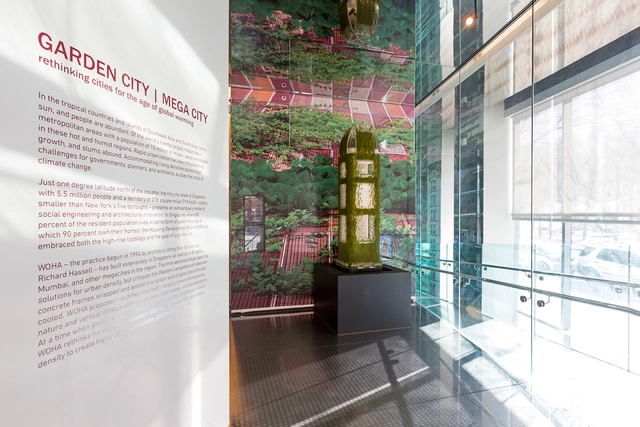
From commercial mixed-use to hospitality and social housing, Singapore- based WOHA reinterprets the skyscraper as a prototype for hyper-dense, green urban living. Their first major exhibition in the United States, GARDEN CITY MEGA CITY, opens March 23rd, 2016 at The Skyscraper Museum, and unveils twelve of their most recent vertical ecosystems.
Featuring architectural models, videos and renderings, the show contextualizes the firm’s towering endeavors as a stunning contribution to skyscraper design and a radical response to the Asian megacity. WOHA’s projects—in China, Bangkok, and Singapore, among others—address issues such as rampant population growth, preservation of tropical biodiversity, and the desire for
Every Building in Baghdad, installation view at Columbia University's Arthur Ross Architecture Gallery
This exhibition of several hundred original photographs examines the work of Iraqi architect Rifat Chadirji through the collection of his documents held at the Arab Image Foundation in Beirut. With the work of his architectural office, Iraq Consult, and in his other roles as a planning consultant and as director of buildings for several government agencies, Chadirji became a pivotal cultural figure in Baghdad during the period of its postwar modernization from the 1950s through the 1970s. Chadirji was central to the organization and consolidation of the image of the postwar city and helped foster the emergence of the factories,








.jpg?1462898782&format=webp&width=640&height=580)