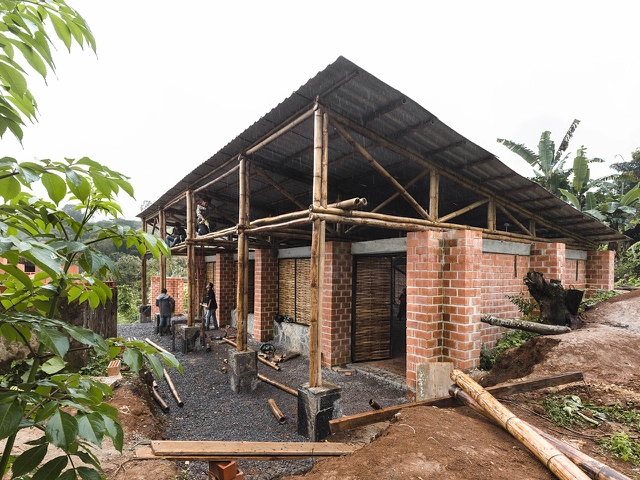
Discovering what young architects are doing across Mexico was the starting question for architects Lucia Zesati Farías, Gustavo López Padilla, and Honorato Carrasco, curators of the exhibition 21 jóvenes arquitectos mexicanos. Segunda edición (21 Young Mexican Architects: Second Edition). The show opened on August 9 at the National Museum of Architecture at the Palace of Fine Arts and will run until September 23, 2018.
Over a year and a half, the curators reviewed recent works to select 21 architecture firms whose design teams are under 45 years old. This age limit was established because significant architectural production is rare among recent graduates in their twenties.
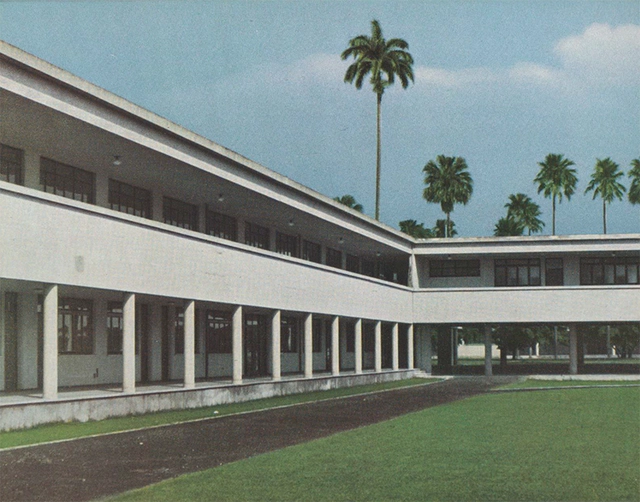
On January 13, 1943, New Yorkers—and, indeed, architects worldwide—were introduced to Brazilian architecture. Brazil builds : architecture new and old, 1652-1942was an exhibition organized by MoMA (the Museum of Modern Art) showcasing the architecture produced in Brazil, not only at that moment but since the mid-17th century.
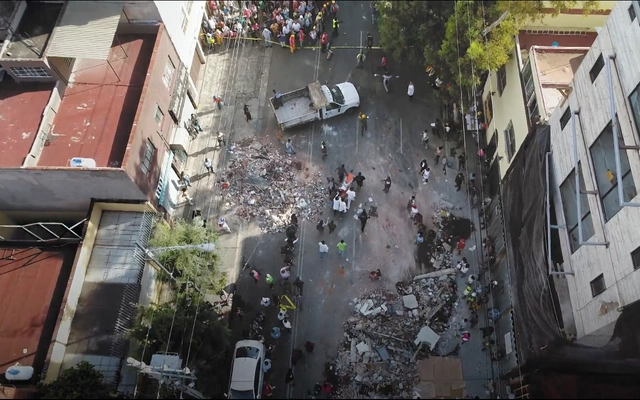
As part of The New York Times' documentary series "En los ojos de México" –where six filmmakers present a perspective on their country– Santiago Arau and Diego Rabasa present "Ciudad Herida" (Wounded City), a chronicle of the 2017 earthquake in central Mexico. Through drone footage, the film captures the strength and resilience shown during a moment of crisis.
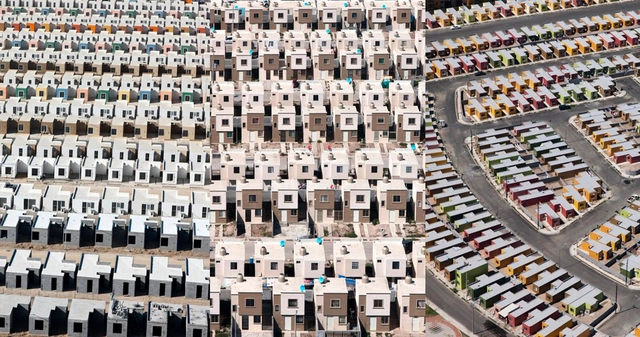
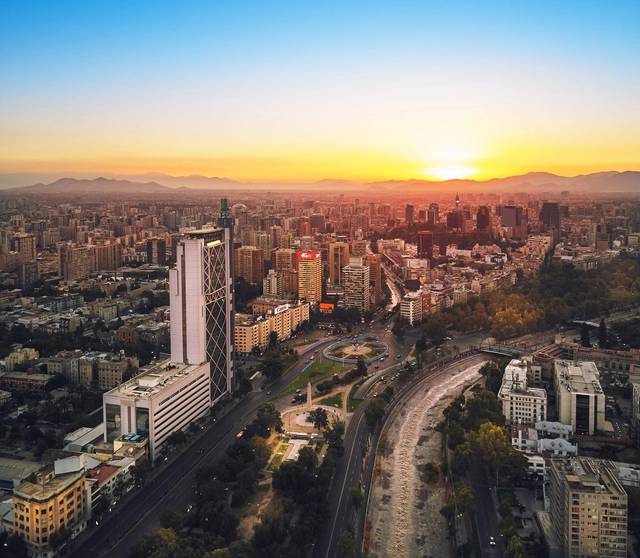
'Alta Densidad' (High Density) is a project by architect Jorge Taboada comprising a series of aerial photographs that depict the stories of a city. This series is presented as an "archaeological vestige" where "people lose their face and identity and become invisible."
The history of social housing in Mexico has come a long way, undergoing transformations that concern not only architecture, but also the organizations leading their construction and the government.
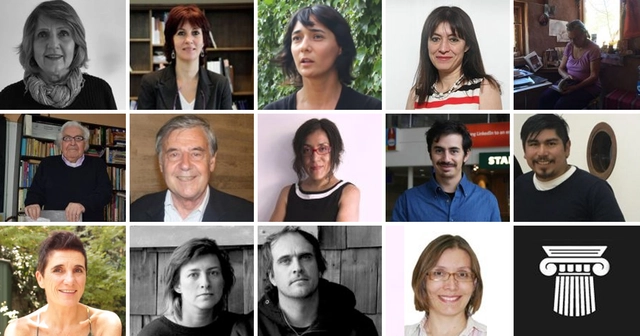
Ganadores de los Premios CA 2018. Línea superior: Beatriz Buccicardi (izq)., Pilar Barba, Verónica Arcos, Claudia Silva, María Magdalena Gutiérrez. Línea central: Osvaldo Cáceres, Gustavo Munizaga, Paulina Villalobos, Juan Pablo Urrutia, José Luis Catalán. Línea inferior: Cazú Zegers, Tania Gebauer, Eugenio Ortúzar, Claudia García Lima. Image Cortesía de Colegio de Arquitectos
On the occasion of the 75th anniversary of the Colegio de Arquitectos de Chile, the professional association has announced the winners of the 2018 CA Awards, the country's most important national honors.
Following a 2017 edition heavily criticized for the absence of women among the honorees, this year's awards not only introduced two new categories promoted by the Mujer Arquitecta organization—the Dora Riedel and Eliana Caraball awards—and another recognizing regional contributions, but women also swept 9 of the 12 categories awarded by the Colegio de Arquitectos to its members.
What is the difference between sustainable architecture and bioclimatic architecture? Both terms are frequently used within the profession, though their underlying principles were discovered centuries ago (referring to the vernacular tradition of architecture) and the terms themselves were derived from the concept of “sustainable development,” first proposed by Norwegian Prime Minister Gro Brundtland at the 42nd session of the United Nations in 1987:
But what is the difference between the two? They are highly similar concepts, varying only according to the intentions of the architect using them. To clarify: terms like sustainable architecture, green architecture, eco-architecture, or environmentally conscious architecture are often used by architects attempting to reflect a basic climatic awareness in their work, but whose actual “gestures” have little impact on energy efficiency. Their primary focus often ends up being to make the building appear “eco-friendly” through a green facade or a green roof. In most cases, these designs lack a real climatic foundation. By contrast, the second term, bioclimatic architecture (without any qualifiers), bases its entire raison d'être on the climate. The building's final appearance is secondary, as all design decisions stem from a preliminary study of the climate—treating it as a fundamental tool—and aim to understand and leverage it.
This gives rise to the concept of the “healthy building,” recently proposed by Harvard University's prestigious school of public health, the Harvard T.H. Chan School of Public Health. Focused on “building healthier communities around the world,” the school has launched the Healthy Buildings program at the Harvard Center for Climate, Health, and the Global Environment (C-CHANGE). One of its main goals has been to synthesize 30 years of public health science to identify what makes a building “healthy.” The result: the 9 Foundations of a Healthy Building. This 36-page study identifies key factors and details how they relate to human health. In addition to defining these factors, the study provides simple recommendations for each, including the regular assessment of both the factors and occupant needs. In short, it is a straightforward study—still far from frameworks like the Well Building Standard—but well-targeted and a step in the right direction.
This discrepancy was highlighted in a petition on Change.org addressed to Jordi Ludevid, then-president of the CSCAE, in which the signing architects called for greater active participation of women at all stages of the process, seeking equal representation with their male colleagues.
https://www.archdaily.com/1113704/women-architects-in-spain-join-forces-to-create-their-own-association-amaeJavier García Librero
The year 2018 marks the centennial of artist Athos Bulcão. In celebration of the life and work of one of Brazil's most influential 20th-century painters, sculptors, and muralists, the National Institute of Historic and Artistic Heritage (Iphan) has launched an updated version of the inventory of his work.
Titled Inventário da Obra de Athos Bulcão em Brasília (Inventory of the Work of Athos Bulcão in Brasília), the book builds upon an initial study conducted by the institute between 2008 and 2009 and published in 2010. That first edition documented 261 works, revealing the sensitivity, versatility, and richness of the artist's creative universe. Officially launched on July 30, the new edition spans over 200 pages, featuring a conceptually expanded and revised content alongside a playful and inventive graphic design.
Removal of the overpass block and clearing of the area at Eixão Sul. Photo: Pedro Ventura/Agência Brasília
The Federal District office of Iphan did not approve the project submitted by the Federal District Department of Roads (DER-DF) for the reconstruction of the section of the Eixão Sul that collapsed in February of this year, burying two cars and the tables of a restaurant.
The agency responsible for Brazil's artistic and cultural heritage blocked the proposal, claiming that the DER-DF/Novacap project "significantly alters the original architecture and compromises the architectural and urban integrity and, by extension, that of the Plataforma Rodoviária complex and complementary road system."
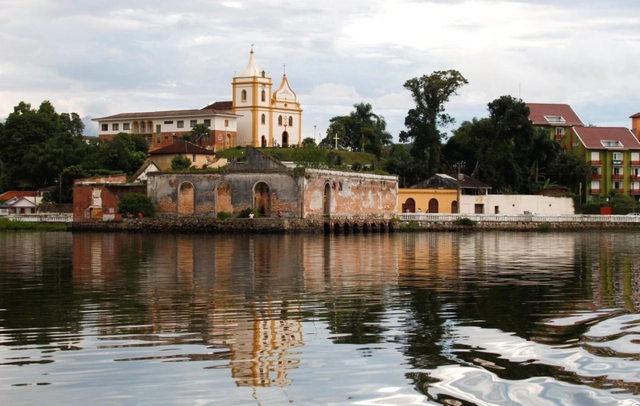
Historic center of the city of Antonina. The site was listed as a heritage site by Iphan in 2012. Photo: Archive/Gazeta do Povo
Cities are living testaments to the cultural, social, economic, and political transformations of society. In a state of constant evolution, superficial traces of the past fade away, while deeper scars overlap with the multiple layers of the present that unfold across cities over decades and centuries.
Throughout history, a combination of factors has allowed some cities to remain better preserved, offering vivid glimpses of colonial Brazil. In contrast, in other cities, the traces of early urbanization have been erased or swallowed by subsequent eras.
Featuring references to his career, projects, and travels, the Ocupação Paulo Mendes da Rocha celebrates the 90th birthday, on October 25, of Brazil's most important living architect. Through sketches, technical drawings, models, and other materials selected from Mendes da Rocha’s personal archive, curator Guilherme Wisnik reveals some of the architect’s most radical ideas, which use ideology and technique to challenge and subvert colonial mindsets that still echo in Brazilian architectural design.
After two editions at the Parque Cultural de Valparaíso, the Chilean Biennial of Architecture and Urbanism will return to Santiago in 2019. On Wednesday, June 6, the Mayor of Santiago, Felipe Alessandri, and the President of the Chilean Association of Architects, Humberto Eliash, signed the official agreement during a ceremony at the Mercado Matadero Franklin, which was attended by city council members, Minister of Housing and Urban Development Cristián Monckeberg, undersecretaries, regional authorities, and other officials.
During the ceremony, organizers confirmed that the 21st Biennial will take place in October 2019, with both the Mercado Matadero Franklin and the Teatro Huemul serving as the main venues for the country's premier architectural event.
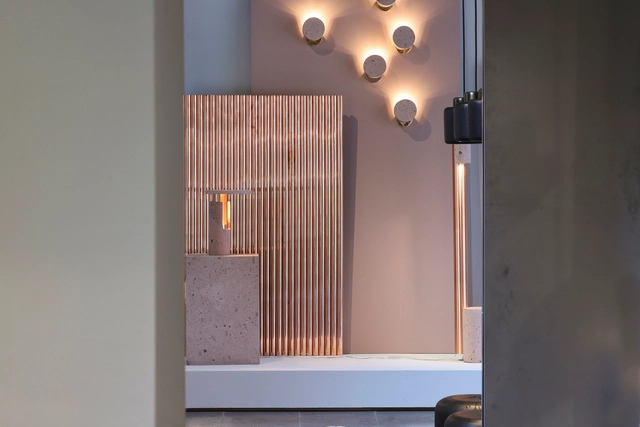
Studio davidpompa is a project founded in 2013, dedicated to creating contemporary objects with a strong commitment to Mexican identity and craftsmanship, using specific materials transformed into innovative shapes to create simple, elegant objects.
Based in the heart of Mexico City with a showroom in Roma Norte—a neighborhood built primarily in the early 20th century featuring French-style buildings—they have reinvented themselves to create a new space.
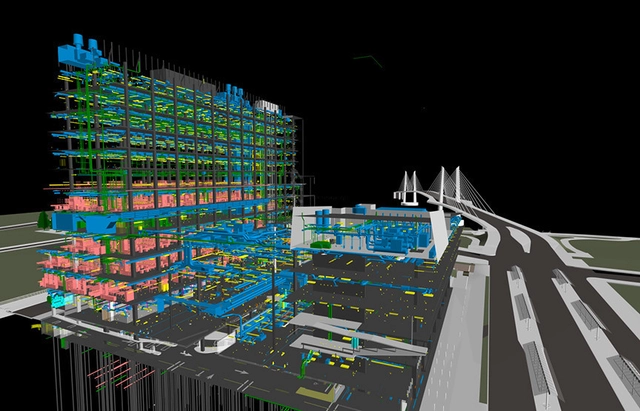
On March 8 and 9, 2018, Barcelona hosted the European BIM Summit, an annual international congress on Building Information Modeling (BIM). The event focused on promoting best practices in BIM use, sharing methodologies, and fostering international alignment.
During the summit, Ana Rojo, Director General of Production and Engineering at Ineco, announced that public building construction projects in Spain must use BIM methodology by the end of 2018. Ineco is part of the European Public Administration Group and has been commissioned to draft the Manual of Common Practices for BIM implementation. Along with the es.BIM commission, the organization is responsible for implementing this methodology across all processes carried out by Spain's Ministry of Development.
https://www.archdaily.com/1113795/bim-will-be-mandatory-for-public-works-in-spain-this-2018Javier García Librero
The IABsp Awards, one of the most anticipated and competitive honors in Brazilian architecture, revealed yesterday, December 7, the 2018 winners across 14 categories. Over the years, since its first edition in 1968, the IABsp awards have established themselves as an important platform for critique, recognition, and dissemination of national architecture and urbanism, promoting the exchange of ideas and new solutions among Brazilian architects.
In addition to the category awards, the Rino Levi Prize was awarded for lifetime achievement. This year, the honor went to Rosa Kliass for her lifetime body of work in landscape architecture.
James Wright retraces the steps of Walter Gropius in the new documentary Konstruktion Argentina. The film explores various Argentine architectural works, revealing their German influence.
Mar del Plata, Buenos Aires, and Berlin are some of the settings where the journey takes place.
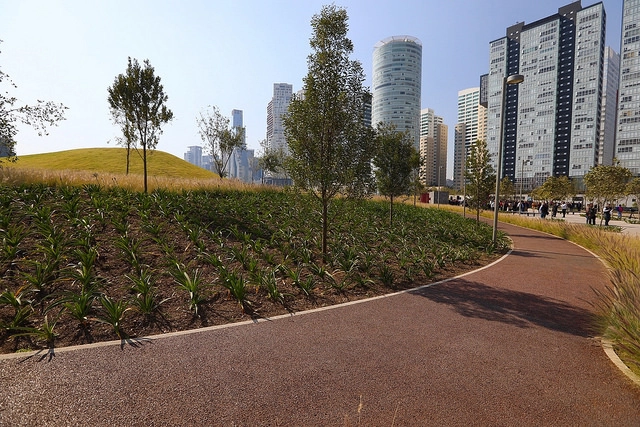
During the Real Estate Show 2018—an event bringing together leading national and international industry figures, and a premier showcase for iconic, cutting-edge architectural projects—La Mexicana park, in Santa Fe, Mexico City, was awarded first place by the Association of Real Estate Developers (ADI) during the sixth edition of the event.