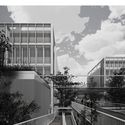
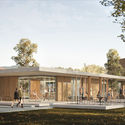
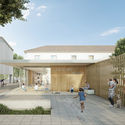
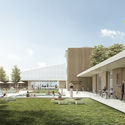
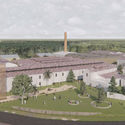
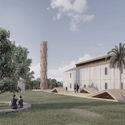
São Paulo-based firm SIAA Arquitetos has been named the winner of the national competition organized by AESabesp for the new São Paulo Water Museum, which involves the restoration and expansion of the former water and sewage department (RAE), currently the França Pinto reservation center.
Below, discover the winning proposal, accompanied by the project description written by the SIAA Arquitetos team.
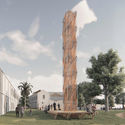
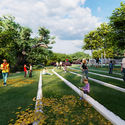
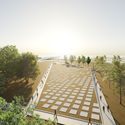
The winners of the Microscapes - Tactical Micro-Gardens competition have been announced. This international call, organized by the Intendencia Departamental de Río Negro (Uruguay) and the Inter-American Development Bank, invited architects, designers, landscape architects, artisans, citizens, entrepreneurs, and any other interested parties to propose installations to revitalize one of the central spaces of the Fray Bentos industrial complex.
The Tomie Ohtake Institute and AkzoNobel continue to map contemporary architectural production, highlighting, for the seventh consecutive year, significant projects built within the current Brazilian landscape. The relationship to the urban context, the commitment to the site and sustainability, as well as design and construction inventiveness, are the core criteria guiding the 7th Tomie Ohtake Institute AkzoNobel Architecture Prize.
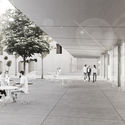
The winners of the competition for Projects to enhance the archaeological site of the Andalusi suburb of Arrixaca and the San Esteban Garden in Murcia (Spain) have been announced. Organized by the Ministry of Development, the call invited participants to devise proposals to protect the valuable Arrixaca Archaeological Site while creating a new public space for the community.
In the year that the nation's capital turns 60, the Council of Architecture and Urbanism of the Federal District (CAU/DF) is launching the CAU/DF Seal - Architecture of Brasília. The initiative celebrates the modern architecture of the Plano Piloto Urban Ensemble, highlighting the city's non-monumental architecture. The goal is to recognize the historical value of these buildings and their authors—who are often little known by the general public—as well as to promote best practices in building conservation and maintenance that have preserved the architectural language of the Modern Movement.
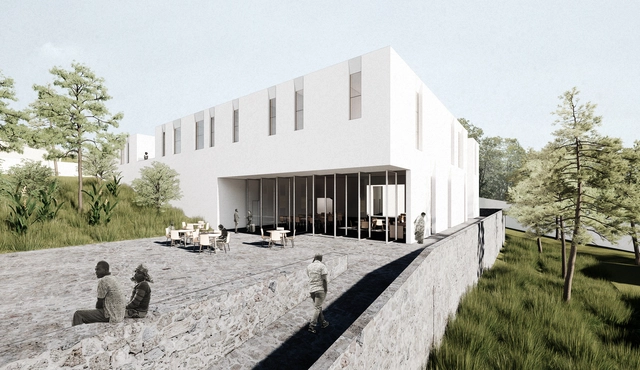
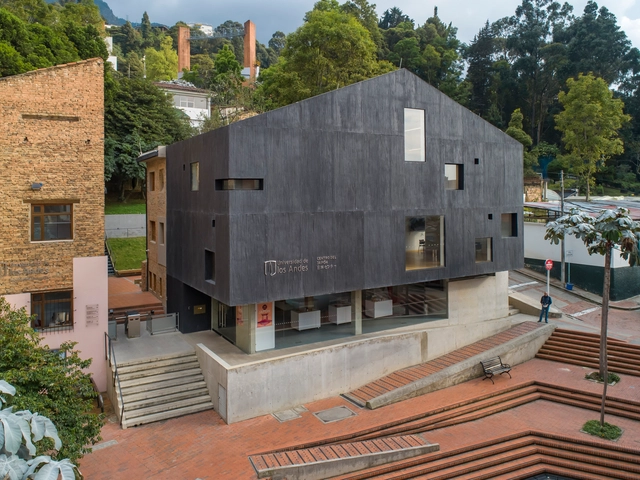
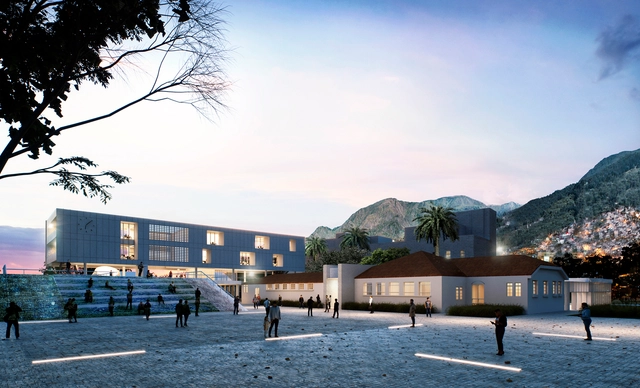
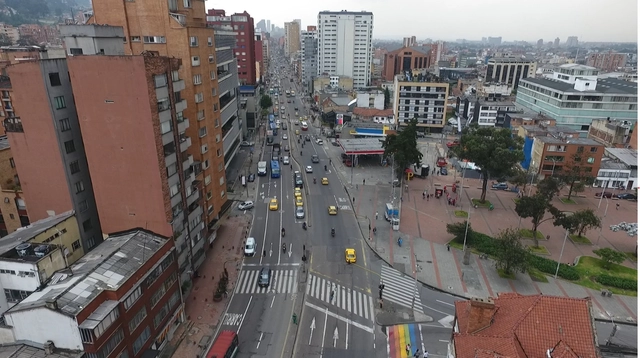
The San Cristóbal local town hall, located in southeastern Bogotá, is currently situated in a mixed-use area of the San Blas neighborhood. It sits in close proximity to a school, a parish church, a community development center, residential complexes, and the local Metropolitan Park.
Despite its privileged location relative to surrounding properties, the town hall building is a designated heritage site. Participants in the public design competition for the new headquarters, organized by the SCA (Sociedad Colombiana de Arquitectos), had to consider all these aspects in developing their proposals. Estudio Territorios was awarded first place, followed by FP Arquitectura in second, and EMS Arquitectura in third. Below, we take a closer look at their proposals.
All large cities face the challenge of managing growth, expansion, and, above all, functioning as an integrated system. In Bogotá, one of the main issues is the mobility of both the commuter and resident populations. We spoke with urban planner and architect Liliana Mejía González, Director of the Projects Division at the Urban Development Institute (IDU), who shared insights into the District Development Plan 2020-2024 for the capital district.
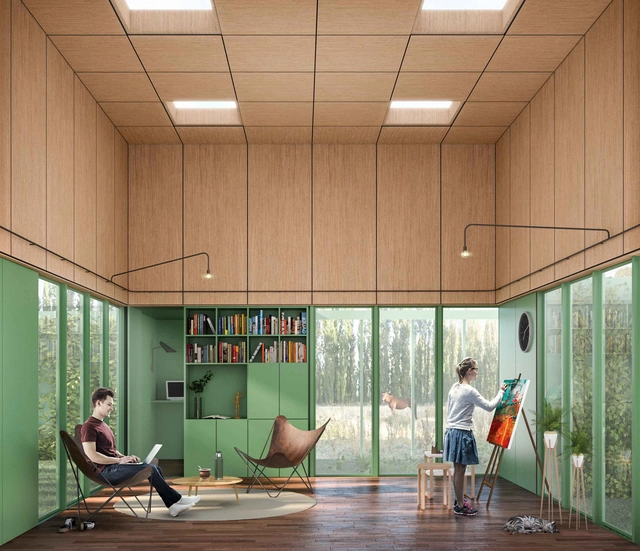
The winners of the International Preliminary Design Competition "A Place for Quarantine" have been announced. Organized by Architecture Eyes and sponsored by Revista Trama, the competition invited architects to design an "ideal" minimal house for two people to inhabit during the period of social isolation, rethinking the ways we relate to space, others, and ourselves.
The winning and distinguished entries have been announced for the "Arquitectura Argentina Solidaria" (Solidarity Argentine Architecture) competition. Organized by the Central Architects' Society (SCA) and the Professional Council of Architecture and Urbanism (CPAU), this national call invited architects and collaborative teams from across the country to submit ideas, initiatives, proposals, projects, works, and research completed over the last ten years centered on solidarity and inclusion. Bringing together the collective knowledge and reflections of professionals nationwide, the primary goal of this call was to address the emerging needs of society's most vulnerable sectors, now further exacerbated by the pandemic.
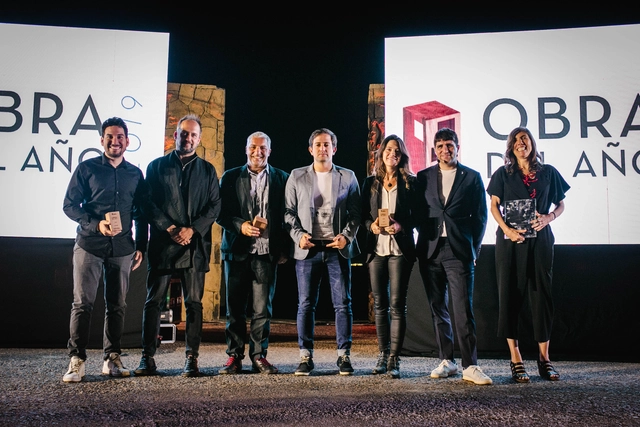
For the eleventh consecutive year, ArchDaily celebrated the best of Latin American architecture, presenting the Building of the Year award to architects Barclay & Crousse (Peru), Felipe Assadi (Chile), and Natura Futura + Frontera Sur Arquitectura (Ecuador). This year, the ceremony took place at the Pablo Neruda Lookout on San Cristóbal Hill, bringing together the architectural community and ArchDaily's main partners.
https://www.archdaily.com/1124207/the-2019-obra-del-ano-awards-were-presented-in-santiago-chilePola Mora
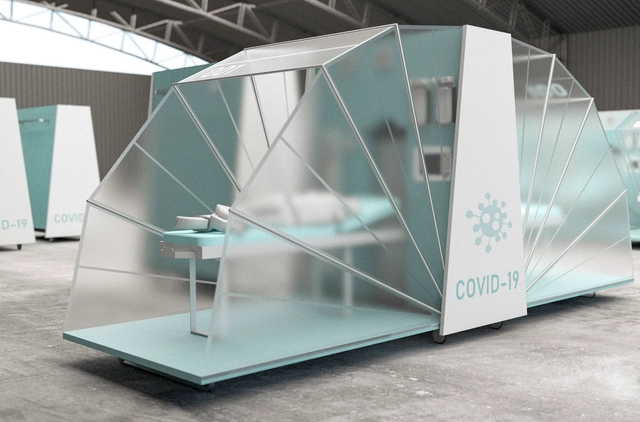
The Architects' Association of the Province of Córdoba has called on architects across the province to collectively contribute ideas to address the current challenges associated with the spread of COVID-19—primarily the lack of adequate healthcare space to treat patients as the disease spreads—seeking to create a space for collective development nourished by the discipline's expertise to offer a response to society through the field of architecture.
During social lockdown, the CNM (National Commission of Monuments, Places, and Historical Assets of the Ministry of Culture), is offering a free online course to discover the great treasures of Argentine architectural heritage, spanning different eras, styles, and regions. Led by renowned experts in each field, the classes will cover a broad overview ranging from the Cueva de las Manos in Santa Cruz Province to modern buildings throughout the country.
For more than 70 years, Guatemala's professional associations have sought to preserve a spirit of unity among their fields. In 1958, in an effort to enhance communication and interaction, a new headquarters was established to bring the different professional associations together in a single space for the first time. Later, the Assembly acquired its own land, and between 1971 and 1972, an architectural design competition was held, resulting in the design of the current complex. Today, Guatemala's professional population is growing steadily, and the complex designed nearly fifty years ago is no longer sufficient to house all the associations and their members. For instance, several organizations, such as the associations of engineers and psychologists, do not operate out of the main headquarters. Therefore, there is a clear need to expand the infrastructure of the professional headquarters to accommodate all current and future associations in a single complex, adequately meeting the needs of their members.
ConArq is the first National Congress of Architecture organized by students in Argentina. It stems from the desire to discuss, listen to, and propose architecture across the country's different schools, aiming to strengthen student education and make significant contributions to the practice of the discipline, ultimately creating a space for debate.
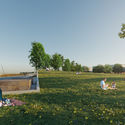
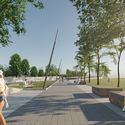
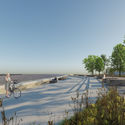
The winners of the Buenos Aires and the River "Salguero Park" National Ideas Competition, Young District CABA, have been announced. Promoted by the Government of the City of Buenos Aires and organized by the Central Society of Architects (SCA) and the Faculty of Architecture, Design, and Urbanism of the UBA (FADU), the call invited participants to develop comprehensive urban ideas for the "Costa Salguero - Punta Carrasco" complex of the Young District across its 32 hectares and 2,535 linear meters along the Río de la Plata.
The São Paulo-based firm SPBR Arquitetos, led by Angelo Bucci, has launched a new version of its website, making vector CAD drawing files of its projects available. In addition to the drawings, photographs of the works, model images, texts, and other information about each building are also available for download.
Posibles proyecciones. Image Cortesía de Estudio TAC
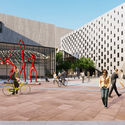
The winners of the Berlin Architecture Museum International Ideas Competition have been announced. The open call invited students and young architects from around the world to design an Architecture Museum for the city of Berlin—a building whose primary mission is to disseminate architectural culture and to transmit and generate knowledge about the discipline, while honoring the immense value of Berlin's architectural and urban heritage.
On May 28, the results of the national architectural ideas competition for the Three Faculties Educational Complex and University Campus were announced, a call inviting professionals in Argentina to develop an educational master plan in the Tigre district, Buenos Aires. The University Campus was to include a Law and Social Sciences Faculty, a Faculty of Medicine with a University Medical Research Center, and a Faculty of Architecture to house technical and humanities disciplines. Meanwhile, the Educational Complex was required to include a high school, a primary school, and a preschool, which had to be connected to the university cloisters to support educational continuity.
São Paulo-based firm Estúdio Módulo, led by Guilherme Bravin and Marcus Vinicius Damon, was named a finalist in the international competition Hope Dental Center: Rwanda Clinic and Training Institute. Organized by Archstorming in partnership with His Hands On Africa (HHOA), the competition aimed to select the design that will be built to house a dental clinic and training institute in Kigali, the capital of Rwanda.
The documentary Vilanova Artigas: The Architect and the Light, written by Laura Artigas and co-directed with Pedro Gorski, was produced to mark the architect's centennial and released in 2015. The film won the "Lusophony Award" at the Portuguese film festival Arquiteturas Film Festival Lisboa 2015 and is now available online to watch from home.
As a consequence of the COVID-19 health emergency, the way we understand urban transportation is likely to change. While concerns regarding fossil-fuel vehicles already carried significant weight before the outbreak—primarily due to their environmental impact—and sustainable transportation had already become a key issue on the urban agenda, the need for social distancing to halt the spread of the coronavirus has accelerated debates around mobility. As a result, the bicycle quickly emerged as a viable alternative for safer transit during the COVID-19 pandemic in cities worldwide.














.jpg?1595432199&format=webp&width=640&height=580)
.jpg?1595432199)