-
Architects: CODE
- Year: 2014
-
Photographs:Andreas Rost - CODE
-
Manufacturers: Calco, Coboce, La casa de las calaminas, Salqui, Synergy

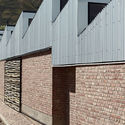
Text description provided by the architects. The agricultural school building has been developed and realised by CODE - the department of architectural design and construction of Prof. Pasel at the Technische Universität Berlin. In an international collaboration with the ecumenical foundation Fundación Cristo Vive Bolivia that works on poverty reduction in Latin America, CODE has developed and implemented the new school building in a two year process. Under supervision of Prof. Pasel and his team 40 students have designed, planned and realised the project together with local partners. The school building is part of the vocational school “Sayarinapaj” that offers young Bolivian students coming from rural Andean areas a professional perspective within the field. Result of the first design and construction phase is a building that is based on a modular concept offering six flexible classrooms. It consists of three massive volumes each of them comprising two classrooms and an additional space that serves as an archive, a laboratory or an installation room for the integrated solar plant. One continuous shed roof structure covers the whole building including two intermediate open air spaces between the volumes to ensure natural ventilation. These ‘in between spaces’ allow for the connection of two classrooms into a larger multi-functional room. With simple but effective means the building responds to the extreme climatic conditions. The massive brick masonry compensates the daily fluctuation of temperature, thus allowing for a comfortable indoor climate. The ventilated roof construction prevents the classrooms from overheating. Its orientation ensures adequate supply of daylight in the classrooms and the optimal declination of the roof for the integration of the solar system.