If you have not yet seen "The Brutalist" and plan to do so, I recommend that you stop reading now and save this piece for after you watch it. Spoilers abound in the paragraphs below. If you are expecting a traditional film review, my apologies in advance: this is an architectural critique stemming from the themes explored in the movie.
The film's final line prompts an interesting debate on the architectural design process: "No matter what others try to sell you, what matters is the destination, not the journey." The line is spoken by Zsófia, niece of fictional architect László Tóth, the protagonist of "The Brutalist," during the epilogue showcasing his international recognition at the first Venice Architecture Biennale in 1980, titled "The Presence of the Past."
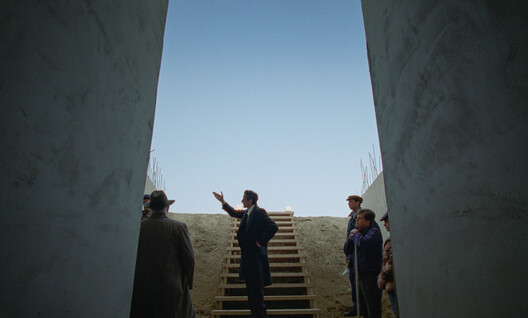
During this moment of celebration, his heir voices an interpretation of the reasons that led the modernist architect to make certain design decisions. According to Zsófia, the community center in rural Pennsylvania featured narrow interior spaces with high ceilings and limited natural light openings as an allusion to the interior of concentration camp gas chambers. Throughout the film, various lines suggest that Tóth, who was Jewish, survived this cruel, Nazi-designed death machine, but this is made explicit only in his niece's final speech, which reveals that he survived Buchenwald during World War II.