
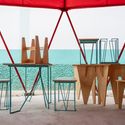
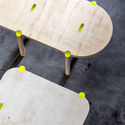

Combining units and patterns to offer different ways of composing a space is the primary reason for choosing modular furniture. It adds value to interiors through spatial versatility while establishing a rhythm that can dictate various forms of occupancy and intervention within the same environment.
Here, we explore the design concepts and benefits of using modular furniture across projects with varied programs.
Residential Architecture
To allow the living room of a small apartment to be rearranged depending on the family's mood and activities, Ruetemple designed modular, mobile furniture for the Bagritsky project. This setup includes seven wheeled modules—four armchairs, two ottomans, and a coffee table—enabling various configurations based on current needs.

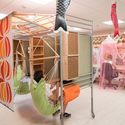
In Studio Mescla, Cité Arquitetura designed pieces that adapt to the user's changing needs. The bed served as the focal point of the creative process. The goal was to create versatile furniture with separate, modular backrests and mobile elements that allow for multiple uses. Rather than being limited to its traditional function, the bed can also serve as an unexpected and comfortable workspace.


Workspaces
LOS OSOS designed a modular furniture system as a natural extension of the Coroflot Mobile Work Unit. To make the most of the compact space, the system utilizes the office's perimeter as a structural frame, organizing the workspace while maintaining maximum flexibility for the user.


To furnish the utopic_US Conde de Casal Coworking space, Izaskun Chinchilla Architects modified industrial modular components, transforming them into character-filled, mobile elements that can easily be relocated while maintaining their distinct aesthetic identity.


To ensure a highly customizable space, Estúdio Guto Requena designed a line of demountable furniture that allows for multiple configurations to support different activities at the LIVE Headquarters Office. All the pieces can be stored within a central "matrix" shelving unit that spans from the ground floor to the mezzanine. Using a system of curtains and brackets, this unit organizes and provides all the items required for various room layouts.


Learning Spaces
Modular furniture is particularly common in schools. For the Qkids English School by Crossboundaries, the defining design feature is a long, blue sculptural element that connects all the spaces while accommodating modular insertions. The project is organized into zones with varying levels of privacy, creating a smooth transition from the public-facing storefront to the semi-public central corridor and the private classrooms in the back. This central feature also accommodates modular furniture pieces that can be flexibly rearranged or stored away inside the structure depending on the activity and the number of students.


To establish spatial versatility at the Wish School, Garoa designed pivoting panels that define or open up the spaces. These panels support nearby activities by serving as storage for backpacks, instruments, books, and student work. Because they are modular and pivot, the panels alter the surrounding spatial configuration, opening classrooms to adjacent areas—expanding for collaborative activities and contracting for quiet, focused work.

At the Pylonesque pavilion, designed by INDA Students of Chulalongkorn University + PAREID, programmatic flexibility is achieved through an open plan symmetrical on two axes. The orientation—what constitutes the front, back, or side of the space—is determined entirely by the arrangement of custom-designed furniture. Sturdy yet light enough for students and staff to reconfigure, these pieces can transform the area into a canteen, classroom, event space, or after-school hangout. This adaptability is essential for a school serving children of various ages at different times of the day.


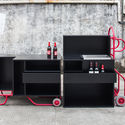
The 12-piece Cornell University AAP Furniture series, designed by CL3 and Lim + Lu, features colorful sofas, coffee tables, and shelving units built onto highly maneuverable handcarts. The design plays on the relationship between the handcart and the New York City streetscape. Placing the modular units on wheels allows them to be easily moved and stored when not in use, or reconfigured to facilitate discussions, act as bookshelves, or serve as lecterns. Moreover, many of these pieces can be rotated on multiple axes to serve alternative functions, such as display stands or elevated seating.

This article was written by Victor Delaqua. The translation is powered by AI.


