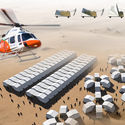
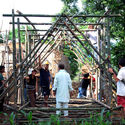
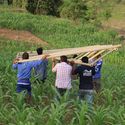
While predicting and preventing damage and disasters are increasingly critical factors when designing our buildings, spaces, and cities, certain extraordinary events still escape our control. These situations demand immediate and urgent architectural responses capable of providing shelter and quality of life to communities affected by natural disasters and conflicts of all kinds—solutions that, in the most extreme cases, may be the only chance of survival for many.
Natural disasters such as earthquakes, tsunamis, hurricanes, and floods, as well as armed conflicts, territorial disputes, or other global humanitarian crises—such as the COVID-19 pandemic—require an immediate response to control and prevent worsening consequences, helping to save lives. **Emergency architecture** can be defined as a constructive response to the most urgent human needs that arise during crises and exceptional situations. It materializes as responsive infrastructure aimed at providing immediate solutions, ranging from shelters for displaced people to healthcare and medical facilities in affected areas.
- Related article:
Emergency Architecture: Projects Against Humanitarian Crises
Whether addressing vulnerable communities, refugee camps, or areas hit by natural disasters, the architectural response—along with the approach and criteria chosen when designing such a project—depends on factors like the scale of the disaster, the number of people affected, the urgency of the situation, material availability, geographical location, available funding, technical support from government entities, and the involvement of humanitarian aid agencies.