

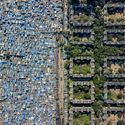


On June 17, Mexico's Supreme Court of Justice of the Nation (SCJN) issued a landmark ruling ordering the National Institute of Statistics and Geography (INEGI) to generate disaggregated statistical data on populations in informal or precarious settlements across the country. This resolution brings to the forefront the discussion on the role that judges can and should play when making decisions that directly impact urban planning, land management, our cities, and our housing.
The SCJN's ruling stems from an amparo (constitutional protection) lawsuit filed by the organization TECHO México against INEGI. Currently, the exact number of informal settlements in the country remains unknown, as do their locations, population sizes, and living conditions. For years, TECHO México had warned that this lack of information hindered both the design of public policies and urban interventions aimed at ensuring adequate housing for this sector of the population, while also precluding public scrutiny of the outcomes of government actions.


