Carla Luisa Escoffié Duarte

BROWSE ALL FROM THIS AUTHOR HERE
↓
Subscriber Access

Roofless Country: The Future of Housing in Mexico

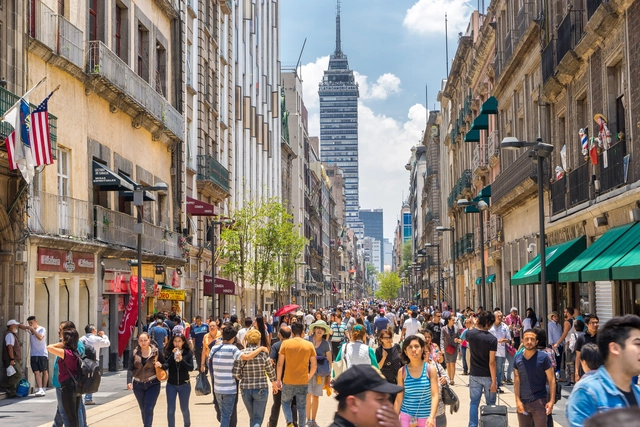
Since the pandemic, urban issues have become more pressing than ever for many people in Latin America. COVID-19 triggered a turbulent shift in the real estate market, driven both by speculation in second-home markets and the influx of “digital nomads” in cities like Medellín, Buenos Aires, and Mexico City.
Subscriber Access

What We Are Failing to Understand About the Right to Housing in Mexico

What We Are Failing to Understand About the Right to Housing in Mexico - Image 1 of 4What We Are Failing to Understand About the Right to Housing in Mexico - Image 2 of 4What We Are Failing to Understand About the Right to Housing in Mexico - Image 3 of 4What We Are Failing to Understand About the Right to Housing in Mexico - Image 4 of 4What We Are Failing to Understand About the Right to Housing in Mexico - More Images

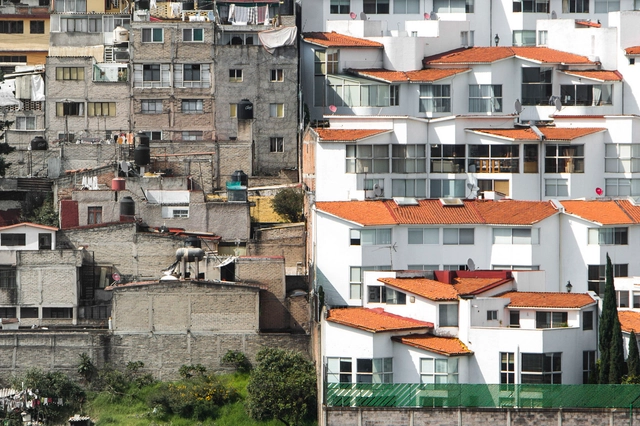
An increasing number of disciplines are engaging with the right to housing. Whether in the realms of architecture, law, economics, urban planning, geography, or political science, diverse voices have sought to identify the obstacles to its fulfillment, especially within increasingly hostile urban environments. Yet, while we all talk about the right to housing, we are not speaking of the same thing.

Subscriber Access

The Challenges of Ensuring Housing in the Face of Tourism in Mexico: The Case of Valladolid, Yucatán

The Challenges of Ensuring Housing in the Face of Tourism in Mexico: The Case of Valladolid, Yucatán - 1 的图像 4The Challenges of Ensuring Housing in the Face of Tourism in Mexico: The Case of Valladolid, Yucatán - 2 的图像 4The Challenges of Ensuring Housing in the Face of Tourism in Mexico: The Case of Valladolid, Yucatán - 3 的图像 4The Challenges of Ensuring Housing in the Face of Tourism in Mexico: The Case of Valladolid, Yucatán - 4 的图像 4The Challenges of Ensuring Housing in the Face of Tourism in Mexico: The Case of Valladolid, Yucatán - More Images+ 3

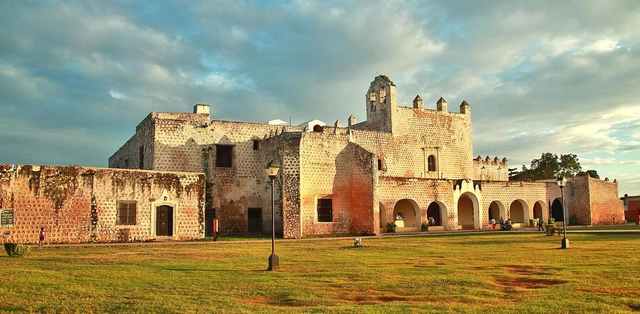
Valladolid is a town of just under 50,000 inhabitants, located in eastern Yucatán. It sits halfway between Cancún and Mérida, about 40 minutes from the Chichén-Itzá archaeological zone. Initially, the tourists who visited did so as a stopover during their travels across the peninsula. However, its gastronomy and architecture transformed it from an involuntary rest stop into a tourist destination in its own right.

Subscriber Access

Reconciling the Environment as Housing: The Case of the Chinamperos of Tlacoapa

Reconciling the Environment as Housing: The Case of the Chinamperos of Tlacoapa - Image 1 of 4Reconciling the Environment as Housing: The Case of the Chinamperos of Tlacoapa - Image 2 of 4Reconciling the Environment as Housing: The Case of the Chinamperos of Tlacoapa - Image 3 of 4Reconciling the Environment as Housing: The Case of the Chinamperos of Tlacoapa - Image 4 of 4Reconciling the Environment as Housing: The Case of the Chinamperos of Tlacoapa - More Images

One of the greatest challenges facing our cities today is reconciling two priority objectives that, at times, seem irreconcilable: reducing inequality and addressing the effects of climate change. On one hand, our planet is at a critical juncture where no action should be underestimated. Urban growth always comes at the expense of green spaces, which is why we must control our settlements. Yet, it is also a fact that certain environmental regulations, besides being ineffective at achieving their intended goals, have discriminatory effects on the most marginalized sectors. It is often these very groups that face the most rigorous enforcement of environmental administrative requirements, as well as penalties for non-compliance. Is there a way out of this apparent dichotomy?

Subscriber Access

The Right to the City: From Lefebvre to the Mexican Constitution

Contrary to popular belief, it is impossible to separate law and urban planning. Both disciplines have served as instruments to establish the rampant inequalities we live in—one through the administration of state force, the other through the accumulation of territorial power. Yet both also hold the keys to creating more equitable cities. The only way to build a true right to the city is through interdisciplinary dialogue, particularly now that a reform proposal seeks to recognize this right in the Political Constitution of the United Mexican States. This article aims to open a space for dialogue among those of us working in law, architecture, and urban planning.

Subscriber Access

Techo México vs. INEGI Ruling: The Impact of Courts on Cities

Techo México vs. INEGI Ruling: The Impact of Courts on Cities - More Images+ 6

On June 17, Mexico's Supreme Court of Justice of the Nation (SCJN) issued a landmark ruling ordering the National Institute of Statistics and Geography (INEGI) to generate disaggregated statistical data on populations in informal or precarious settlements across the country. This resolution brings to the forefront the discussion on the role that judges can and should play when making decisions that directly impact urban planning, land management, our cities, and our housing.