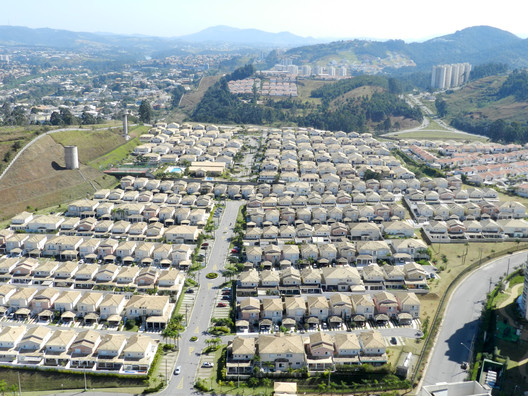
The formal configuration of open space systems in Brazilian cities—whether qualified or not—derives a significant contribution from private developments, since public urban planning and design have historically been the exception.
The production of new urbanized areas in Brazilian cities during the final decades of the 20th century became characterized by the popularization of developments with extensive walled areas and restricted access. Within these, open spaces—which should have unrestricted access—are appropriated for private use, in direct violation of Federal Law 6766/1979 (also known as the Lehmann Law), which establishes the main parameters for land subdivision in the country.
This process leads to a situation in which, according to Macedo et al. in their most recent book (2018, p. 24): “(...) it is practically impossible, within the general conditions of national urbanization, to establish a priori how, when, and where an open space will be constituted, since the reservation of areas for parks, squares, etc., depends on the actions implemented by private initiative.”