
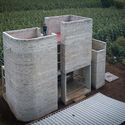
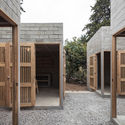
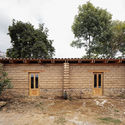
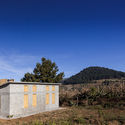

In recent years, architectural production in Mexico has faced a series of extraordinary challenges. Some of these stem from natural disasters that severely shook at least nine states, leaving several areas gravely affected across Mexico City, Puebla, Morelos, Oaxaca, Veracruz, Tlaxcala, Guerrero, and the State of Mexico. However, these events also served as a catalyst, prompting the architectural community to increase its focus—and active involvement—on housing and infrastructure for the most vulnerable sectors of the population.
These responses sparked—and revived—countless debates on the role of architects in society, fostering a critique aimed at production methods that are far more sensitive to context and, above all, to communities that possess ancestral knowledge threatened by a break in its generational transmission. The resulting experiences have yielded both tangible and intangible knowledge, going beyond the physical architectural object to encompass design processes, construction techniques, written records, prototypes, models, and a myriad of connections that extend the profession into other disciplines. Most importantly, they connect architecture to everyday life—to the ordinary (or extraordinary) act of inhabiting.


.jpg?1562864261 "12 Built Projects Serving Vulnerable Sectors in Mexico")


