
Flood-prone cities and water scarcity in the Amazon: contradictions and problems that are further exacerbated by climate change. While population resettlement is a solution in itself, it generally tends to be unsustainable, eventually evolving into a more complex issue. This stems from a lack of viable livelihoods and the limited adaptation of architectural and urban infrastructure to the specific cultural, social, and environmental realities of each context. How can sustainability be achieved? CASA [Self-Sustainable Amazonian Cities], as its name suggests, is a program whose work focuses on vulnerable Amazonian populations seeking to become sustainable and progressively resilient throughout their development.

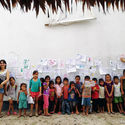


All too often, wonderful and exhaustive research projects end up shelved or forgotten, and sometimes we as architects are not fully aware of their importance and connection to more harmonious practices. In contrast, this is an action-research project, as everything studied is put into practice. Their deep analysis of the issues leads to major innovations, demonstrating that the answer lies in closely observing what is lacking and what is abundant in the Amazonian environment. This ranges from focusing on needs—such as addressing the impacts of climate change, economic poverty, and high housing demand—to carefully considering customs and lifestyles to leverage local resources and traditions while reinforcing identity. It is a holistic vision drawing on different disciplines, both economic-environmental and socio-cultural. CASA integrates, synthesizes and adapts to various scales: from macro-cities to micro-details, and vice versa.

