1. ArchDaily
  2. AWP

AWP: The Latest Architecture and News

From Hiding to Civic Presence: How Wastewater Plants Entered the City

Audio available

When London's main drainage was completed north of the Thames in 1868, the Metropolitan Board of Works marked the occasion with a banquet held inside a sewage pumping station. Abbey Mills had been built over the previous three years by the engineer Joseph Bazalgette, working with the architect Charles Driver, laid out on a cruciform plan with eight beam engines, two on each arm. Its style has been read as Byzantine, Italian Medieval, Russian, Ruskinian Gothic and Moorish, and its twin ventilation chimneys, richly ornamented, rose more than sixty meters. The builder called it an elegant structure in a swamp and thought it might pass for a mosque or a temple.

Almost everything else Bazalgette built was buried, and the exception did not last the century. Steam gave way to electric motors at Abbey Mills in 1933, and the chimneys, redundant since then, were demolished in 1941 out of fear that a bomb strike would topple them onto the station. Sanitary engineering consolidated around criteria that could be measured, among them throughput, discharge quality and hydraulic gradient, and appearance registered in none of them. Treatment moved outward to floodplains, estuaries and municipal edges where land was cheap, and gravity did useful work.
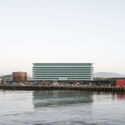
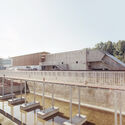
From Hiding to Civic Presence: How Wastewater Plants Entered the City - Image 5 of 4From Hiding to Civic Presence: How Wastewater Plants Entered the City - Image 6 of 4From Hiding to Civic Presence: How Wastewater Plants Entered the City - Image 7 of 4From Hiding to Civic Presence: How Wastewater Plants Entered the City - Image 3 of 4From Hiding to Civic Presence: How Wastewater Plants Entered the City - More Images+ 7

Subscriber Access

What is Architecture? Thoughts from Yona Friedman, Bogdan & Van Broeck, MAD Architects, and AWP Architecture

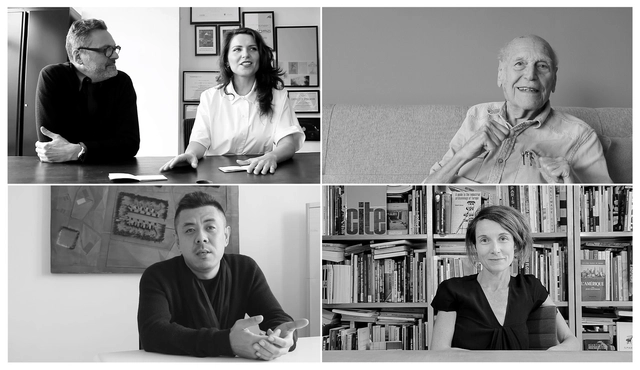
Simple in form but complex in substance, “What is Architecture?” remains an existential question for a lot of architecture students and young professionals. In an attempt to define this ever-changing interrogation and expose the different visions out there, the interview series: WIA – What is architecture? asks four, straightforward, questions to world-leading architectural designers and thinkers. Seeking to uncover their opinion on what architecture is and what it can do, these short videos reveal responses to “What is architecture? What can architecture do? What is your architectural position? and What is your design method?”.

ArchDaily has collaborated with WIA to release every week, 4 of these conversations, and to invite you to take on the challenge and answer these questions. The third article of the series presents the ideas and visions of Yona Friedman, Oana Bogdan, and Leo Van Broeck from Bogdan & Van Broeck, Ma Yansong from MAD Architects, and Alessandra Cianchetta from AWP Architecture.

AWP to announce masterplan for La Défense

La Défense, Paris’ major business district, is about to undergo a transformation with the help of Paris architecture firm AWP. AWP’s plan was presented to government agencies EPADESA and DEFACTO as well as local communities in November 2012, but will be released to the public for the first time in March. The proposed plan not only updates and adds to the current site: it rethinks and reevaluates what already exists. More on the plan after the break.

Subscriber Access

Pavilions and Follies of the Parc des Bords de Seine / AWP + HHF

Pavilions and Follies of the Parc des Bords de Seine / AWP + HHF - Image 8 of 4
© AWP - HHF, Sbda

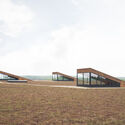
The series of a pavilions with different public functions and programs by AWP + HHF Architects are part of a future 113 hectare large public green space along the Seine river, in Carrière-Sous-Poissy, at the end station of the RER line A and close the renown Villa Savoye from Le Corbusier. The Park designed by the Paris based landscape architects Agence TER will be a public park and ecological showcase for local residents and a leisure destination for people living in and around Paris. More images and architects’ description after the break.