How to visualize architectural concepts in SketchUp using D5 Lite for faster design exploration.
How to visualize architectural concepts in SketchUp using D5 Lite for faster design exploration.
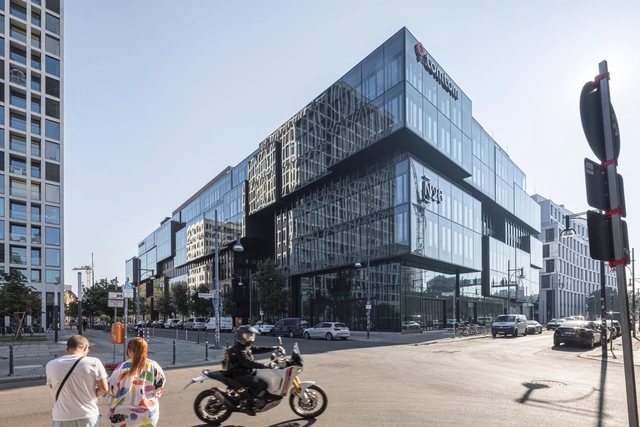

The 2023 Guatemala Architecture Biennial brings to the forefront the need to build a city without walls, integrating public spaces that foster a sense of belonging, unity, and identity. In this interview, the Biennial's general coordinator, Esteban Borjes Castillo, discusses the significance of this year's edition.
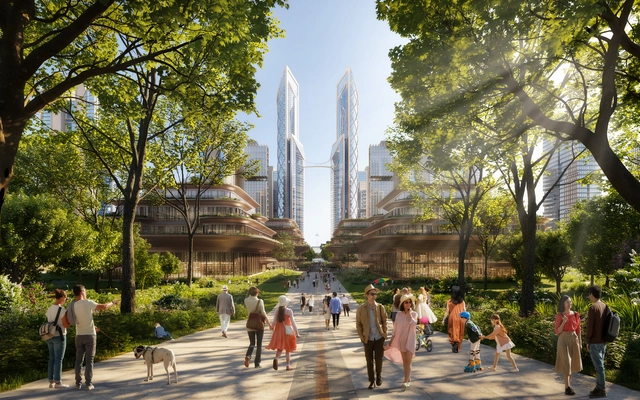
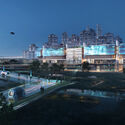
Foster + Partners has been selected as the winner of an international competition to design a new center for Hangzhou, the capital of China's Zhejiang province. The master plan envisions a green and interconnected mixed-use quarter situated in the heart of the Yuhang District. In its essence, the project aims to foster a strong connection between nature and people’s daily lives, creating a sustainable urban quarter.
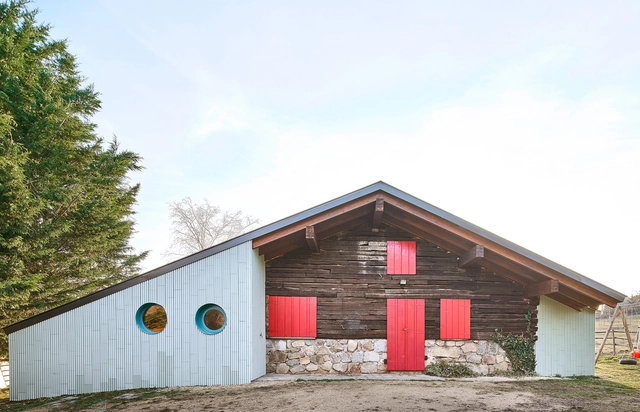
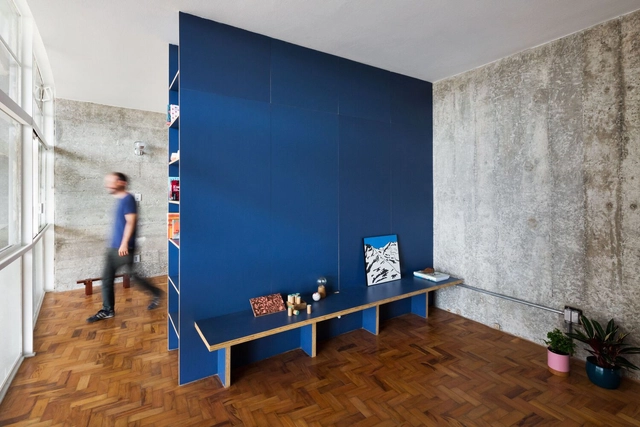
Home is not just a physical structure defined by its materials and spatial characteristics. It is the result of everyday habits, routines, and fond memories blending into the very essence of the place through its walls, textures, and aromas. This is why a true home cannot be instantly created; it demands time, and a sense of continuity, as it reflects the ongoing adaptation of both the family and the individual within that space.
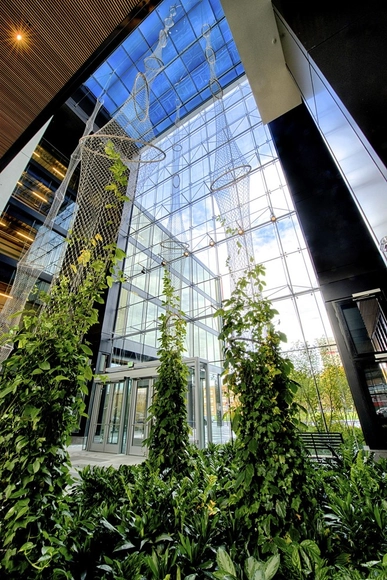
With the high population density of cities and voracious appetite of the market for every square meter, it is not uncommon for urban vegetation to be forgotten. For this reason, forests, vegetable gardens, and vertical gardens have aroused much interest and figured into a variety of different innovative proposals. Using the vertical plane to maintain plants in an urban setting is a coherent and common-sense solution, especially when there is little possibility of bringing green to the level of the people on the streets.
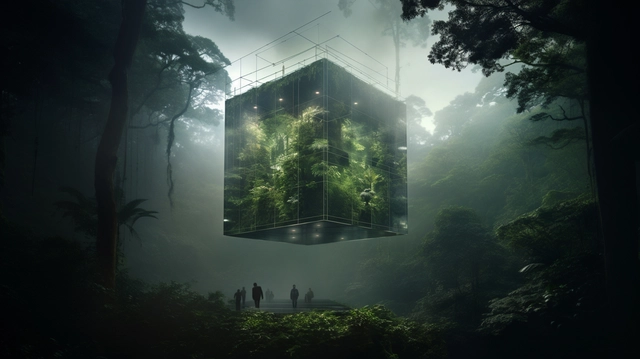
This article is the sixth in a series focusing on the Architecture of the Metaverse. ArchDaily has collaborated with John Marx, AIA, the founding design principal and Chief Artistic Officer of Form4 Architecture, to bring you monthly articles that seek to define the Metaverse, convey the potential of this new realm as well as understand its constraints.
Artificial Intelligence is at the genesis of creating fundamental changes in the way we design and construct buildings and cities. Some of these changes will be abrupt and disruptive to normative practice. Others will take more time to feel the effect of this new technology, but the change will be pervasive. When combined with the Metaverse, AI will also offer vast opportunities for the profession to expand and grow. The kinds of spaces and environments we design in the Metaverse will be, in some aspects, very different from what we currently design in the physical world alone. AI evolves every day, and we are compelled to learn while we innovate. AI has proven it is a powerful tool to assist designers and offers the potential to challenge us to alter our design process. Combining AI with narrative design is one of those challenges.




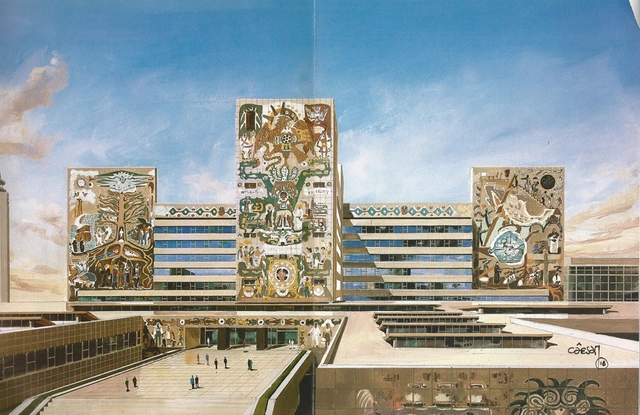
Six years ago, the 2017 earthquake left deep scars across various parts of the country, including Mexico City, where several buildings suffered severe structural damage and were subsequently evacuated. One of these is the SCOP Center (Centro SCOP). Designed by architects Carlos Lazo, Augusto Pérez Palacios, and Raúl Cacho, this integrated sculptural and pictorial complex features murals by Juan O'Gorman, José Chávez Morado, Francisco Zúñiga, and Rodrigo Arenas Betancourt. Today, it stands as one of Mexico's most significant 20th-century artistic monuments. Spanning over 6,000 square meters of gross floor area, it is widely considered one of the most successful examples of the *Integración Plástica* (Plastic Integration) movement.