At a time when urbanization has become planetary and humanity has become a geological force capable of profoundly altering Earth's thermodynamic cycles, it is urgent to reinvent the urban way of life and rehearse other forms of coexistence between humans, animals, and plants—between cities, forests, rivers, and mountains. Furthermore, it is urgent to design, with our feet on the ground and in collaboration with the peoples and sciences of the Earth, the conditions for future habitability.
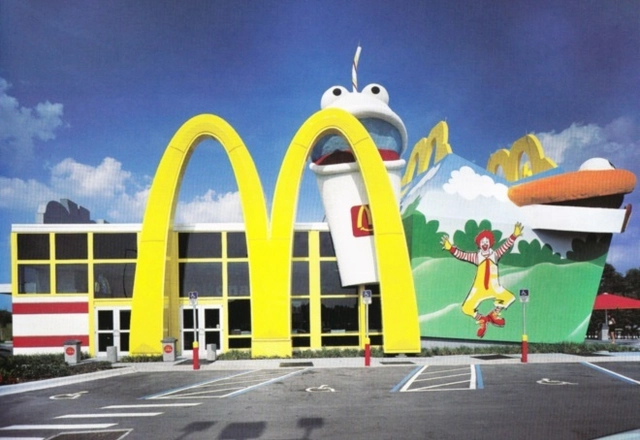
You might not think of McDonald’s as the pinnacle of architectural style, but even the world’s largest fast-food franchise has taken some bold design risks. While the literal “secret sauce” has largely remained the same since the inception of the iconic golden arches, McDonald’s has had its fair share of experimentation and has even hired some of the profession’s most prominent names to put their own spin on the design of these restaurants- turning the repetitive and mundane into one of a kind experiences.
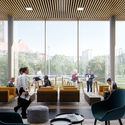
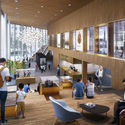
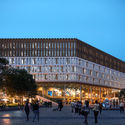
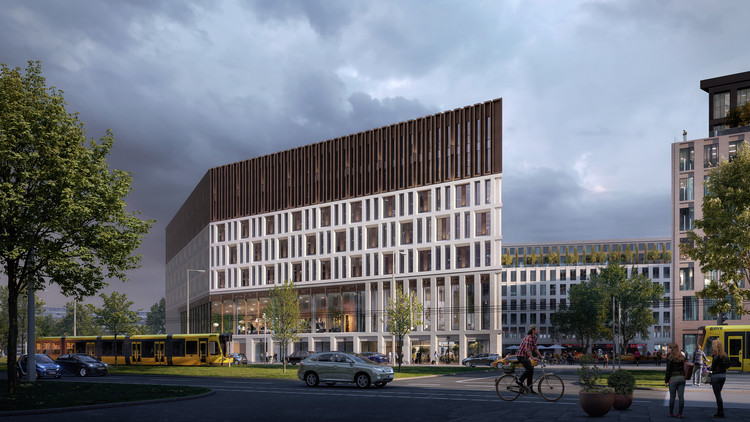
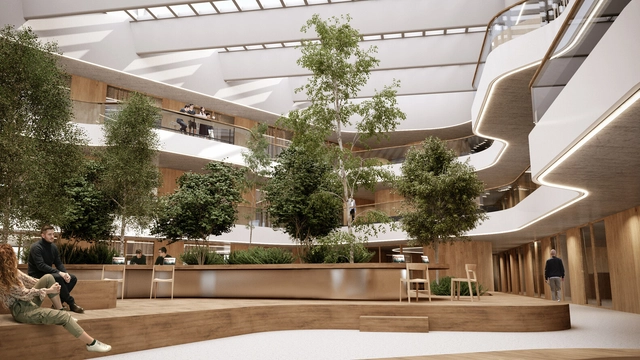
Barcode Architects and Tchoban Voss Architekten have landed the win of the Dresden City Public Administration Headquarters design competition. The proposed building will have a dynamic, three-layered façade that compliments Dresden's architecture and carefully embeds it with its surroundings. The 34,000m2 'Verwaltungszentrum' will be part of a larger urban transformation of the Ferdinandplatz, and is expected to be complete in 2025.
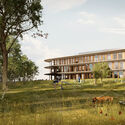
Designed by 3LHD Architects, the new campus for the Croatian electric hypercar manufacturer Rimac brings together a wide array of programs and spaces, from production plant and offices to kindergarten, dormitory and even a sheep meadow. Located in the outskirts of Zagreb, within a natural landscape, the Rimac Campus is organized around two main volumes that follow the site’s natural topography, with several accompanying facilities tucked underneath a green roof that stretches out, meeting the surrounding landscape.
Concéntrico, Logroño's International Architecture and Design Festival, has announced the winning proposals for their three open competitions in three locations in the historic center of Logroño, in Spain.
This edition of the competitions sought to create a Pavilion in the Plaza de Escuelas Trevijano and two interventions, one in the River Ebro walk and the other in Viña Lanciano by Bodegas LAN.
In this episode of “Behind the Scenes”, where we showcase the work of visionary artists and ask about their experiences beyond what is seen by the public, we are presenting Nicolás Castagnola: an illustrator, animator, and architect born in Buenos Aires and based in Berlin. Through his illustrations and animations, he brings different meanings to architecture by opening an imaginative field about the infinite possibilities that the built environment can provide.
Corviale is one of Italy’s biggest postwar public housing projects and, arguably, one of the most controversial. Both revered and abhorred, the complex remains a pilgrimage site for architectural schools from around the world. Il Serpentone (The Big Snake), as it is affectionately called, stretches nearly a kilometer in a straight line, a monolithic, brutalist building that hovers over the countryside on the outskirts of Rome. But there is nothing sinuous about a construction made up of 750,000 square meters of reinforced concrete condensed into 60 hectares. This hulking horizontal skyscraper is formed by twin structures, each 30 meters high, connected through labyrinths of elongated hallways, external corridors, and inner courtyards. Divided into five housing units, each with its own entrance and staircase, it contains 1,200 apartments and houses up to 6,000 people.
https://www.archdaily.com/960563/chilometro-verde-five-women-architects-revitalizing-the-corviale-a-giant-public-housing-project-in-romeMarina Engel













.jpg?1619126725&format=webp&width=640&height=580)


_02.jpg?1619038906 "© Dominik Keul (KOLLEKTIV B)")
_03.jpg?1619038931 "© Dominik Keul (KOLLEKTIV B)")







.jpg?1619004179 "secondary entrance. Image Courtesy of Atelier Sounding Architecture")