-
Architects: Architekten Cie.
-
Photographs: Jeroen Musch, Hugo Kaagman
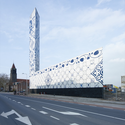
Text description provided by the architects. This power station is an instrument of education: designed to develop a sensibility for the consumption of energy and sustainable cohabitation. Combined heat and power plants are usually neutral industrial struc-tures that are situated at some inconspicuous location. By contrast, the Stadshaard (literally the ‘city hearth’) stands at a prominent spot in Roombeek, where a neutral building would be out of place. With the Stadshaard’s dimensions (a building 10 metres high with a 40-metre chimney) it would, moreover, be impossible to realize an ‘invisible’ building that merges with the surroundings.

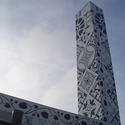
The Stadshaard is a gateway building for the district of Roombeek, an eye-stopper and a point of refer-ence. Its basic form is simple, while its elevations are clad in one-metre-square panels with expressive motifs and figurative depictions. These are reminiscent of the delftware tiles that line Holland’s traditional open hearths and therefore hint that this structure might have something to do with fire and warmth: the City Hearth.

Delftware tiles often have figurative motifs that are anecdotes about everyday life. The figurative depic-tions for the Stadshaard allude to energy generation, to famous buildings or people from Enschede and to themes that recur often in the work and life of the artist Hugo Kaagman. The result is the biggest delft-ware artwork in the Netherlands.