
On August 6th, 1945, a B-29 bomber dropped the first atomic bomb in history over Hiroshima, Japan, targeting the intersection of bridges over the Honkawa and Motoyasu rivers. The bomb devastated Hiroshima within a radius of 5 km, resulting in 140,000-150,000 deaths by December of that year.


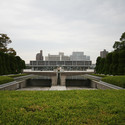
Kenzo Tange was commissioned with the challenge of designing the reconstruction of Hiroshima. By designing the Hiroshima Peace Center and Memorial Park, Tange expressed the solidarity of human kind as well as symbolizing a commitment to peace. More after the break.

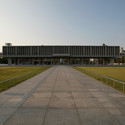
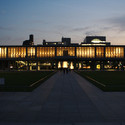
An undeniable Modern style is expressed in one of Kenzo Tange's first buildings in the postwar period.
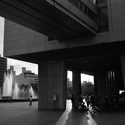
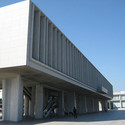
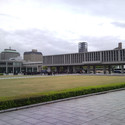
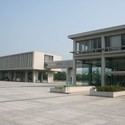
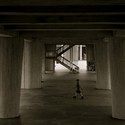
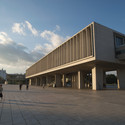
Inevitably suggesting Le Corbusier influences, the museum is supported on pillars, like Le Corbusier's patented piloti. Furthermore, the building is articulated with reinforced concrete, a natural convention of Corbu. Tange loved what Le Corbusier represented and was convinced that Japanese architecture would become enormous in scale, pursuing that large architecture built in social human scale was in demand.

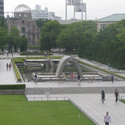
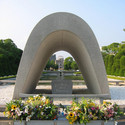
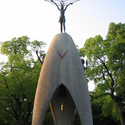
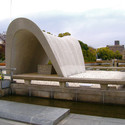
Tange combined Le Corbusier's five points with elements drawing from Japanese traditions, such as the sun-screens and the modular arrangement of the facade. Moreover, the parabolic shaped sculpture in the garden resembles a saddle, evoking the way of the Haniwa, the habitual tombs of former rulers of Japan.

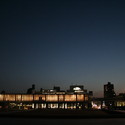
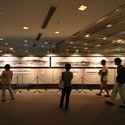
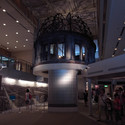
Inside, the museum succeeds in transporting the visitor into the catastrophe of the blast. The exhibition ranges technical data about the bomb to dramatic testimonies of victims, all in theatrically prepared halls.

Hiroshima made it a rule to continue using the building as much as possible by maintaining it properly. Most modern Japanese architecture built in the 1950's has been demolished, but this building still survives, pioneering all modern architecture in Japan.

The best way to know the real value of the park is to attend the Peace Memorial Ceremony, held on August 6th each year. The ceremony attracts a variety of politicians, religious organizations, and artists.
Photographs:Flickr user: skidsk, Flickr user: RinzeWind, Flickr user: kristi-san, Flickr user: karma-police, Flickr user: Joost Strootman, Flickr user: Jonas in China, Flickr user: hairyeggg, Flickr user: faihmonsoon, Flickr user: dwired, Flickr user: DoNotLick, Flickr user: dejahthoris, Flickr user: chriggy, Flickr user: bikku
-
Architects: Kenzo Tange
- Year: 1955