Jeanne Gang, the founder of Studio Gang Architects, has made a name for herself as a designer who can design both show-stopping skyscrapers and sensitive small-scale buildings. From her breakout 2009 Aqua Tower project, to the hypothetical “Polis Station” proposal presented at last year's Chicago Architecture Biennial, Gang has established herself as perhaps Chicago's leading architect.
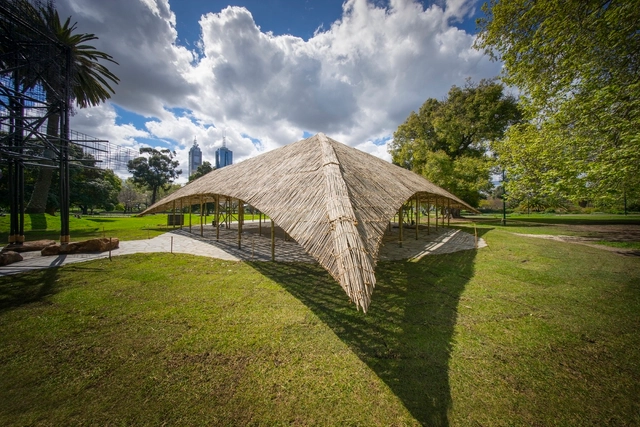
Bijoy Jain, the founder of Indian practice Studio Mumbai, has long been well-known for his earth-bound material sensibilities, and an approach to architecture that bridges the gap between Modernism and vernacular construction. The recent opening of the third annual MPavilion in Melbourne, this year designed by Jain, offered an opportunity to present this architectural approach on a global stage. In this interview as part of his “City of Ideas” series, Vladimir Belogolovsky speaks with Bijoy Jain about his design for the MPavilion and his architecture of “gravity, equilibrium, light, air and water.”
Yuri Grigoryan founded Project Meganom in 1999 in Moscow with his partners Alexandra Pavlova, Iliya Kuleshov, and Pavel Ivanchikov. Together, the group all graduated from Moscow’s Architectural Institute, MArchI in 1991, the year of the Soviet Union’s collapse, and then practiced at the studio of Moscow architect Alexander Larin. Today Project Meganom is headed by Grigoryan, Iliya Kuleshov, Artem Staborovsky, and Elena Uglovskaya, and keeps in close contact with the theoretical side of architecture: Grigoryan teaches at his alma mater and until recently he was the Director of Education at Strelka Institute, founded in 2009 under the creative leadership of Rem Koolhaas, while in 2008 the practice was involved in the Venice Architecture Biennale with their San Stae project for curator Yuri Avvakumov's “BornHouse” exhibition. All of this gives Grigoryan an interesting overview of Russia's unique architectural context. In this interview from his “City of Ideas” column, Vladimir Belogolovsky speaks with Grigoryan about the issues facing Russian architecture and how Project Meganom has responded to those challenges.
Throughout the course of his career, the forms present in Zvi Hecker's work have undergone significant changes – from the rigidly geometric shapes of his early work such as his Ramot Polin housing and Synagogue in the Negev Desert, to his more freeform recent works like the Jewish School he designed in Berlin. Hecker, though, sees all of his works as both consistent with each other and individual, describing himself as “an artist whose profession is architecture.” In this interview from his “City of Ideas” column, Vladimir Belogolovsky speaks with Hecker about his inspirations and the ideas that underpin his career.
As a Japanese immigrant who has spent much of her life in the United States, the architecture of Toshiko Mori occupies an interesting space: on one hand, the material and tectonic culture of Japan is, as she puts it, her “DNA.” On the other hand, her work clearly draws inspiration from the Modernists of 20th century America, and most notably from Mies van der Rohe. In this interview from his “City of Ideas” series, Vladimir Belogolovsky speaks with Mori (his former architecture professor) about materials, details, and the inspiration behind her work.
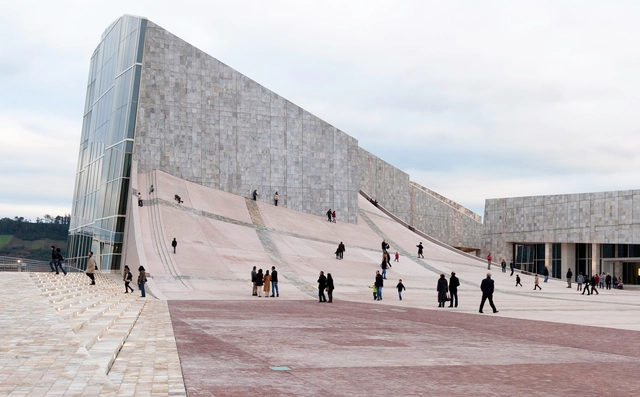
The City of Culture in Santiago de Compostela, Spain. Image Courtesy of Eisenman Architects
As one of the most revered and often reviled architects of the latter part of the 20th century, Peter Eisenman has courted controversy throughout his 50-year career, often attempting to distance himself from the work of his contemporaries and standing in firm opposition to popular trends. In this interview, Eisenman elaborates on his beliefs about architecture and the new direction he has taken in recent years – while simultaneously pulling no punches when discussing the work of others, including Rem Koolhaas, Richard Meier, and even his younger self.
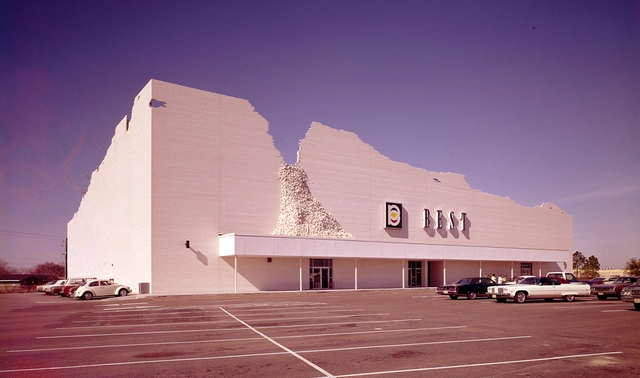
As the founder of SITE, an architecture firm most widely-known for their seminal series of stores for BEST in the 1970s, James Wines has become something of an anomaly in the field of architecture: originally an artist, his approach of creating architecture as a form of cultural criticism struck a chord almost universally, delighting critics and the public alike. In this interview, the latest in Vladimir Belogolovsky's “City of Ideas” column, Wines explains the ideas behind those early designs and how his subsequent works have continued that thread of ideas.
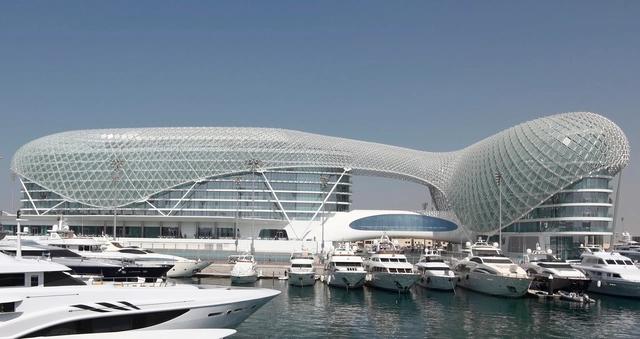
Yas Viceroy Hotel Abu Dhabi, UAE, 2010. Image Courtesy of Asymptote Architecture
Founded in 1989, Asymptote Architecture is one of those rare practices that gained their initial notoriety despite the fact that in the early years of their practice most of their designs went unbuilt. As a result, only in the last decade or so have the practice's futuristic and parametric forms truly been tested as physical architecture, with projects such as the Yas Viceroy Hotel in Abu Dhabi. In this installment of his “City of Ideas” column,Vladimir Belogolovsky speaks with Asymptote founders Hani Rashid and Lise Anne Couture about their inspirations, the creation of space and whether architecture can ever be thought of as solving problems.
Founded in 1986 in Mexico City, Enrique Norten's practice TEN Arquitectos is not known for a signature style, preferring to make each project a modernist-infused response to its own specific conditions. Nonetheless, they have become one of the most widely-recognized architectural practices emerging from Mexico, with projects throughout North America. In the latest interview in his "City of Ideas" column, Vladimir Belogolovsky speaks with Norten in New York to find out how the architect's past has influenced his current design work, and to discuss the future trajectory of architecture.
Over the past quarter-century, EMBT has emerged as one of the most influential practices in Spain, remaining as thought-provoking under the sole direction of Benedetta Tagliabue as it was before the tragic death of her inspirational husband and co-founder Enric Miralles. In this installment of his “City of Ideas” column, Vladimir Belogolovsky visits Tagliabue at the firm's studio in Barcelona to talk about the role of experimentation and curiosity in their work.
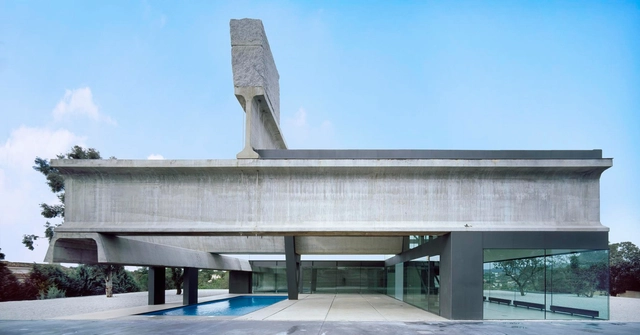
Founded in 2000 by Antón García-Abril and Débora Mesa, Ensamble Studio represents that rare and highly sought-after ideal of 21st century architecture: a firm whose work is as intellectually rigorous as it is visceral and viral, with work that is equally at home in both the 2010 Venice Biennale and on the popular website Viralnova. In this interview - the first installment in his column for ArchDaily "City of Ideas" - Vladimir Belogolovsky visits the studio's founders at their unconventional home, the Hemeroscopium House in Madrid, to talk about their experimental approach to design and their conception of the city of the future.
No matter what you think of it, these days there is no denying that a celebrity culture has a significant effect on the architecture world, with a small percentage of architects taking a large portion of the spotlight. Questioning this status quo, Vladimir Belogolovsky's new book "Conversations with Architects in the Age of Celebrity" interrogates some of these famous architects to find out what they think of the culture which has elevated them to such heights. In this excerpt from the book's foreword, Belogolovsky asks how we got into this celebrity-loving architectural culture, and what it means for the buildings produced.
_Hedrich_Blessing_015.jpg?1478169991&format=webp&width=640&height=580)

.jpg?1461556064&format=webp&width=640&height=580)




.jpg?1447120055&format=webp&width=640&height=580)

.jpg?1447120320 "Santa Caterina Market, Barcelona. Image © Alex Gaultier")

.jpg?1447120055)