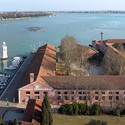
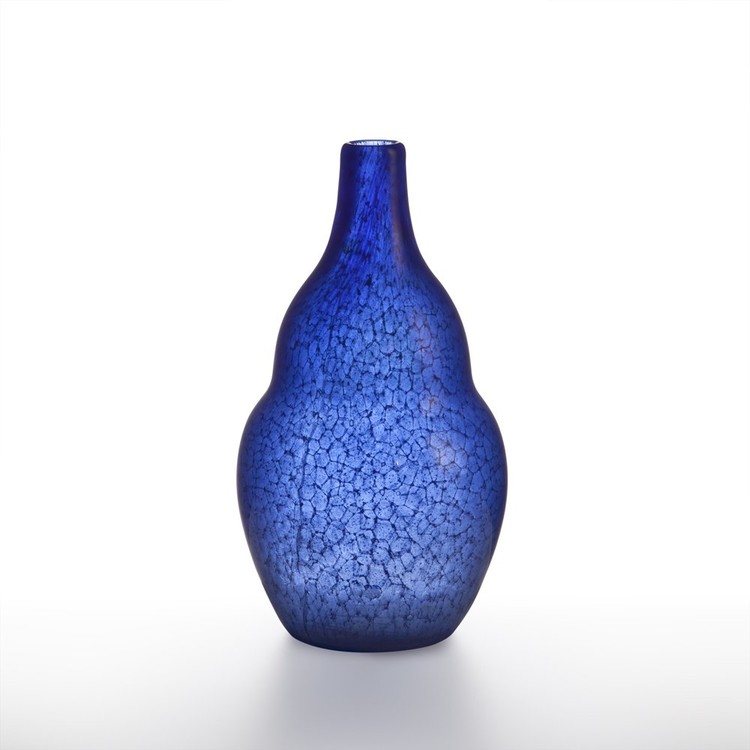
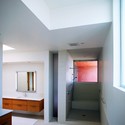
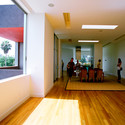
The new exhibition space Rooms for Glass (Le Stanze del Vetro) in Italy, designed by Selldorf Architects, will open this summer in August 2012. The first exhibit to inaugurate the space will be Carlo Scarpa. Venini 1932–1947, a collection of over 300 glassworks by architect Carlo Scarpa. The exhibit will run until November 29, 2012, after which Rooms for Glass will continue showcasing the art of Venetian glassmaking in the 20th century with other exhibits.
Today, the President of the Biennale di Venezia, Paolo Baratta, and the 13th International Architecture Exhibition Director, David Chipperfield, met at Ca’Giustinian with the representatives of the 41 countries participating in the exhibition, including representatives of Kosovo, Kuwait and Peru for the first time. David Chipperfield announced the theme of this year’s Biennale is to be Common Ground. Continue reading for more information.
David Chipperfield states, “I want this Biennale to celebrate a vital, interconnected architectural culture, and pose questions about the intellectual and physical territories that it shares. In the methods of selection of participants, my Biennale will encourage the collaboration and dialogue that I believe is at the heart of architecture, and the title will also serve as a metaphor for architecture’s field of activity.”
Photo by artinberlin - http://www.flickr.com/photos/artinberlin/. Used under Creative Commons
British architect, David Chipperfield, will curate the 2012 Venice Architecture Biennale. Chipperfield will have only eight months to decide on a theme and prepare to curate the world’s largest architecture exhibition. He will become the first British architect to curate the event.
Venice is commonly regarded as one of the wonders of the world, attracting over 17 million tourists each year. However, the city of Venice faces ongoing problems that threaten its ability to stay above water. The city’s flooding issues are notorious around the world. Every year water surges through its legendary labyrinth of streets wreaking havoc on architectural gems such as the Palazzo San Marco. With its architecture under threat, and dwindling population as many young people flock to the mainland, it is appropriate to think of Venice as a dying relic.
Coinciding with the start of the Venice Biennale, OMA and Prada open an exhibition surveying recent collaborative works. The exhibition appears at Ca’ Corner della Regina, a former palazzo, alongside highlights from the Prada Fondazione collection. More images and information after the break.
The installation of Emergency Exit, the Polish Pavilion at the 2010 Venice Architecture Biennale, by artist Agnieszka Kurant and architect Aleksandra Wasilkowska, seeks to go beyond the logic of urban reality through the creation of ‘urban portable holes’: in-between spaces, places of uncertainty and doubt, of time-space discontinuity, such as abandoned or unfinished buildings, sites of catastrophe or accidents, illegal markets, rooftops and tunnels. The title refers ironically to the health and safety regulations in buildings and urban space that seek to plan, control risk and eliminate the accidental and unexpected. More images and architect’s description after the break.
Architects Ahmed Mito, Kamel Loqman, Hisham Alaa and artists Ayman Lotfy, Ahmed Refat, Niveen Farghaly, and Amer Abdelhakemrecently took part of the prestigious La Biennale di Venezia where they presented their work for the Egyptian Pavilion. Images and the architects description after the break.
1:1 es the exhibition space for the Romanian Pavilion at the Venice Biennale. The project was designed by architects Romina Grillo, Ciprian Răşoiu, Liviu Vasiu, Matei Vlăsceanu and Tudor Vlăsceanu. Images and architect’s description after the break.
NOVAE Architecture has been recently selected as one of the 10 Young Italian Architects under 35 at the “Architects Meet at Fuori Biennale”, for the Venice Biennale. For the event, they presented their project “Teritorial Dissonances”. More images and architect’s description after the break.
dePaor Architects present a folly in pleated linen and lavendered softwood, called “4am”, in the Palazzo delle Esposizioni in the Giardini of Venice. The project constructs a liminal space, between two bespoke subject objects, as a domestic shadowplay.
https://www.archdaily.com/76736/4am-by-depaor-architects-at-venice-biennaleAmber P
We’re so happy to share this video BIG passed along to us highlighting their contribution to the 2010 Venice Biennale. Entitled the LOOP City, the exhibition focuses on a new Metro loop that become the catalyst for development for the cross border region as different programs grow around the new stations. The loop will connect areas around the Øresund Strait in a sustainable spine of public transport, energy exchange and electric car infrastructure. The design introduces a new “vein of true urbanity” that will weave it was through the suburbs. This new loop will create a new realm by uniting specific points, yet activating each interstitial segment.