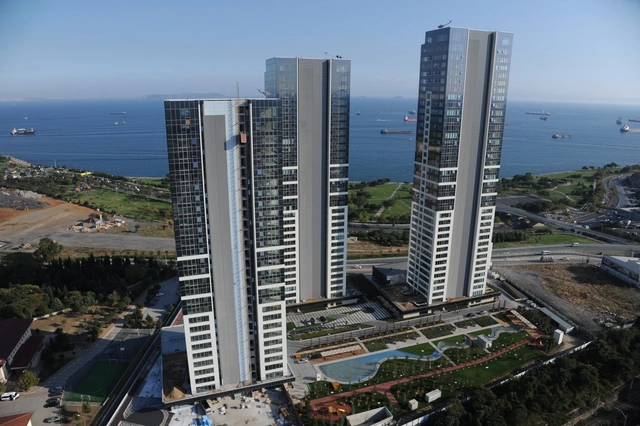
The Turkish Council of State has ruled that the OnaltiDokuz Residence, a trio of towers between 27 and 37 stories tall in Istanbul's Zeytinburnu district, must be demolished in a landmark ruling that could have major ramifications for the country's planning system.
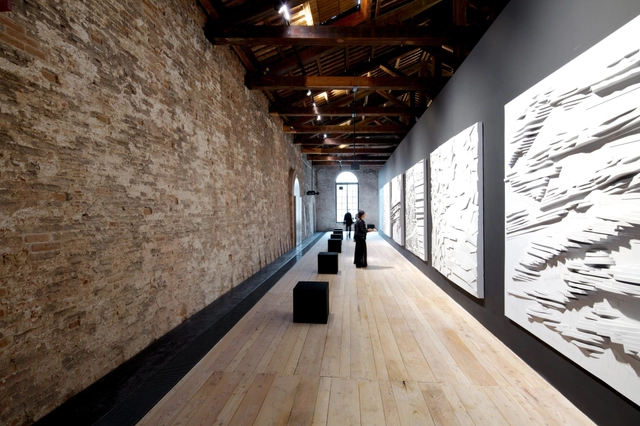
From the Curators. Rather than conducting a historical account of modern epoch in Turkey, presenting an exhaustive catalogue, or trying to capture its unique local attributes, “Places of Memory” attempts to explore the main theme of the biennial via perceptions and experiences.
The İstanbul Foundation for Culture and Art (İKSV) has announced Turkey’s first-ever participation in the Venice Architecture Biennale: “Places of Memory.” Comprised of the work of five contemporary Turkish artists, and curated by architect Murat Tabanlıoğlu, the pavilion will aim to illustrate how a variety of 20th century architectural styles eventually evolved into a singe style throughout most of the contemporary world.
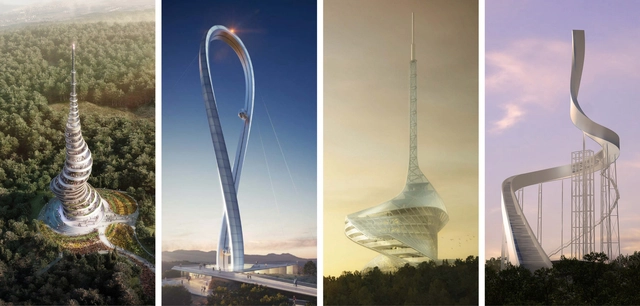
Eight international teams have been shortlisted to design a 100-meter tall Observation and Broadcast Tower for the historic city of Çanakkale. The competition, now in its second stage, has required each team to develop their schematic designs before submitting them to the jury in February.
As stated by the competition brief, “competitors are strongly recommended to consider the technological requirements of the broadcasting tower and recreational potentials of a public entity with equal emphasis.” Once complete, the forested hilltop site will be transformed into a public destination, offering exhibition spaces, recreational facilities and observation decks, in addition to an “iconic antenna tower.”
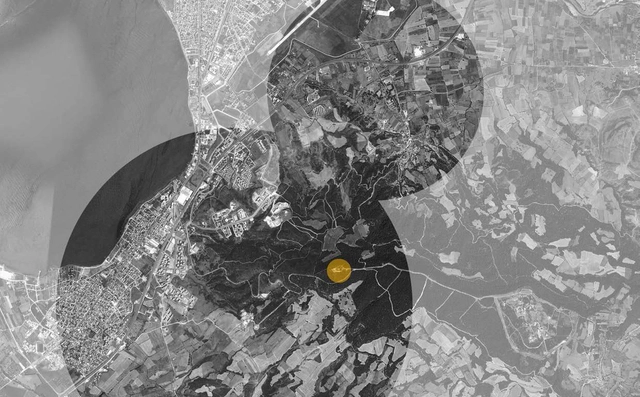
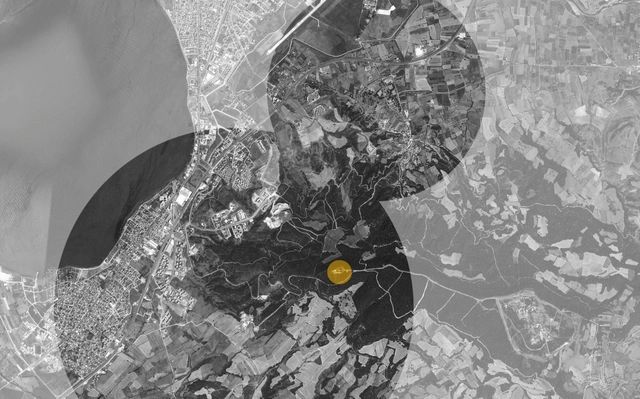
Çanakkale, a city of unique urban heritage, is situated on the northwestern coast of Turkey along the Aegean Sea and Dardanelles. The new antenna tower to be designed will be located at the southern outskirt of Çanakkale and will broadcast to the surrounding cities. The site for the proposed tower is on the top of a hill -and within a national forest- providing stunning views of the Dardanelles.
The competitors are strongly recommended to consider the technological requirements of the broadcasting tower and recreational potentials of a public entity with equal emphasis.
The scope of the competition is not only limited to the design of an iconic antenna tower but also includes development of innovative concepts for creating outdoor and indoor spaces enabling public programs of leisure, recreation and exhibition that will attract local people as well as tourists. The design and the position of the project should create a destination in the region that will be renown throughout Turkey.
Following a competitive interview process Grimshaw, in partnership with Nordic Office of Architecture, has been appointed by the Turkish consortium of Cengiz, Mapa, Limak, Kolin and Kalyon to design the terminal complex for Istanbul New Airport.
Located on the Black Sea coast, some 35km outside of Istanbul, the ambitious six-runway development, masterplanned by Arup, will be delivered in four phases. The first phase will open in 2019 and aims to serve 90 million passengers per year. This will increase to 150 million passengers per annum once fully complete. The new airport will include the world’s largest airport terminal, with a gross floor area close to one million square meters.
Arkitera Architecture Center is an independent architecture center that has been dedicated to sustain a better architectural practice, enhance the architectural culture and to raise the architectural quality in Turkey.
ARKIMEET, one of the brands created by Arkitera Architectural Center, is developed as the most significant meeting platform among the architects in Turkey. With the motto "ARCHITECTS MEET in ISTANBUL", the event will comprise national and international conferences, panels and award ceremonies to honor individuals and institutions which contribute to the improvement of the urban quality. In addition to these activities and awards, it is aimed to provide opportunities to establish one-to-one connections among the participants and providing appropriate meeting occasions.
Last June we covered some of the anti-government protests that were taking Turkey by storm - but the Turks are still making headlines! Last week, one Istanbul resident decided to paint a derelict public stair only to find it hastily covered up by government workers. In an act of “guerilla beautification” and silent protest, people across Turkey have once again taken to the streets to paint their stairs and public walkways in rainbow colors. For the full story, check out this article on The Lede by Robert Mackey.
In an effort to protect Turkey’s historic skylines from uncontrolled urbanization, the Turkish Parliament has passed an amendment that would grant zoning authority to the Ministry of Environment and Urbanization as well as set up an aesthetic architectural commission.
The efforts of thousands who occupied Gezi Park, and those who joined them in solidarity via social media from around the world, have paid off. According to Reuters, a Turkish court has ruled against the Prime Minister Tayyip Erdogan-backed development in which proposed to redesign Istanbul’s iconic Taksim Square and replace one of the populated city’s few public parks with a mall.
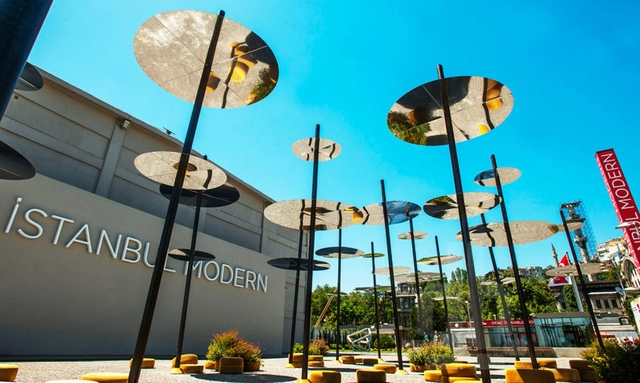
Though temporarily postponed due to the Gezi Park protests, SO? Architecture and Ideas has celebrated the opening of their winning entry - Sky Spotting Stop- for the 2013 Young Architects Program (YAP) at Istanbul Modern in Turkey. Offering refuge from the historic city’s busy streets, the fragmented canopy of reflective circular discs invites visitors to “sit, rest, gather, play, or skyspot” while overlooking the mouth of the Bosphorus.
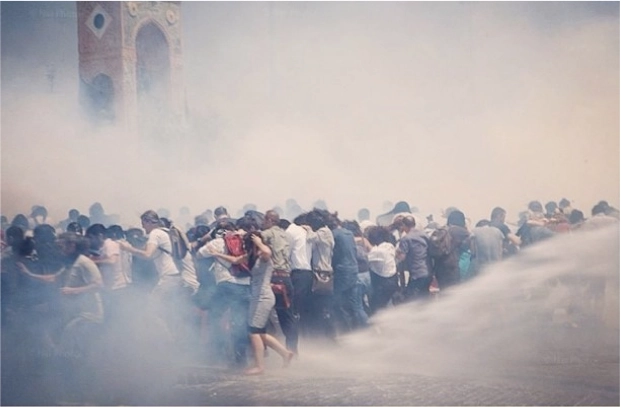
Over the last two weeks, the world has witnessed history unfold in a small park in the heart of Istanbul, Taksim Square. What started out as a peaceful protest to save Gezi Park and its trees from destruction has turned into a country-wide (and, to some degree, worldwide) movement that rejects the ever-increasing autocratic tendencies of Prime Minister Recep Tayyip Erdogan.
The urban policies and projects that PM Erdogan and his government have been loutishly implementing in Istanbul offer only a few examples of the way this government has manifested its undemocratic attitudes. In that regard, it would be misleading to consider the protest over Taksim and Gezi Park as an isolated incident. Instead, development over Istanbul’s quintessential square constitutes the last straw in a series of neo-liberal policies, themselves the result of a century of history, that have shaped Istanbul over the course of the last decade.
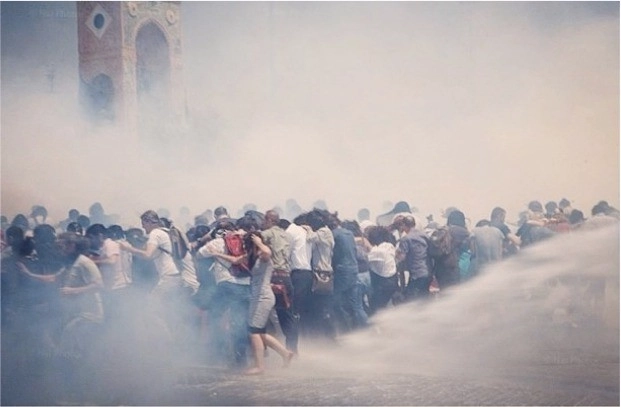
The impending destruction of the last public park in Istanbul was the straw that broke the camel's back last Tuesday. When a peaceful demonstration to save Taksim Gezi Park was met with violent police retaliation, the situation quickly escalated into a nationwide protest against the increasingly authoritarian Turkish government. At this moment all across the country, thousands are standing up not only for Gezi Park but for the right to shape the place that they call home.
More information on the situation in Turkey after the break.
In its third year, the AA Istanbul Visiting School, Vertical Interventions, in collaboration with Istanbul Technical University, will continue to rediscover verticality through novel generative design techniques and large-scale physical prototypes. Abstracted as a fusion of various sub-systems, each subsystem of the tower will be investigated in relation to their various performance criteria. The correlations between the separate sets of performance criteria and evaluation methods will be analyzed, leading to the generation of unified design alternatives for a vertical system typology. In addition to the custom-made digital design and evaluation tools supporting the core methodology, Vertical Interventions will also highlight the fabrication and assembly of a large scale working prototype integrating the performative characteristics of each system in examination.
As in 2012, the design agendas of AA Athens and AA Istanbul Visiting Schools will directly create feedback on one another, allowing participation in either one or both Programmes.
In an effort to maximize Istanbul’s potential of becoming a bustling regional hub, Transport Minister Binali Yildirim has released a request for proposals to construct and operate what could potentially be one of the world's largest airports. With the Ataturk airport - Turkey’s largest airport which handled nearly 45 million passengers last year - steadily reaching capacity and limited by land restrictions, the new $9 billion dollar, six-runway airport promises to expand the country’s aviation capacity with the potential of handling 150 million yearly passengers.
“The new airport project will be bigger than any other in Turkey and will be part of our plan to build a new city on the Black Sea coast,” Yildirim said, according to Bloomberg.