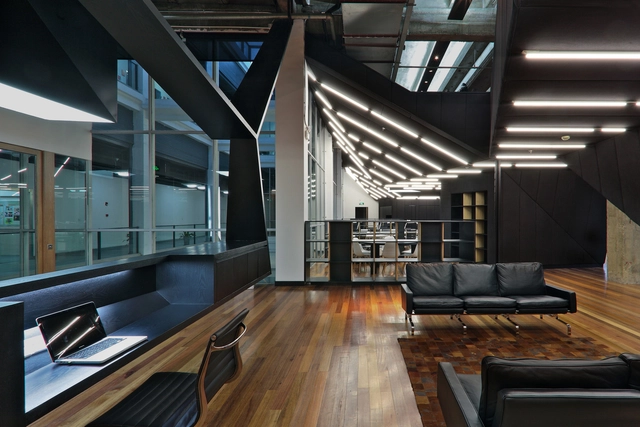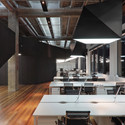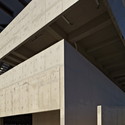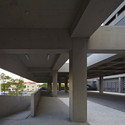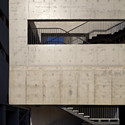

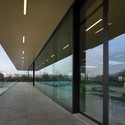
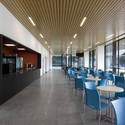

-
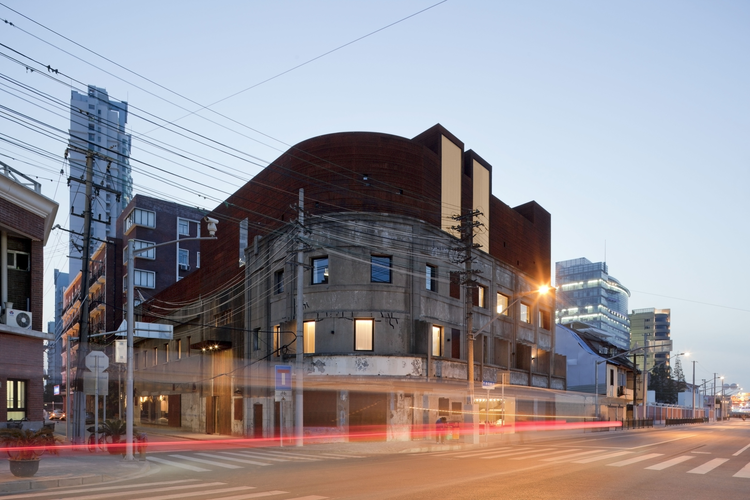
Architects: EXH Design
- Area: 3500 m²
- Year: 2009


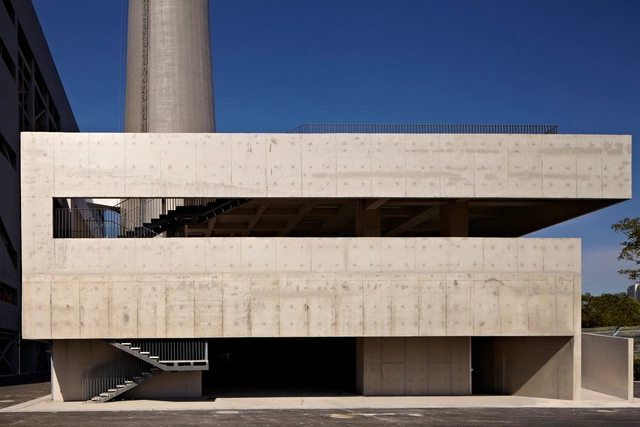
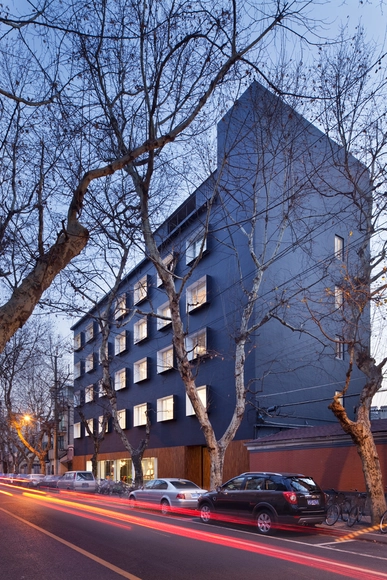


In an article published by The Wall Street Journal called For Creative Cities, the Sky Has Its Limit, Richard Florida discusses the development of urban environments and their relative successes. As human migrations are trending towards big cities, the design and appropriation of space within these cities is increasingly important. Florida cites that trends indicate that by 2050 cities will make up 70% of the global population. With so many people, elevate density within cities will be unavoidable, but what Florida emphasizes is that it isn’t just density that makes a vibrant and thriving city. Citing Shanghai and New York City as examples of dense urban environments, Florida explains the differences in their relative architectural and urban developments and the prosperity that follows. The fundamental difference? The prevalence of mixed-use neighborhoods in New York City that overpower the innovation of strictly financial districts of either New York or Shanghai.
Let’s look at these examples after the break.

“Flip/City”, a proposal by PinkCloud.DK which was shortlisted in the 2012 Rethinking Shanghai competition, proposes a new urban identity for Shanghai as a model for the development of future cities. By flipping the horizontal cityscape to the vertical, footprints of Shanghai’s existing typologies, only visible by plane, embody the new face of the vertical city. By expanding Shanghai up along the vertical plane, unused urban voids will be activated. More images and architects’ description after the break.

Sponsored by Cannon Design, the ‘(un) Made in China’ Exhibition will be taking place April 20 – June 20 at the ide@s gallery in Shanghai, China.Thirty years of unprecedented growth have transformed China’s built environment and given it the reputation as a land of opportunity for architects today. While much attention – and some criticism – has been focused on major completed works, little is known of those projects that disappear, fizzle out, or sit abandoned in spite of the rich tradition within architecture of both celebrating and criticizing unbuilt work. “(un) Made in China” seeks to bring light to these could-have-been-transformative projects and the experiences they produced. At its heart is a series of interviews conducted with 12 international architecture practices, which generate a wealth of interesting, insightful, and often humorous accounts and accompanying these are architectural models and images of the unrealized projects. For more information, please visit here.



Architectural firm 10 Design from Shanghai and Hong Kong is inviting anyone of all ages – architects, students artists, all who are interested – to take part at their recently started competition, Re-thinking Shanghai 2012.

Next week we will be taking our Architecture City Guide to Shanghai and we need your help. To make the City Guides more engaging we are asking for your input on which designs should comprise our weekly list of 12. In order for this to work we will need you, our readers, to suggest a few of your favorite modern/contemporary buildings for the upcoming city guide in the comment section below. Along with your suggestions we ask that you provide a link to an image you took of the building that we can use, the address of the building, and the architect. (The image must be from a site that has a Creative Common License cache like Flickr or Wikimedia. We cannot use images that are copyrighted unless they are yours and you give us permission.) From that we will select the top 12 most recommended buildings. Hopefully this method will help bring to our attention smaller well done projects that only locals truly know. With that in mind we do not showcase private single-family residences for obvious reasons. Additionally, we try to only show completed projects.