This July 11 marks World Population Day, an annual event established by the United Nations Development Programme (UNDP) in 1990 to raise awareness of global demographic issues. This is a critical issue today; not only is the global population projected to reach nearly 10 billion by 2050, but the latest UN-Habitat reports estimate that, by then, two-thirds of the world will live in cities.
Every year, World Population Review assesses urban growth and the number of residents living in metropolitan areas to understand global development trends. While the list of the 20 most populous cities in the world features recurring Asian hubs like Tokyo, Delhi, and Shanghai, it also includes several Latin American metropolises such as Sao Paulo, Mexico City, and Buenos Aires. Consequently, we have compiled a list of the ten most populous cities in Latin America to understand their growth and role in the global context.
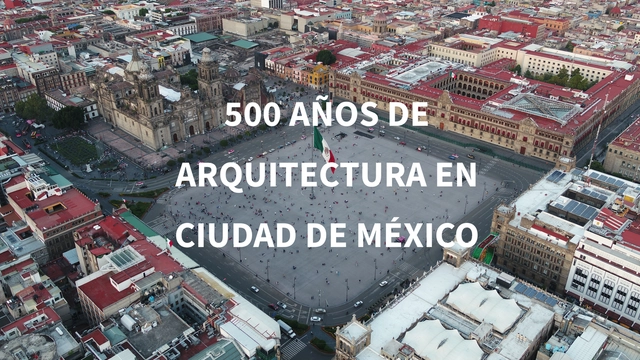
Today, August 13, commemorates two pivotal events in Mexico's history: the approximate founding of Tenochtitlan, capital of the Mexica civilization, around 1325 on an island in Lake Texcoco in the Valley of Mexico; and the fall of this empire in 1521 to the Spanish army led by the conquistador Hernán Cortés.
These are just a few of the many events that shape today's Mexico City, making it nearly impossible to summarize them all. Nonetheless, revisiting some of these milestones helps us understand the very ground we stand on and, above all, reflect on the future of our actions as architecture professionals: from the pre-Hispanic period, colonization, Independence, and the Revolution, to the foreign influences of the Modern Movement and the diverse interpretations that culminate in what we recognize today as contemporary architecture.
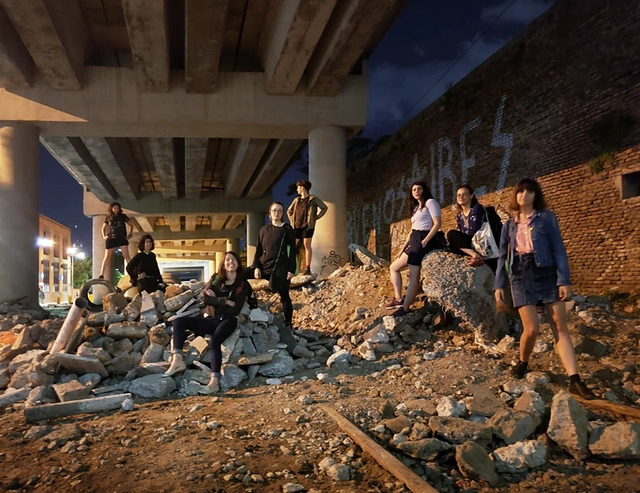
It is well known that since its inception, the field of architecture has been predominantly composed of white, cisgender men, who to this day continue to occupy some of the most prominent positions in both architectural practices and prestigious awards. For this and many other reasons, the struggle to bring visibility to women in architecture has always been present, responding to the specific demands of each era and winning increasingly significant battles. However, inequalities persist, making it a challenging profession for women—and even more so for women of color, Indigenous women, Latinas, and those from disadvantaged economic backgrounds.
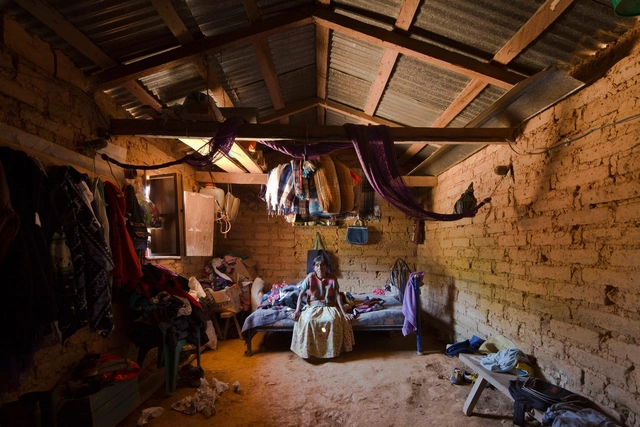
In Latin America, the concept of emergency architecture refers to spaces that serve as temporary shelter in the face of adverse circumstances, such as earthquakes, floods, and migration. Various countries, including Mexico, Chile, Colombia, Ecuador, Uruguay, and Panama, have faced events that required redefining emergency housing according to each nation's specific needs.
The history of light has undergone various transformations over the centuries; its intrinsic relationship with architecture itself has sparked expressions and critiques that, beyond serving as a tool to illuminate the inhabited world, directly influence how we perceive it and how the built environment is produced. Every lighting project is directly tied to its own understanding of quality, class, interpretation, intention, and meaning.
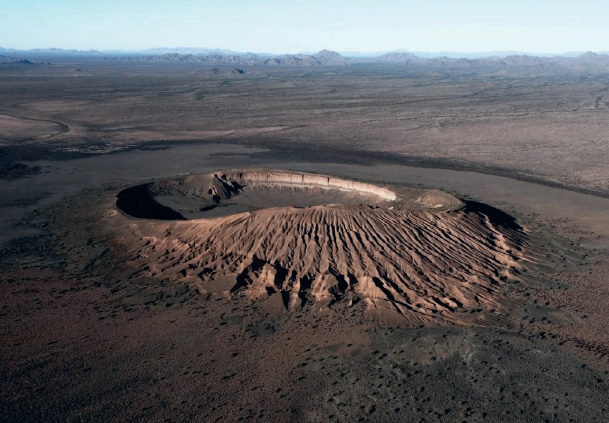
Santiago Arau is a renowned photographer whose work focuses on aerial shots of the Mexican territory. His lens travels from Ciudad Juárez to Cancún and Holbox, from the northern border to the Mexican southeast, spanning from 5,500 to minus five meters above sea level, from minus 15 to 45 degrees, and covering over 5,000 kilometers. Arau defines this approach as "a different perspective than what we are used to, since seeing things from above situates where we stand; it is a way to calibrate the human, urban, and geographical scale within a territory. The framing possibilities a drone offers are infinite; you can choose the height, framing, and technique to photograph an object, maximizing the power of a camera."
“Earthquakes are a naturally destructive effect of our earth's constantly changing surface” -National Geographic, “Latest Earthquakes–and How Earthquakes Work”, February 2018.
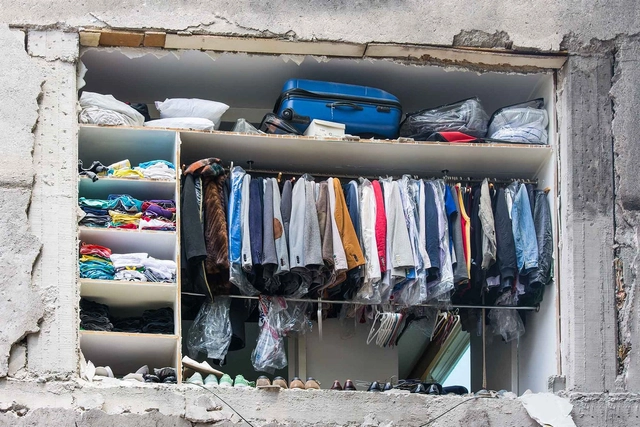
ReConstructo is a group exhibition curated by Mexican architects Luis Carbonell and Andres Souto, presented at Zuecca Project Space in parallel with the International Architecture Exhibition of the Venice Biennale 2018. The exhibition offers a multifaceted look at simultaneous and overlapping readings of the actions and agents of destruction that subsequently paved the way for a latent reconstruction following the 2017 earthquakes in Mexico.
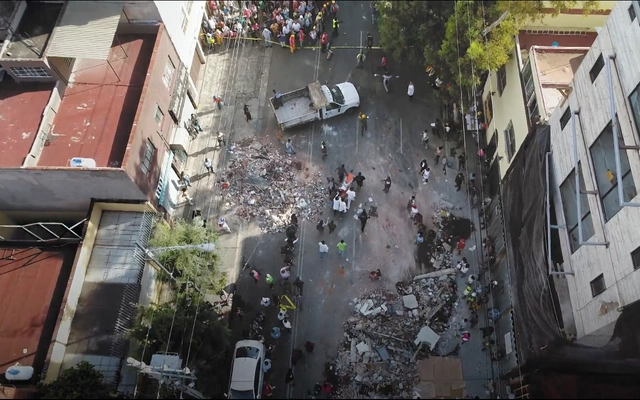
As part of The New York Times' documentary series "En los ojos de México" –where six filmmakers present a perspective on their country– Santiago Arau and Diego Rabasa present "Ciudad Herida" (Wounded City), a chronicle of the 2017 earthquake in central Mexico. Through drone footage, the film captures the strength and resilience shown during a moment of crisis.
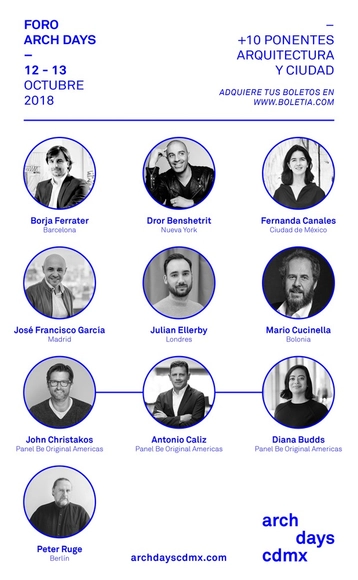
The Arch Days CDMX Forum will bring together national and international figures in the fields of design and architecture to explore the connections between creativity, education, and innovation, with the goal of proposing global solutions for sustainability.
The renowned DWM design thinking forum, known as Creativity & Change, is evolving into the Arch Days Forum. This international event will feature architecture professionals discussing the intersections of creativity, education, and innovation to propose global solutions for sustainability.
In the architectural history of the Mexican territory, the built environment has functioned not merely as a human stage, but as a biological infrastructure designed to organize proximity between species. The resulting spatial logic is not a solo performance, but a negotiated coexistence between human and animal bodies. To examine this heritage today is to shift the analytical focus away from stylistic authorship and toward a more fundamental phenomenon: the persistence of spatial practices that emerged to sustain shared forms of life.
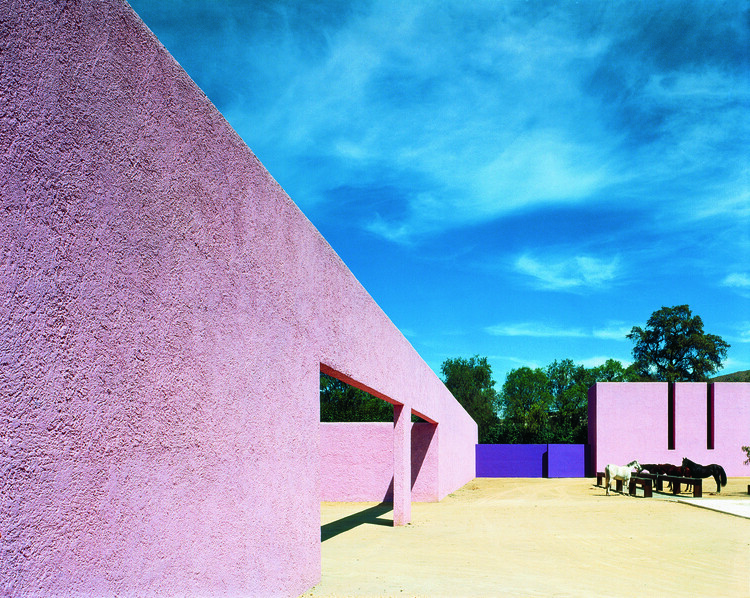
Many of the architectural features now interpreted as cultural or aesthetic markers — oversized thresholds, expansive patios, and durable surfaces — can be understood instead as material traces of an interspecies contract. For centuries, horses, mules, and livestock were not external to architecture but essential inhabitants whose physical presence shaped scale, circulation, and material choices. Their bodies left measurable imprints in space, from the height of entrances that accommodated mounted riders to paving systems designed to withstand hooves, friction, and biological wear. Nowhere was this contract more visible than at the ground level of the colonial house.
A look at most of the cities within Latin America reveals striking commonalities across countries, from Mexico down to Argentina: most cities have a well-defined area known as "El Centro" (The Center), anchored by a main plaza (Plaza Mayor), flanked by a church on one side and key buildings like the city hall on another. This is no coincidence, as it can be traced back to an urban planning system established during the Spanish colonization of the Americas in the 17th and 18th centuries. It gave standardized guidelines for city design across its viceroyalties. Unlike French and English colonies, Spanish settlements adhered to regulations that contributed to the emergence of a shared urban identity, with cities displaying similar spatial logic and architectural cohesion despite differing scales and contexts.
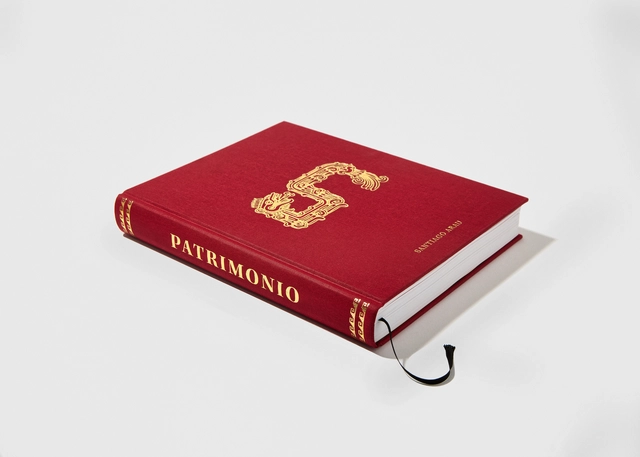
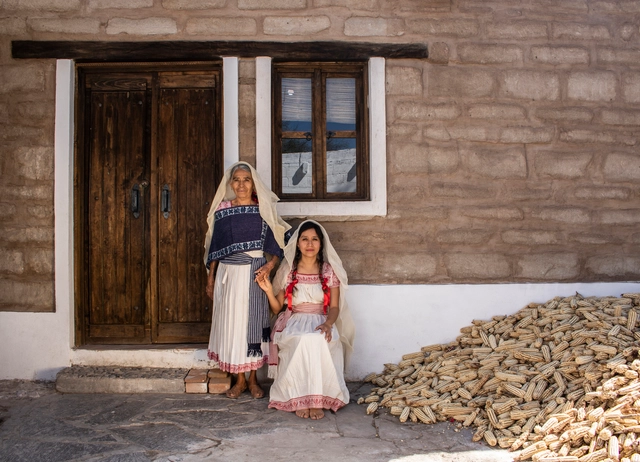
The heritage of Mexico City is extremely rich and diverse due to a long history that overlays like layers above the urban fabric since pre-Hispanic times. Currently, it is one of the largest cities in the world, and its heritage is reflected in its architecture, museums, historical sites, cultural traditions, protected sites, gastronomy, and much more. This chronology has been evidenced through various historical records. However, contemporary recording is essential in moments where we are writing history immediately with different digital tools.
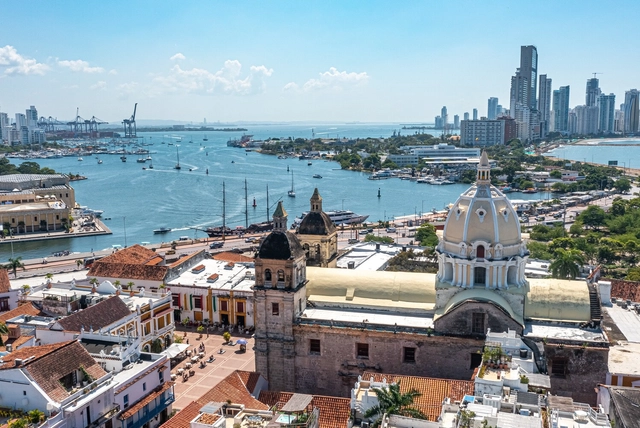
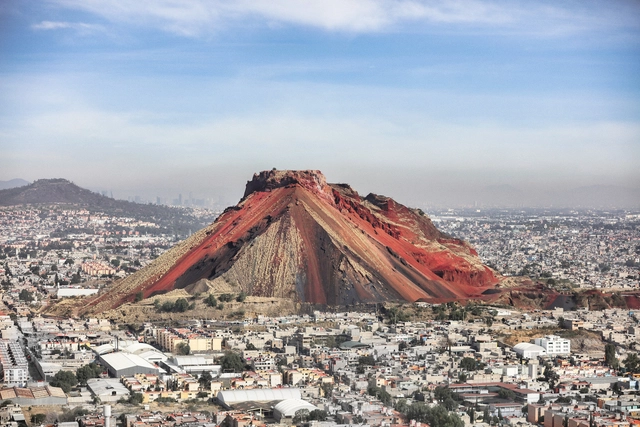
The project consists of approximately 200 photographs taken between 2015 and 2023, aimed at exploring the heritage of the Valley of Mexico—its geography and culture—and representing the current state of that heritage. The narrative begins with the volcanoes of a city surrounded by and built upon them. Beyond featuring well-known peaks like Popocatépetl, this personal quest led Santiago to discover others that have been assimilated into the urban environment. The images reveal craters that now house soccer fields, farmland, landfills, and even dwellings.
The Venice Architecture Biennale is an event organized by the Italian State that brings together some of the world's most prestigious international architecture exhibitions. The Giardini and the Arsenale serve as the event's main venues. These spaces have hosted various exhibitions, national pavilions, and collateral events spread throughout Venice.
The 8th March is a date set by the UN in 1975 to remember the struggle for equal rights and universal suffrage. This commemoration brings together the efforts of women who demanded their right to vote, work, professional training, hold public office, and fight discrimination in the workplace. This struggle is the fruit of the work of women who sacrificed themselves for the cause. Various events that we experience on a daily basis show that the social situation has changed. However, it is essential that both men and women commit themselves to progress and justice in order to make things happen.
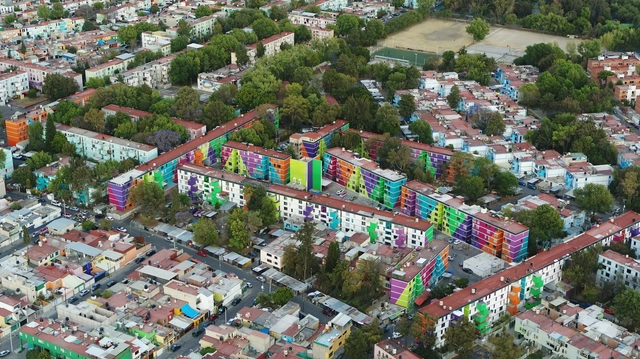
Forty-seven years after construction began on the El Rosario housing complex—the largest housing development in Mexico at 350 hectares—the Azcapotzalco borough of Mexico City, in coordination with the city's Social Prosecutor's Office and the ICA Foundation, inaugurated the photographic exhibition “The City within the City: El Rosario” on March 25 at Plaza El Parián. The exhibition aims to show residents and visitors the evolution this complex has undergone over time.
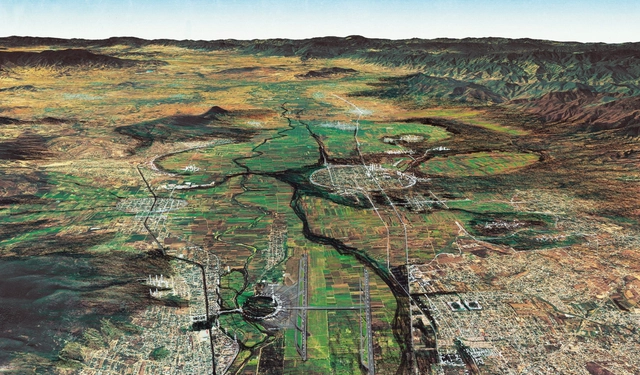
'Territorios y vivenda' (2018). Image Cortesía de Alberto Kalach
When looking at the population of the world's metropolises, in this case Mexico City, the reality is that the majority of the people living there have migrated from other regions of the country and, sometimes, from other countries as well. Of course, thanks to the Covid-19 pandemic, companies and schools have gone virtual, and, with their work and studies no longer tied to urban centers, people have left in masse for the coast and other less populated areas in search of space and lower living costs.
As the philosopher Byung-Chul Han states: every age has its signature afflictions. These illnesses have represented some of the most significant challenges in human history, bringing drastic changes not only to the healthcare sector but also to economic and political spheres, revealing humanity as a complex network negotiating its daily existence through actions that have reshaped our ways of living and relating to one another.



.jpg?1615489068&format=webp&width=230&height=230&crop=true)


















.jpg?1611548432&format=webp&width=230&height=230&crop=true)

_22.43.53_(1).jpg?1611548822&format=webp&width=230&height=230&crop=true)

_22.43.53.jpg?1597908512&format=webp&width=640&height=580)


_22.43.53.jpg?1597908512)