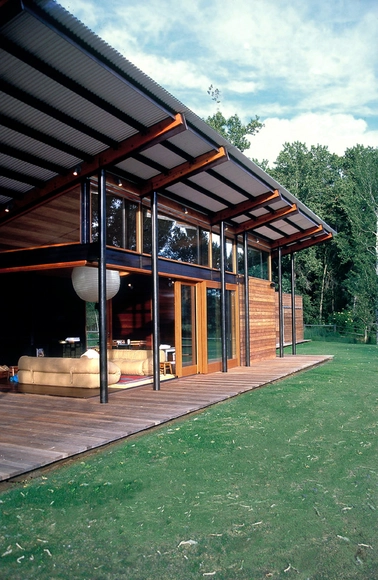
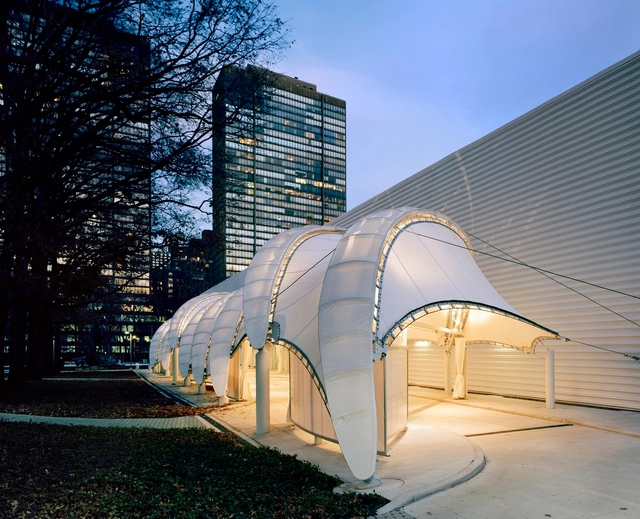
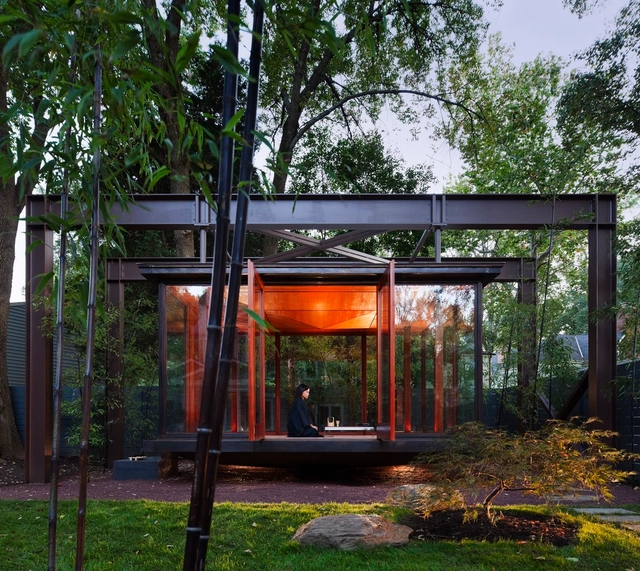
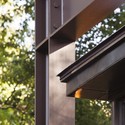
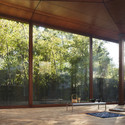
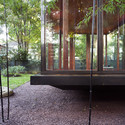
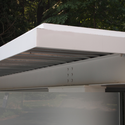
A couple of months ago we showed you Noa Biran and Roy Talmon’s design for the Warming Huts Competition, which asked for ideas for shelter to be constructed along the Assiniboine River in Winnipeg, Canada. The project was constructed and the architects shared with us some great photos. Check them all after the break.
South Korean architects thegroundstudio shared with us their winning proposal for the Shop & Cafe + Pavilion Redesign Competition at the entrance of Seoul National University’s main gate and SNU Museum. More images and a brief description after the break.
Architects’ Week is a longstanding tradition of the Tulane School of Architecture as a weeklong, design and build, group project. It is a unique occasion for students to work not only with a proven designer, but also with fellow students. The exact form that it takes varies from year to year. In 2010, A-Week groups created information kiosks for New Orleans. The year before was an exploration in rethinking the bench. This year the project brief was a bit different. The project brief, images and descriptions of each student project and the winning design after the break.
Greek architects, mab architecture, have shared with us their interactive, multi sensory pavilion, Plinthos. Additional images, multiple videos and a description of this visually striking project after the break.
Shane Neufeld and Kevin Kunstadt have worked together to create Kissing Booth, a progressive warming hut for the Assiniboine River and Winnipeg. Follow after the break for additional rendering, diagrams and a quick description from the designer.
buijsenpennock architects has shared with ArchDaily their competition entry for a water sport pavilion. Additional renderings and a brief architects description after the break.
Canadian design team Open Form has shared with us their recent competition entry for the new Trois-Rivières Amphitheatre. Additional images and a description from the architects after the break.
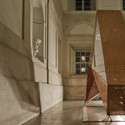
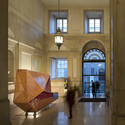
The installation of Emergency Exit, the Polish Pavilion at the 2010 Venice Architecture Biennale, by artist Agnieszka Kurant and architect Aleksandra Wasilkowska, seeks to go beyond the logic of urban reality through the creation of ‘urban portable holes’: in-between spaces, places of uncertainty and doubt, of time-space discontinuity, such as abandoned or unfinished buildings, sites of catastrophe or accidents, illegal markets, rooftops and tunnels. The title refers ironically to the health and safety regulations in buildings and urban space that seek to plan, control risk and eliminate the accidental and unexpected. More images and architect’s description after the break.