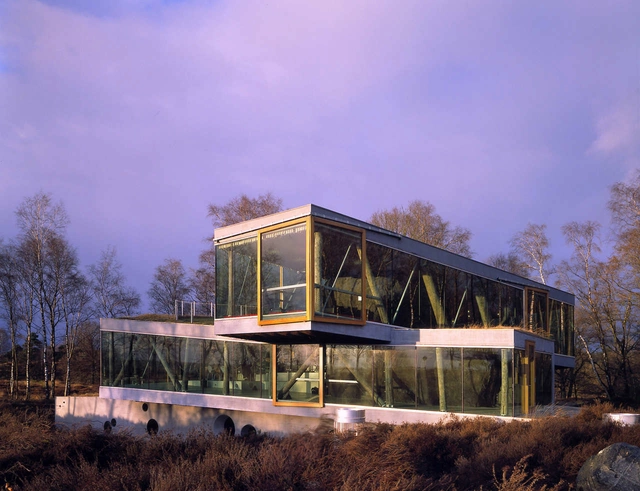
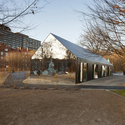
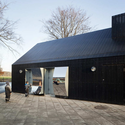
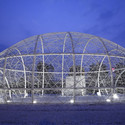
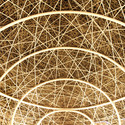
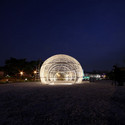
Located in natural surroundings close to the mountain, river, and wetland in the west south suburb of Beijing, Atelier 11’s proposal for the main pavilion of the Expo aims to create an artificial landscape. Rather than a manmade construction, their design echos the park’s site condition and the Expo’s particular theme. Simplistic form, unique spaces, and flexible planning become elements that both facilitate and influence one another in the overall design. More images and architects’ description after the break.
Grenade, the proposal for the CityVision Inflatable Pavilion competition, by SITBON Architectes aims to create a relation with its environment. The theme of the pavilion is to think of the city as an immense architecture in constant mobility, by the transformation of its town planning, of the wanderings of its inhabitants, etc. The time dimension becomes essential in this management of the living area. By lauding the mobility, they question the vision of the architecture as a motionless element to in-vest it with another appropriate life, which allows each one to grow, to be transformed and to move. More images and architects’ description after the break.
The shortlisted proposal for the Swedish Pavilion at the upcoming 2012 World Expo by Stockholm Field Office, in collaboration with Fieldwork, is based on the idea of gradients; the gradual shifts in Swedish landscape and relatively smooth changes in Swedish society. This idea is interpreted into different spatial elements, gradually fading between different points in space. They create the physical environment of the exhibition space, showcasing information and objects as well as guiding the flows of visitors through the space. More images and architects’ description after the break.
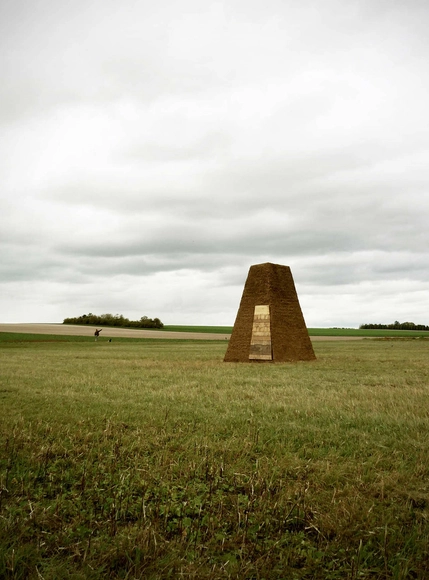
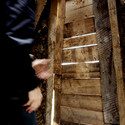
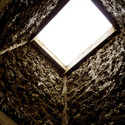
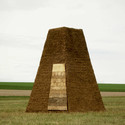
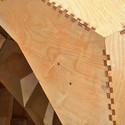
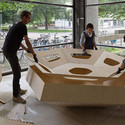
“A Thousand Traps to Escape” is a temporary installation designed by 13 students from Laval University under Olivier Bourgeois in the Magdalen Islands in Quebec, Canada. The project builds on the collaboration of themes of architecture, art, landscape and installation in the creation of space based on simple materials, the landscape and “the basic rules of construction”. The “local material” chosen for this construction is the ubiquitous lobster trap made of wood and fishnet. Its formal simplicity allowed for an basic stacking technique that produced relatively complex visual results of transparencies and opacities.
Read on for more information on the development of this project.
Serie Architects‘ proposal was recently selected as the design for the 2012 Olympic Pavilion for BMW following a sustainable design competition. Their cutting-edge design will represent a significant architectural addition to the Olympic Park, while reflecting the company’s deep commitment to sustainability. BMW’s pavilion, which has a floor space of 800m2, will be built on an elevated site above the Waterworks River, situated between the Olympic Stadium and the Aquatics Center. More images and architects’ description after the break.
Morris Architects shared with us their Houston Pavilion for the 8th China International Garden Expo in Chongqing, China, which is a showcase for a variety of landscape typologies throughout China and the world. The theme, “Better Garden, Better City”, promotes harmony between landscaped and built spaces. The City of Houston is one of thirty-two international cities invited to participate in the Expo. Morris Architects partnered with SWA Group to design the Houston Pavilion. More images and architects’ description after the break.
The series of a pavilions with different public functions and programs by AWP + HHF Architects are part of a future 113 hectare large public green space along the Seine river, in Carrière-Sous-Poissy, at the end station of the RER line A and close the renown Villa Savoye from Le Corbusier. The Park designed by the Paris based landscape architects Agence TER will be a public park and ecological showcase for local residents and a leisure destination for people living in and around Paris. More images and architects’ description after the break.
Held every five years, the competition for this year’s pavilion called for a temporary building which may be easily disassembled and relocated to another site. The modular pavilion by Prechteck exists of different parts, housing different functions, all singular cells, but the strongest in coexistence with its neighboring parts. The main concept is that during the 5 years, each cell can be assembled in a different German city and serve as an info booth to the next. At the beginning of the next five years, the parts get transported back and get reconnected on site. More images and architects’ description after the break.