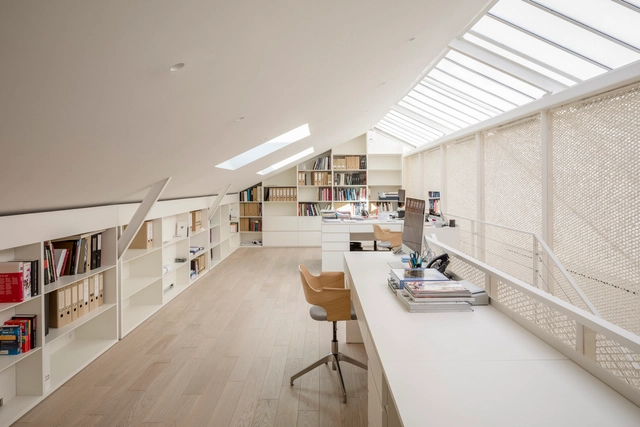
Context:
The project concerns the interior design of an atelier which was used as by an artist, on whom we realized a new space of work as archives.



Context:
The project concerns the interior design of an atelier which was used as by an artist, on whom we realized a new space of work as archives.
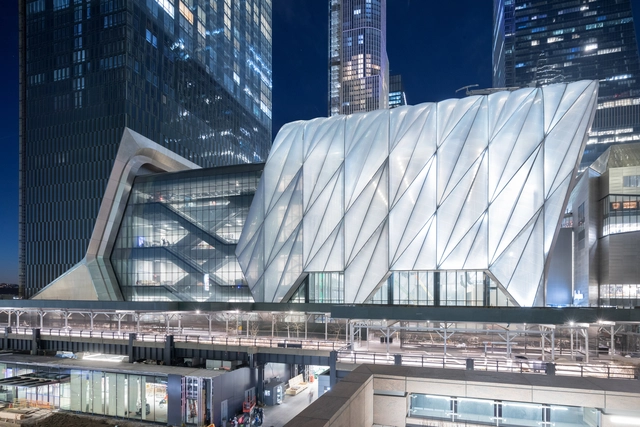
The Shed is a nonprofit cultural organization that commissions, develops, and presents original works of art, across all disciplines, for all audiences. The Shed’s Bloomberg Building can physically transform to support artists’ most ambitious ideas. Its eight-level base building includes two levels of gallery space; the versatile Griffin Theater; and The Tisch Skylights, which comprise a rehearsal space, a creative lab for local artists, and a skylit event space. The McCourt, an iconic space for large-scale performances, installations, and events, is formed when The Shed’s telescoping outer shell is deployed from over the base building and glides along rails onto the adjoining plaza.
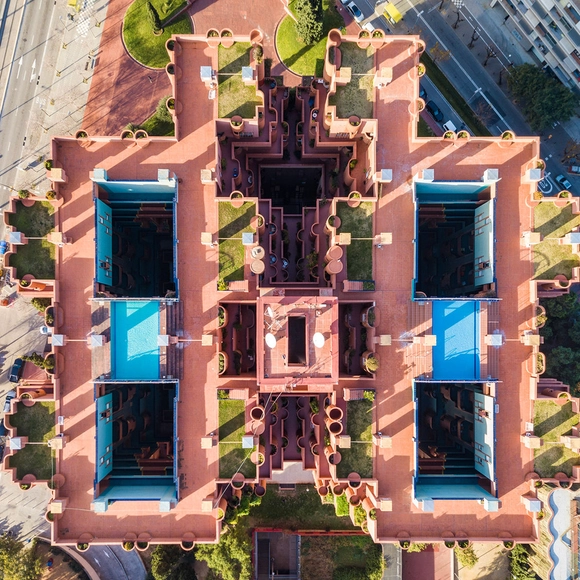
Exploring the streets of foreign cities is profoundly engaging. Whether it's meeting new cultures, observing new architectures, or trying new food, travelers usually go for the typical sightseeing activities. However, some have quite a unique take on tourism and choose to think outside the box - or in this case, above it.
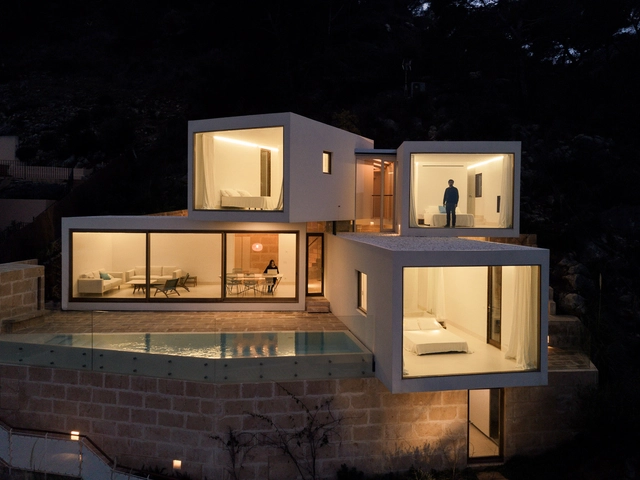
The House is located in a steep and rocky hillside covered in the local wild vegetation, from which you can enjoy a magnificent view of Canyamel Bay. The plot is accessed from the ground level; from there you can choose between a gentle zig zag path and an elevator that will take you to the main entrance. Just as you cross the front door you are greeted by the first view of the bay, framed by the infinity windows on the living-dinner room. These magnificent views will be the backdrop for every interior space in the house. Also in this floor you will find a bedroom with an en suite bathroom, kitchen and utility room, leaving two more en suite bedrooms on the top floor.
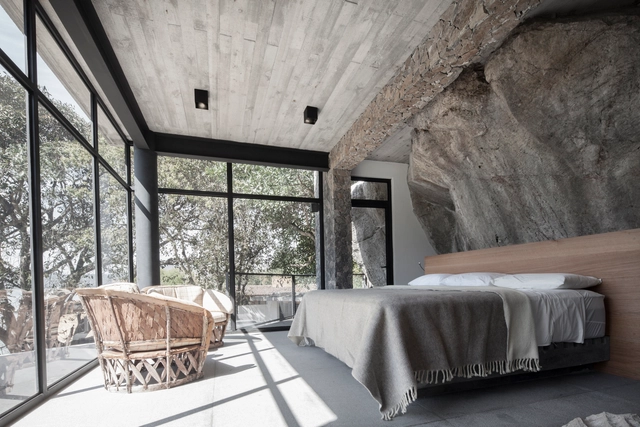
To properly contextualize a new work is of utmost importance, especially in interventions of existing projects, in cases of renovations and/or extensions. In a certain way, the natural context in which they are situated is already influenced, as an intrinsic part of the environment.
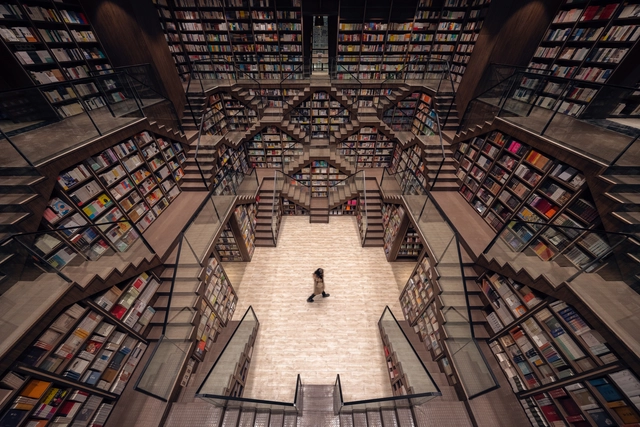
As one of the world’s largest inland city of mountains and rivers, Chongqing is a city full of surprises and wonderful and charming corners. Since ancient times, its landscape and numerous historical sites have attracted many ancient writers and calligraphers. Until today, Chongqing is still a city of attraction to everyone.
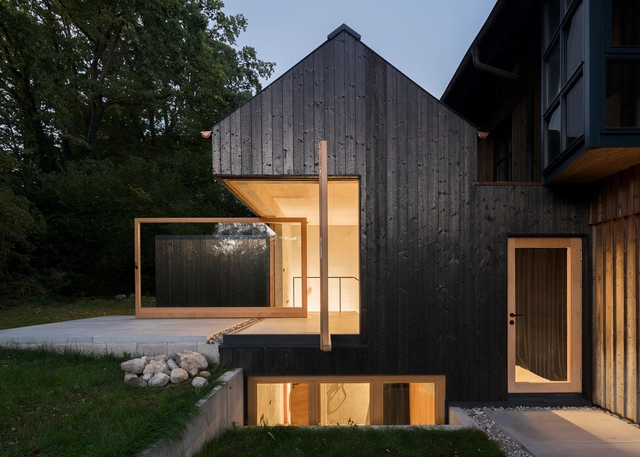
Rural areas in Germany are often characterized by urban sprawl, faceless villages and generic detached houses. This is especially the case for the eastern shore of Lake Ammersee, which lies inside Munich metropolitan region. A contrast is formed by a small black house that stands out from its surroundings solely on account of its carbonized facade. Unlike typical detached homes it is located between two existing houses an office building and a multifamily home. And although it directly adjoins the latter it does consciously distinguish itself from its setting, so that it is perceived as an independent building. In this manner, a further element is added to the existing heterogeneous ensemble.
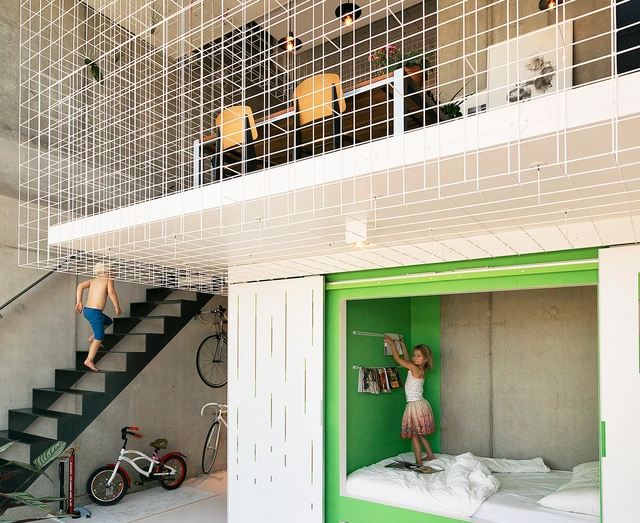
Casco Loft is an interior design project developed by FABRICations for one of the Superlofts Houthaven, in Amsterdam. The three stories dwelling takes advantage of the flexibility of the structure to deliver an innovative experience of a housing interior, in line with the resiliency principles of FABRICations. The design relies on a range of strategies that aim to privilege interaction and flexibility, encouraging shared activities and free use. Enclosed spaces, like the bedrooms, are minimized and strategically placed to leave visual and physical proximity of common spaces.
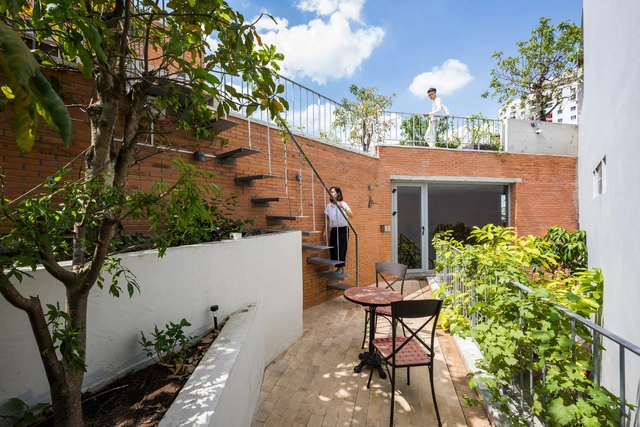
This is a private house project for the three-generation family located in an emerging residential area, 15-minutes drive from the center of Ho Chi Minh city, Vietnam. The newly built houses around the site form a highly dense neighborhood and they share the outer wall with each other. The site of project is in such a narrow site of 7 meter wide x 20 meter long.
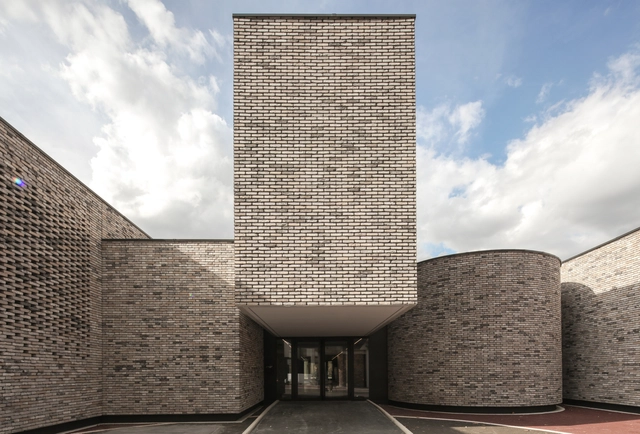
The new Élancourt Music School has taken up residence in the former ecumenical center of the Sept Mares neighborhood, one of the focal points founding the new town of Saint-Quentin en Yvelines. The building was originally a house of worship, a simple, without ornament and inward-looking construction owing to the peace and quiet required by its function. Philippe Deslandes built it between 1974 and 1977, with the desire that it embody the qualities of simplicity, modularity and anonymity.
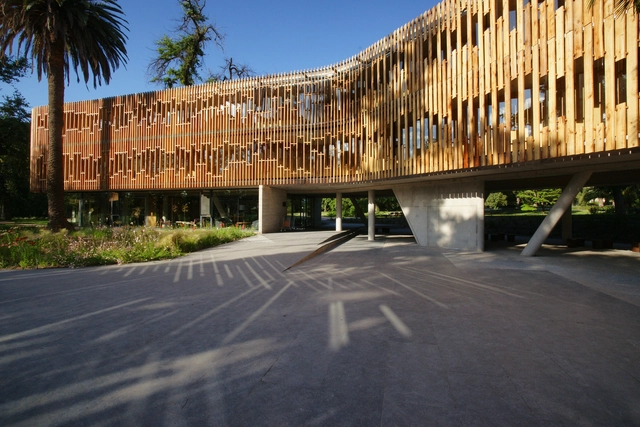
How to restore a centennial park that had lost its original layout? How to rethink the social role of a heritage milestone? How to place a 50-room building among the large existing trees? These are the questions posed by the Las Majadas de Pirque project.
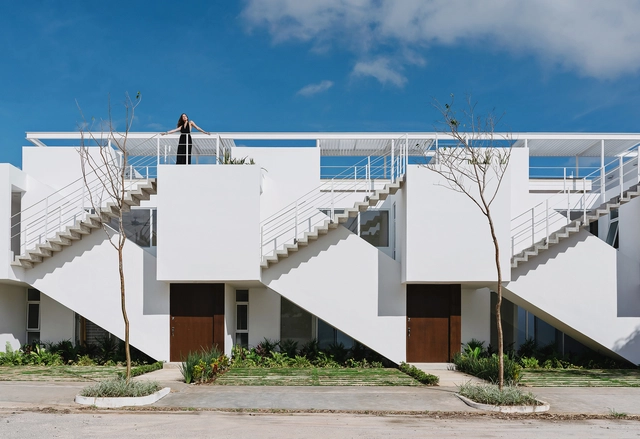
The solution was to remove vertical circulations from the inside, and the result was an intersection of two staircases, one closed and one open, which give the project a playful minimalism, but not in the plastic sense, but economic, taking the words of the client as a basis for the design. A façade with program, essential for the project, a façade that cannot be removed, with horizontal repetitions, which simplify the whole when seeing it in its entirety. The white color works as the guideline, as a integrator, leaving the sun to be the protagonist while painting the façade with light, turning the project into a canvas where the shadows can be seen in different forms throughout the day.
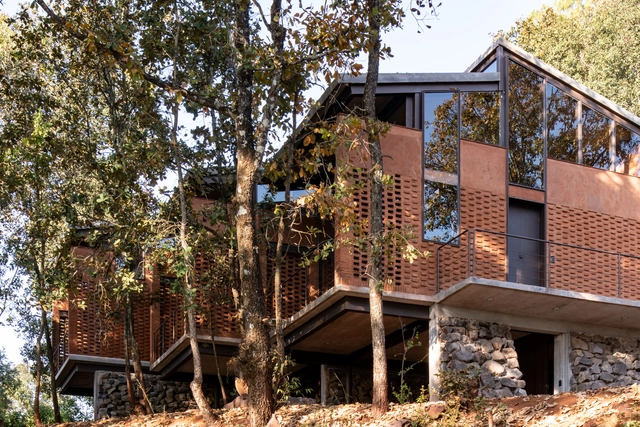
Casa Zirahuén’ is a holiday house located in a small town of Michoacán called Zirahuén. From de heights of the hills, the project rests amongs the site’s vegetation. The lake of Zirahuén is to the west, directing all the project’s views towards it.
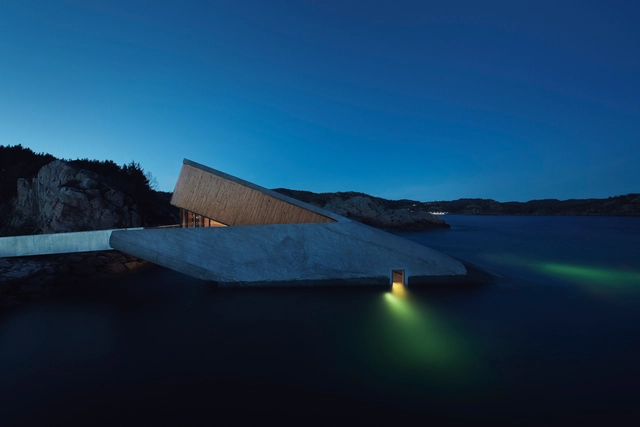
Located at the southernmost point of the Norwegian coastline, where the sea storms from the north and south meet, the project is situated at a unique confluence. Marine species flourish here in both briny and brackish waters to produce a natural abundance in biodiversity at the site. The Snøhetta-designed restaurant also functions as a research center for marine life, providing a tribute to the wild fauna of the sea and to the rocky coastline of Norway’s southern tip.
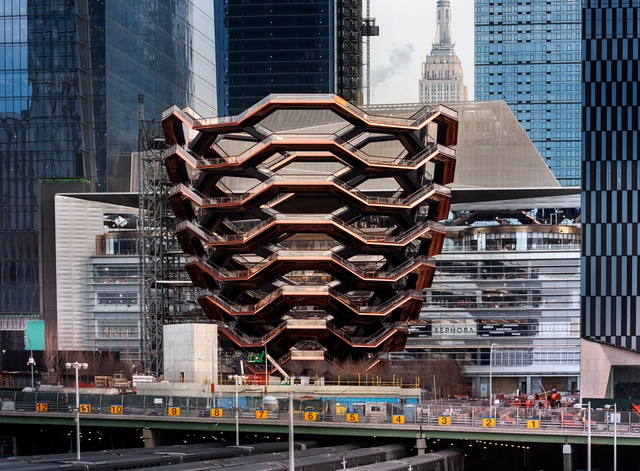
Vessel is a new type of public landmark – a 16-storey circular climbing frame, with 2,465 steps, 80 landings and views across the Hudson River and Manhattan. It is the central feature of the main public square in the Hudson Yards development, one of the largest real estate projects in American history, which is transforming a former rail yard in Manhattan’s Upper West Side into a completely new neighbourhood, with more than five acres of new public spaces and gardens.
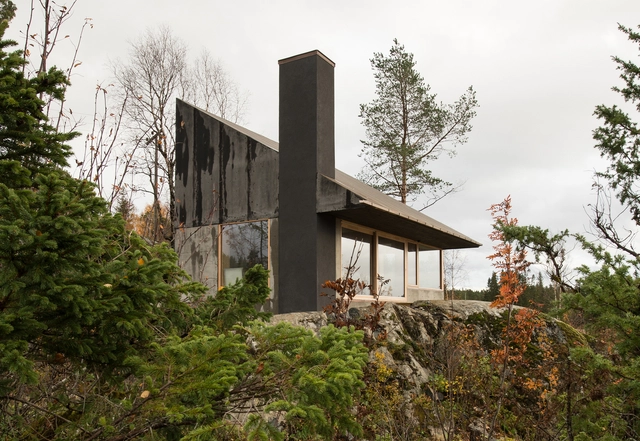
The small cabin is located at Rones, 150km north of Trondheim. The site is steep and rough with a view of the fjord. The cabin has a compact footprint which adapts to the landscape and preserves the site and its vegetation.
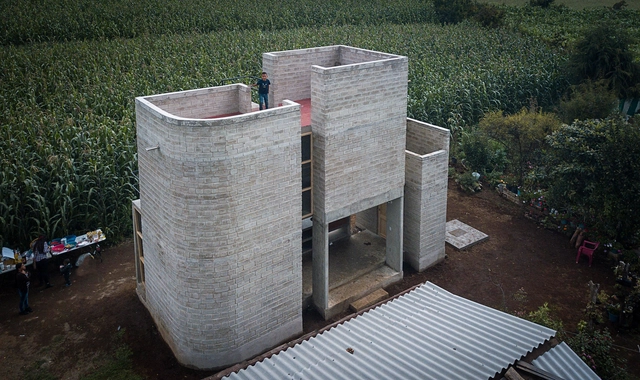
Following the earthquakes of September 2017, different architectural offices, designers and collaborators, both national and international, joined ReConstruir México, a project supported by PienZa Sostenible, which emerged with the aim of joining forces to achieve a conscious and sustainable reconstruction. Seventeen months after the tragedy, PienZa Sostenible has managed more than 150 reconstruction projects in 6 states thanks to the support of different donors, agencies and volunteers, with the aim of improving the quality of life of people in communities that not only suffered serious effects on their heritage, but also present serious cases of vulnerability and social deprivation.
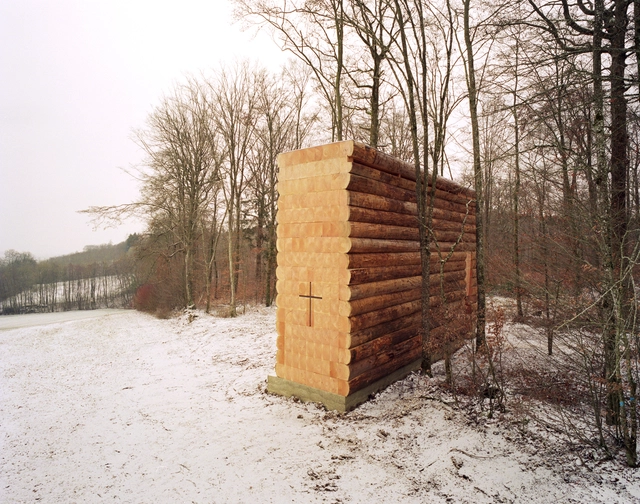
When John Pawson was commissioned by the Siegfried and Elfriede Denzel Foundation to design a wayside chapel for a site in southwestern Germany, he became part of a longstanding tradition of erecting chapels as spiritual and architectural features in the landscape. The purpose of the Sieben Kapellen or Seven Chapels project is to provide cyclists with a series of places in which to take shelter, but also to pause and reflect. A common brief for all of the seven chapels stipulated a timber construction, with a cross in the vicinity and provision of seating.