“I See My Work as Autobiographical”: In Conversation with Li Hua of TAO

Architect Li Hua was born in 1972 in China. He studied architecture at China’s leading school, Tsinghua University, from which he received his bachelor’s (1994) and master’s (1997) degrees. He continued his studies at Yale University, graduating with his second Master of Architecture in 1999. Hua then stayed in the US, practicing in New York at Herbert Beckhard Frank Richlan & Associates. The firm’s founders used to be partners at Marcel Breuer office before starting their own practice in the early 1980s. This experience introduced Hua to dealing with masonry and precast concrete, while working on cultural and educational projects in the New York area. Returning to Beijing in 2003, Hua established Universal Architecture Studio (UAS) with his former classmate at Tsinghua. Parallel to that, he started his teaching career – first at the Central Academy of Fine Arts, CAFA and then at his Alma Mater. In 2009, Hua left the partnership and established his own practice, Trace Architecture Office, TAO. His studio currently numbers about twenty architects. TAO’s most prominent built projects include Huandao Middle School in Hainan province (2018), Xinzhai Coffee Manor in Yunnan (2018), Wuyishan Bamboo Raft Factory in Fujian (2013), and Museum of Handcraft Paper in Yunnan (2010). The architect won many prestigious honors and was shortlisted for the 2013 Aga Kahn Award. The following interview was conducted at the architect’s office in Caochangdi Village, a thriving arts and culture hub on the outskirts of Beijing.

Musée Atelier Audemars Piguet / BIG + ATELIER BRÜCKNER + CCHE

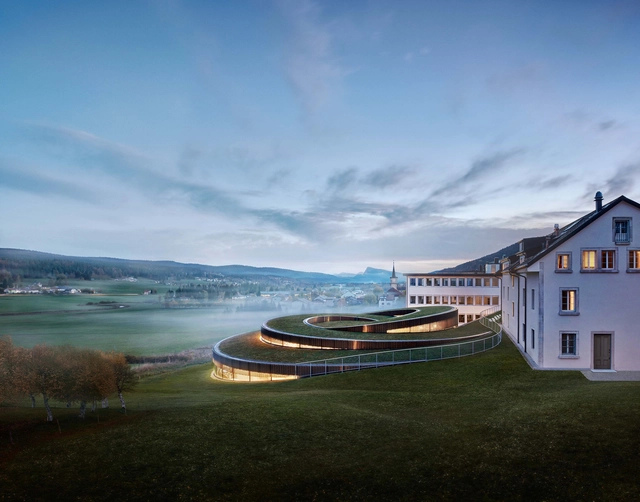
In 2014, BIG (Bjarke Ingels Group) won the architectural competition Audemars Piguet hosted to expand its historical premises. The firm designed a contemporary spiral-shaped glass pavilion to complement the company’s oldest building, where Jules Louis Audemars and Edward Auguste Piguet set their workshop, technically a start-up of the old times, in 1875. This architectural combination symbolises the blend of tradition and forward-thinking at the heart of Audemars Piguet’s craftsmanship while honouring its deep-rooted origins in the Vallée de Joux. BIG’s high-concept spiral, seamlessly rising from the ground, offers a pristine setting for the masterpieces of technicity and design which have taken shape, year after year, in this remote valley of the Swiss Jura Mountains.

House in Salto de Pirapora / Vereda Arquitetos

House in Salto de Pirapora Salto de Pirapora is a satellite city 25km from Sorocaba and the house is located on the road that connects these two cities. The 1000m2 plot has an eitght meters slope and looks out over a small ecological reserve bordering a stream.

F.I.L. FUKUOKA Shop / MURAYAMA + KATO ARCHITECTURE

The shop design for the flagship store of the Japanese fashion brand “visvim.” The shop is facing the serene street, with a hundred planted Zelkova trees and brick pavement. Vintage apartments standing along this street match the calm cityscape and nearby, there is the museum designed by Kunio Mayekawa, which has elegant vaulted ceiling and brick-cladding.

Skigard Hytte Cabin / Mork-Ulnes Architects

Located on the west side of Kvitfjell, 45 minutes north of Lillehammer, the cabin designed by Mork-Ulnes Architects is situated 943 meters above sea level, nearly at the top of the mountain (1.039 meters). Its high altitude means the cabin is exposed to severe winter weather, at times being socked in and at times floating peacefully above the clouds in the valley below. 

RISD Student Success Center / WORKac

At Rhode Island School of Design’s Student Success Center in Providence, a historic U-shaped, three-story brick building reveals a dynamic and colorful renovation and addition by New York City-based architecture firm WORKac.

8.5 House / DOG

This project is a small atelier-style house (87.23㎡) that will be built along the Tokaido Road that Hiroshige has walked and drawn. And this house is home to three generations of painter, his wife, infant and husband's mother. The design began with the idea of transmitting a large exhibition wall for decorating his work to the city with a maximum length on the diagonal of the site, and decided to separate the living area from the atelier with the exhibition wall.

NUBO Kindergarten / PAL Design

NUBO – as its meaning cloud suggests – is hard to pin down with its unlimited potential as a stimulating and inclusive play centre to encourage learning, exploration, boundless imagination. Children are respected yet always stimulated, while parents are encouraged to engage and interact with them through and through.

Shanghai Xujiahui Centre, Lot I & II / Ronald Lu & Partners

Located at the northwest corner of Shanghai’s Xuhui district, a prominent cultural and commercial destination, Xujiahui Centre is one of the most prestigious projects Shanghai has seen in recent times. The project comprises four comprehensive developments with a total gross floor area at 584,000 sq.m.. The project’s“Plot One”was nominated to this award entry, acting as an introduction to this high-profile project. Plot One has a gross floor area of around 30,000 sq.m. and the project’s strategic plan and design envisions commercial offices on top of a two-storey podium containing a shopping mall.

The Wine Ayutthaya / Bangkok Project Studio

Situated on a bank of the Chao Phraya River in Phra Nakhon Si Ayutthaya Province, The Wine Ayutthaya is a new leisure place for wine drinkers. The building was constructed to become a new tourist attraction in hopes of stimulating the economy of local communities surrounding this world heritage site, which was the capital city of Thailand 400 years ago. The building is a product of architectural creativity and environmental context molded into a magnet for tourists.

El Salvador II Building / Estudio Abramzon

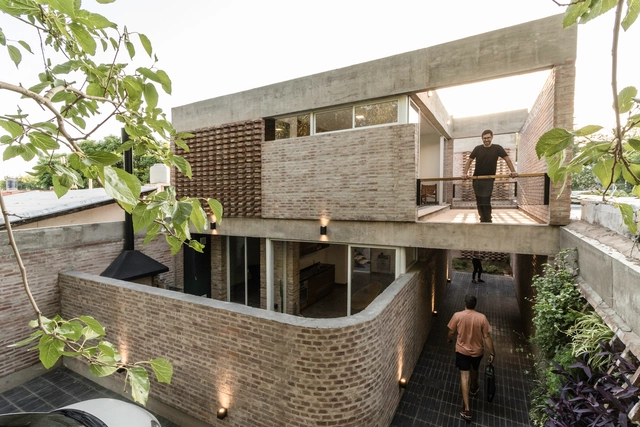
The building is located in Palermo neighborhood, a small-scale residential area, with an important traffic flow. Two volumes of housing are implanted supported on the front and back of the lot according to the scale of the neighborhood. Both volumes are connected by an open staircase and bridges where the accesses to the units are located, between these two elements a vertical grid appears with vegetation that connects all the levels. This open system generates a central void that takes advantage of the lower height of the boundaries and seeks to capture more natural light.

Ygará Apartment / Estúdio BRA Arquitetura

After the first conversation with the future resident, it was decided that the integration of the environments would be achieved through the use of a small material palette and that the furniture would, whenever possible, pass through more than one room. Basically we have wood and some gray [melamine laminate, concrete or high-strength porcelain tiles] on a white background.

Ha Long Villa / VTN Architects

Vietnam has an abundance of nature and townscapes that are registered as World Heritage Sites. Economic growth due to the increase in tourism has raised the standard of living but has also given way to reckless development by clearing away nature. To tackle this situation, we want to create a house that will connect people and nature. Ha Long, home to Ha Long Villa, is a beautiful coastal city in northern Vietnam, 160 km northeast of Hanoi. It is also home to the UNESCO World Heritage Site of Ha Long Bay. In particular, it is a city abundant with local industries such as fisheries and coal mining, and it is a region that is rapidly developing alongside its tourism industry.

Barn Rehabilitation in a House / G+F Arquitectos

An agricultural and livestock building of the early twentieth century located in a town on the Castilian Plateau of Spain has been deprecated. The intervention in the existing building is considered as recycling of it. It is intended to preserve the identity of the productive space and the vernacular character of its construction.

Sincere Hotel / Benzhe Architecture Design

This project is located at the foot of Nanchan Temple in Wuxi, among a cluster of civilian houses near Qingming Bridge at the bank of an ancient canal; hence the name “Sincere Hotel ,Wuxi”. With the changes of times and the renewal of city, Benzhe deconstructs the new meaning of guesthouse architecture while inheriting the essence of historical and cultural heritage.

Cottonwood Canyon Experience Center / SIGNAL | Architecture + Research

This story begins around the fin-de-siecle, when Jim Murtha, an Irish immigrant, partnered up with Frank Monahan to start a sheep operation at what would become known as the Murtha Ranch. Business peaked during the Great War when the army needed blankets, but life in the windy Cottonwood Canyon changed after the depression, and the barn went empty. Years later, Oregon State Parks was donated the 8,000-acre private property nestled against the John Day River.

Maria Montessori Mazatlán School / EPArquitectos + Estudio Macías Peredo

Mazatlán is a city in the Pacific Coast that maintains a humid and high temperature climate great part of the year, invites to think about an architecture that in principal faces climate and consider the high degree of salinity of the site.The strategy for this school should aim to both minimize the impact of heat in the classroom;  this without losing natural illumination and relation to the outside, as well as the use of materials and constructive system that were little prone to corrosion.