Elementary School Vřesovice / Public Atelier + Fuuze

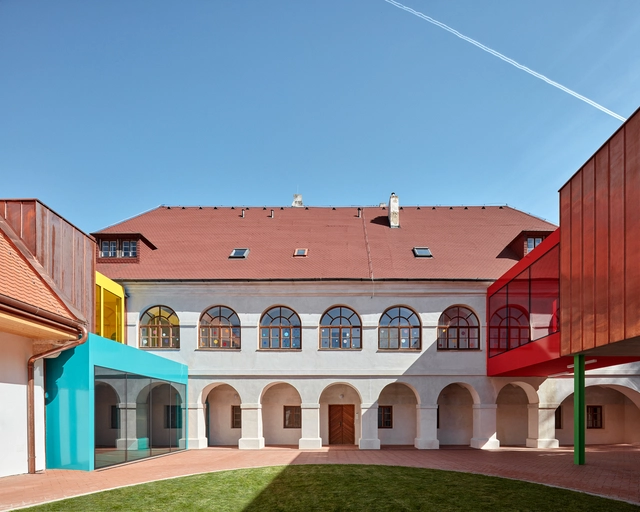
When the municipality of Vřesovice agreed with the Church on transferring the rectory and the parish estate to the municipal property, the Church wished that the village should not let the whole premises deteriorate but use it for a purpose. Therefore, since 2013 the main building of the rectory has been a primary school and two years later, a daycare center with a kitchen and a dining room, which are also used by the primary school, was established on the ground floor of the two building wings. Our task was to reconstruct another part of the buildings into two classrooms and two vocational ones.
House for Architectural Heritage / Noura Al Sayeh + Leopold Banchini Architects

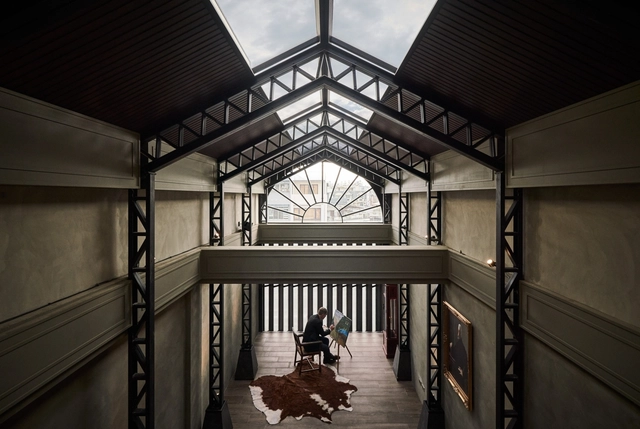
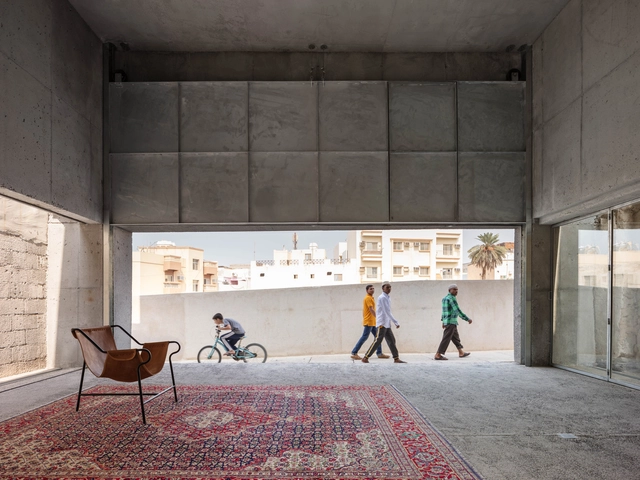
The house for Architectural Heritage houses the archival collection of sketches and drawings by the architect John Yarwood, as well as serving as an exhibition space for architecture exhibition. The project is conceived as a beam structure that frames the existing adjacent walls of the two neighbouring buildings, serving as a showcase for the architectural heritage of the city, the old as well as the new.

Symmons Plains / Cumulus Studio

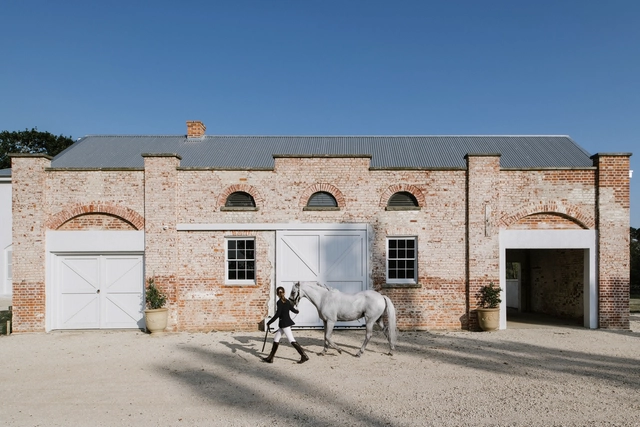
Understanding the significant heritage value of the Symmons Plains homestead, our clients approached the project with a clear vision; to restore the aging original buildings, then introduce functional, contemporary elements that would remain sensitive to the 19th-century architecture.

Memory of the Land / NODE Architecture & Urbanism

Foreword
Bao’an sub-venue of 2019 UABB in Qiaotou Village is composed of industrial exhibition area, canal-themed landscape, the Community Park, Qiaotou Theater, and Qiaotou Market. NODE participated in the renovation and design of the latter four, which involve two types of spaces, namely the public space upgrading based on status quo and experimental public space and landscape.

Giant House in Oiso / Fumiko Takahama Architects

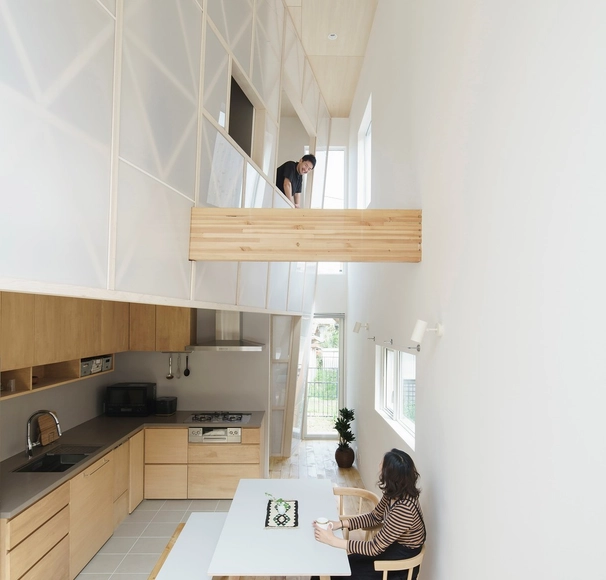
Giant House in Oiso is a house for a young couple allocated in a residential area near the sea in Oiso. The site is quite large for living by two persons, and their wish was very simple, to have one big space besides a small master bedroom. We explore in this project “the bigness” beyond an ordinary big room by carefully reading the context of the site, laying out and shaping the volume of the house, creating the intermediate space as extension of both public and private, and selecting materials to enforce all of those intentions.

House in “La Place” / Deschenaux Follonier

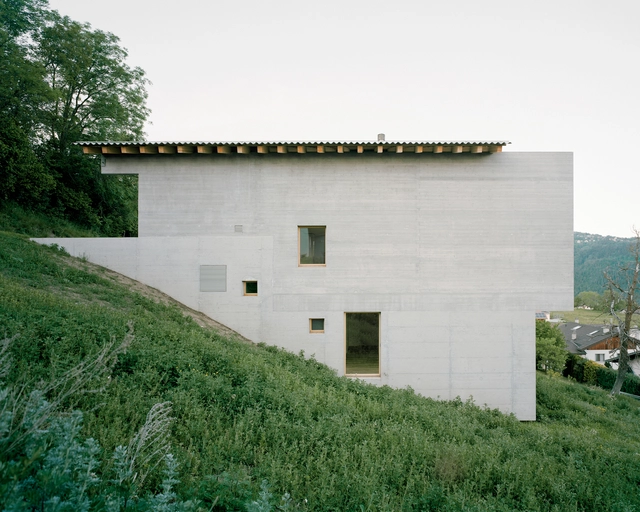
The house overlooks the hamlet “La Place”, in Ayent, central Valais. The project takes root in the site’s memory, by reinterpreting the atmosphere and the materialization of its vernacular architecture. Like the barns of the hamlet, the house stands in a meadow that is left blank. Thus, the project frees itself from all boundaries. The grass grows according to the seasons and the livestock can come and graze. The main terrace is on top of the house, away from prying eyes and offering a stunning view.

Around the Net House / MARTINS AFONSO atelier de design + l'atelier miel

Game of solids and voids. In the house, space is used but has yet to be lived in. The family, who has recently moved in, is settling in, capturing sensations and sequences which will soon become the pillars of the upcoming project. 

House in Hayama / Eri Sumitomo Architects + Sumitomo Eri + ENJOYWORKS

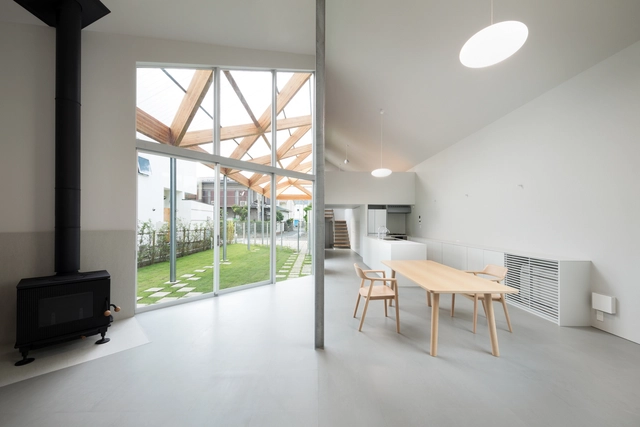
A small wooden house for a couple in Hayama, Japan where is surrounded by a rich natural environment. The project was developed in collaboration with ENJOYWORKS, which develops its own construction method for housing. Users can plan inside the timber structure box freely. Based on that condition, we deepened our thinking of partition within the outline determined by the required number of square meters.

Hotel Bauhofstrasse / VON M

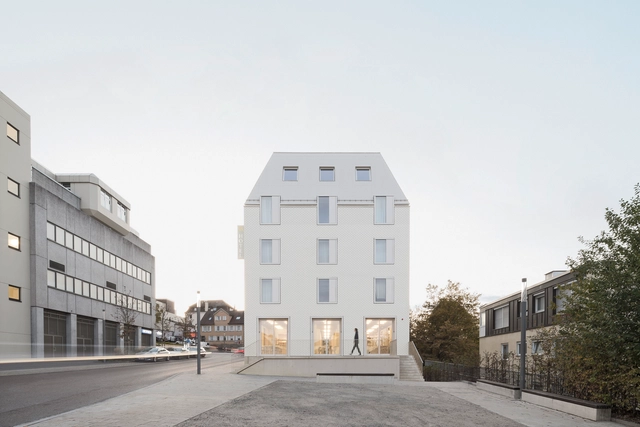
Hotel Bauhofstrasse is a consistent sustainable building with eyes on the future. Due to sensitive urban integration next to historic buildings the hotel contributes to the revitalization of the surrounding district. By choosing the trendsetting construction principle of wooden room modules it sets standards regarding ecology, efficiency, construction period and quality. The modules were produced in Austria, transported to Ludwigsburg and installed on site within five working days. The shingling with white Eternit plates does not reveal that this is a wooden building. The surfaces in the interior remain visible in their inherent construction and thus provoke a special atmosphere.

Clock Museum Of the Cultural Revolution / Jiakun Architects

The museum is sited in an abandoned site within the commercial heart, and the design concept was inspired by the relationship between culture and economy.

Plot # 1282 / Bernard Khoury / DW5

Plot # 1282 is a residential project located on the northern periphery of Beirut at the proximity of one the city’s abandoned and unused railway terminal, military barracks, leftovers of agricultural land and a 30‐meter wide highway. The zone in which our project is located is not presently considered residential. The project’s program consists of 95 industrial lofts with surfaces ranging from 100 square meters to 650 square meters on a total built‐up area of 25,800 square meters.

BEE DUCK / HAO Design

The house in this case is a 40-year-old terrace house with a narrow and long pattern, and the internal is cut into many small pieces of space by many old mezzanines which are all the original structure of this house. Therefore, the whole space was dark and lacking of lighting even in the morning. We hope that the old mezzanines in the building can be preserved, and trying to make the disadvantages of the original space be turned into highlights which are presented in a more interesting way through design. The first step is to import light into the room. We remove the useless stairs and built a patio in the central of the building so that the ample light can spread on each interlaced mezzanine evenly. The angle of sunshine which reflects in different corners at different moment also affects our feeling of the space.

Centre for Comparative Medicine and Bio-Image / Calderon-Folch Studio + Sarsanedas Arquitectura + COMA Arquitectura + Mario Nahra

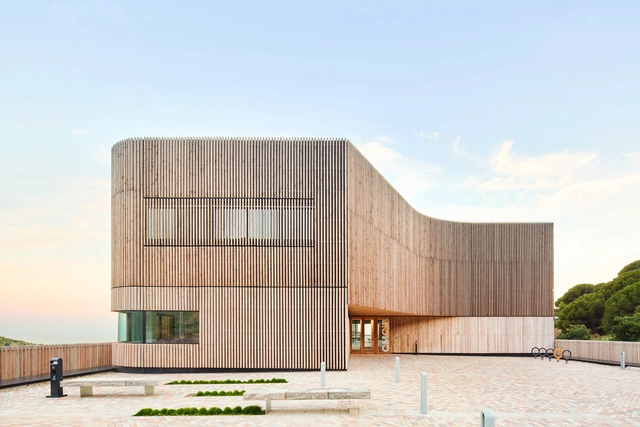
The new Centre for Comparative Medicine and Bio-Image holds a research center of the first order. A research facility based on ethical research criteria, technical and functional complexity, and comfort features that have been resolved in an efficient and sustainable way that strongly considers its relationship with the environment.

Dwellings, Nursery and Emergency Shelter / MUOTO

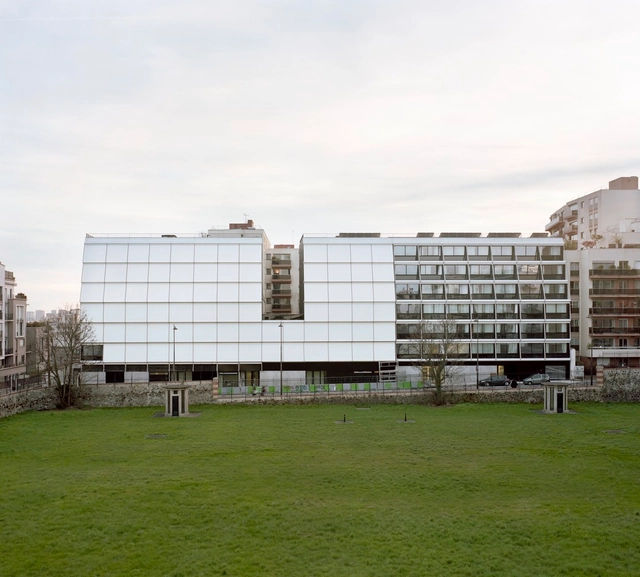
The project responds to the challenge of combining three different programs into one composite building that stretches along Rue Stendhal in the North-East part of Paris. The building stands in dialogue with a large patch of grass covering two water tanks. To orient the courtyard, balconies, and dwelling spaces relative to the sun; the project opens fully to the inside of the green space nearby.

Family Greenhouse / RicharDavidArchitekti

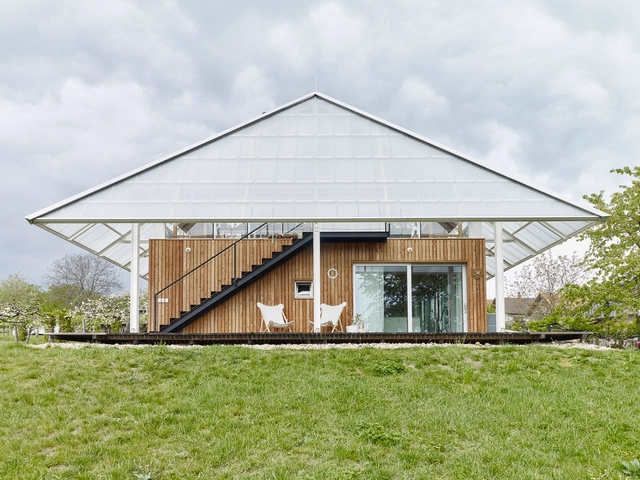
Concept. This project has three stages. The first one was the reconstruction of their old house. We did some cost calculations and propose them to build a new house with half volume and without any compromises.

Philosophical Seminar at the Cathedral Square / Peter Böhm Architekten

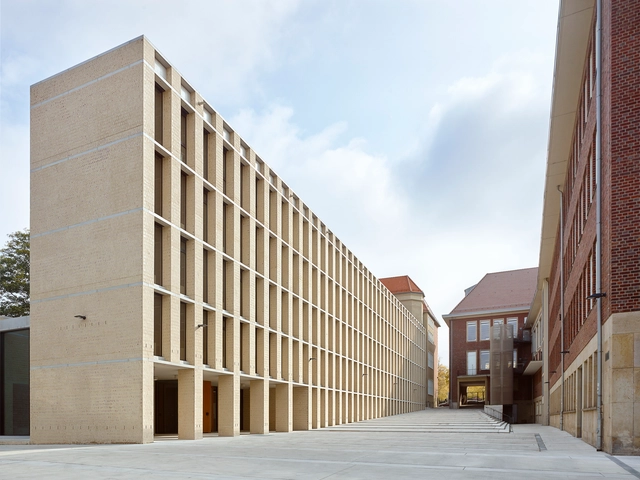
“The location between the cathedral square and the Aa-shore prompted us to form the courtyard as a small and quiet square with the entrance to the new “Philosophikum”.

Residence in Megara / Tense Architecture Network

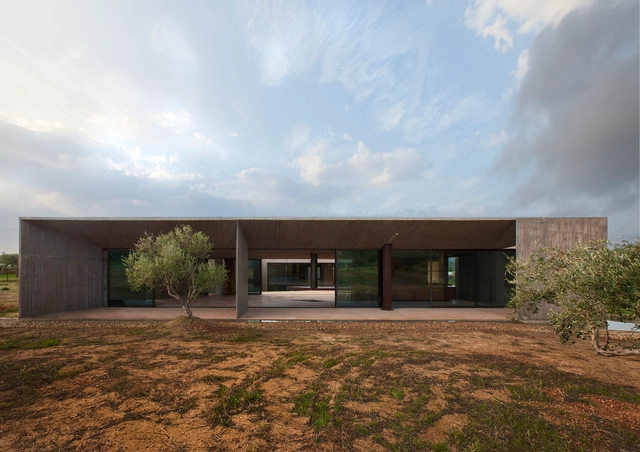
The house is a frugal yet decisive answer to the need for a family shelter in the midst of a rather recluse site. It is articulated through the creation of two interior courtyards, while the interconnection of its open and closed spaces is served by two juxtaposed corridors -a glass-roofed and an open-air one. Its courtyards and living spaces remain inscribed in an austere, yet perforated triangle. Two of its trapezoid, inclined sides retain a deliberate protective massiveness while the third, rectilinear one opens up to the magnetic view of the opposite mountain.

The Ger Innovation Hub / Rural Urban Framework + The University of Hong Kong

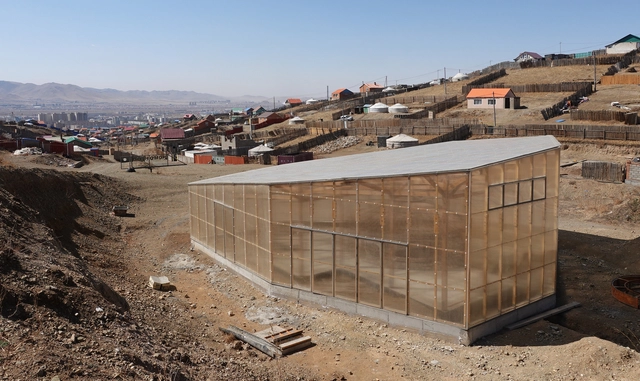
The ger districts of Ulaanbaatar, Mongolia, are sprawling settlements comprised of traditional nomadic felt tents, or gers, and self-built brick homes. These districts have no running water or sewage systems and in the extreme winter, with temperatures reaching -40 °C, coal is the main source of heat, resulting in debilitating air pollution.