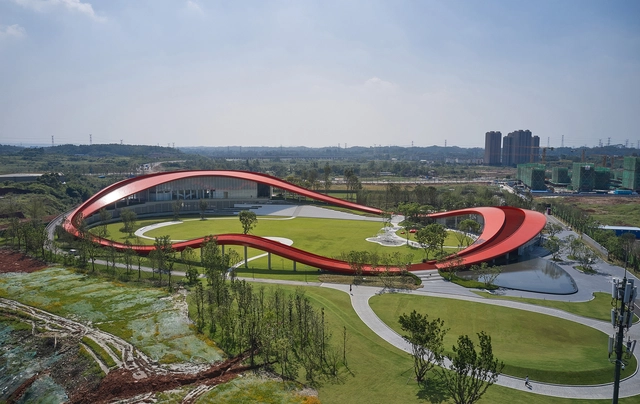
Loop of Wisdom Museum & Reception Center / Powerhouse Company

Living up to the suggestiveness of its name, the Loop of Wisdom embodies a timeless architectural concept. Powerhouse Company’s design for a technology museum and reception center for a new neighborhood in Chengdu, China, is much more than an exuberant landmark. In addition to its obvious aesthetic appeal and cultural program, the fluid-structure incorporates a spectacular public space – an undulating rooftop trail. This addition makes the Loop of Wisdom an accessible icon, rather than a remote beacon. It invites people to explore it and make it part of their regular walking or jogging routine.
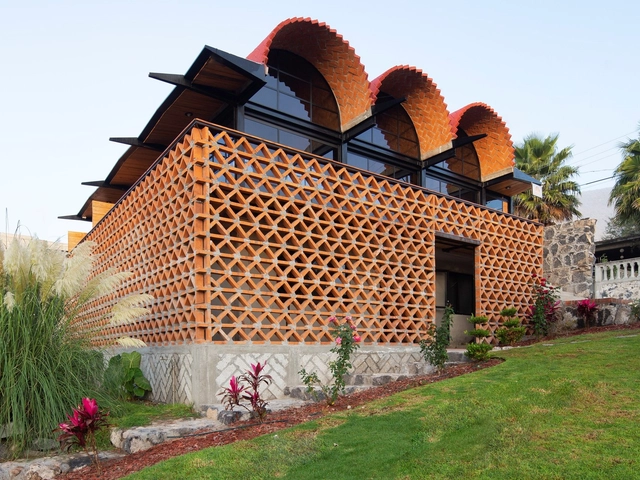
Hñähñu Multimedia Center / Aldana + Sánchez

The Hñähñu Multimedia Center project consists of creating a multipurpose room to provide technological services using the upper floor of a rural house. The architecture seeks to create a public place to gather people of different ages around its media activities: cyber café, gaming, and cell phone services; the program also includes an apartment with independent access, the ground floor housing was wrapped with a lattice as a base for the building.

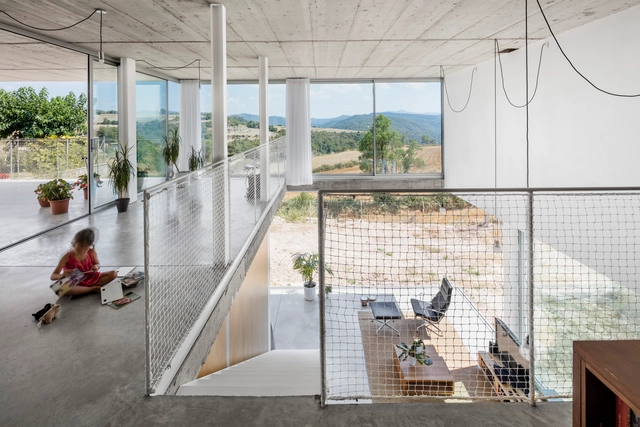
Calders House / narch

The house, located in Calders (a small village in the centre of Catalonia), is the new home to a couple with two children. The site is at the end of the village with the natural park of “Sant Llorenç del Munt i l´Obac” just in front.  They requested to include an office, common living space, three private rooms, two bathrooms and a garage.

Superpausée Macro Tent / Vous Architecture & Design

SuperPausée is a macro-tent, result of the superposition of two Canadian tents whose wooden structure have been replaced by steel tubes. It is an offbeat ode to camping, playing with its codes through its geometry, its apparent lightness, its minimal footprint, and its textile materiality. We spend a stay there in levitation, between starry sky and barely touched earth. Camped in a clearing accessible on foot, the SuperPausée is assembled by force of arms, without lifting motors, like a traditional tent. Each of the pieces is handy, all of them are assembled on the ground to create the structure, which then rises by simply bringing the feet together like a folding camping stool.

Tilt Roof House / BCHO Architects

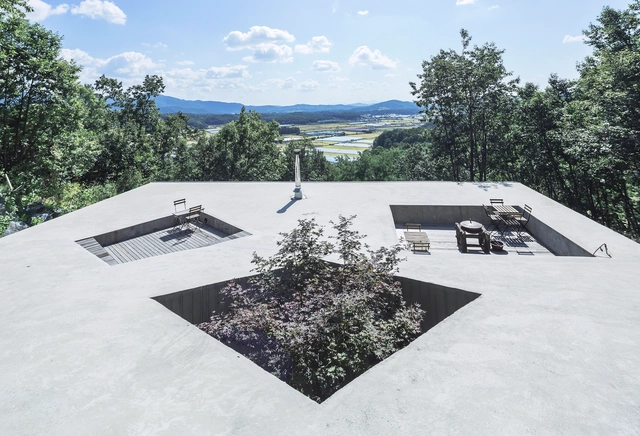
The subterranean Tilt Roof House is set amid peaceful mountains and rice fields an hour east of Seoul in Korea. The house shows our understanding and consideration of "Ki", which is the traditional term for the universal energy that permeates through everything.

Thi House / Gerira Architects

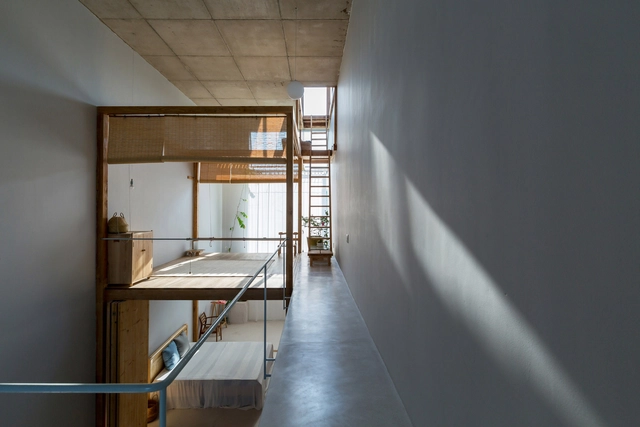
Thi house is a small housing project we specifically design for a celibate client. As a worker with a fixed living time, mostly in the factory. The project was built on a 4m * 17m planned to land in the suburb of the city with low expense.

Gallery and Studio / Johnsen Schmaling Architects

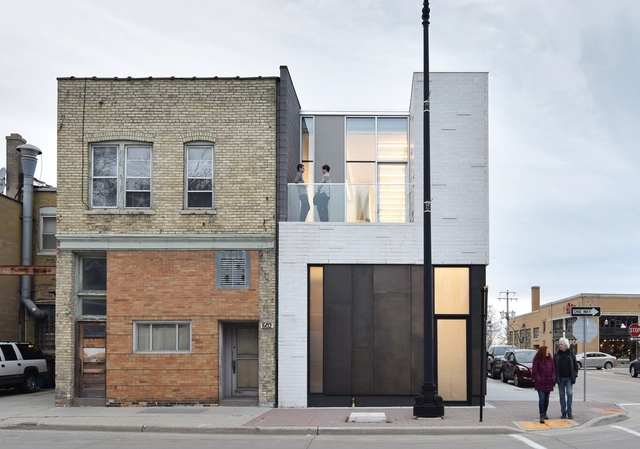
Located in in the heart of Racine, the Gallery and Studio building was designed for a painter and local art advocate who set out to create a new cultural anchor for the city, one that would help revitalize Racine’s currently anemic downtown. The project pairs the painter’s own studio on the upper level with a street level art gallery. Sitting on a narrow sliver of vacant land at the end of a trapezoid city block shaped by two overlapping urban grids, the 3,250 sf. building caps the block of historic brick structures and re-establishes the street edges along two important thoroughfares that connect Racine’s western neighborhoods with Lake Michigan.

Lostvilla Qinyong Primary School Hotel / Atelier XÜK

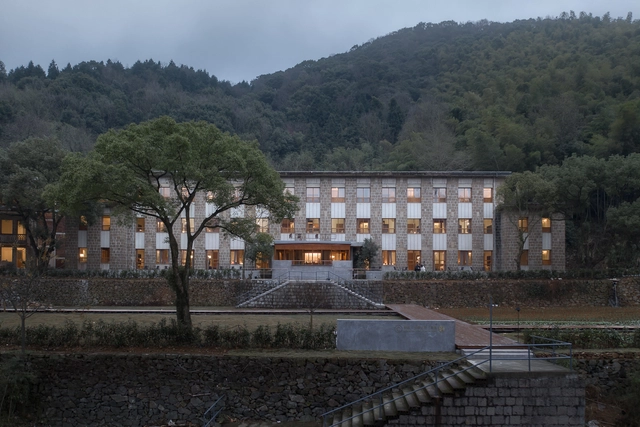
The Qinyong Primary School Hotel is located in the southeast of Ningbo, Zhejiang Province in China. The village, which used to be notorious for being a “rotten village” in the 1960s, was transformed under a specific historical circumstance. At the height of the communism movement in the 1970s, the whole village was demolished and reconstructed, and became the first strictly planned commune in the province. The original natural fabrics and traces were wiped out and a grid of townhouses were established with blocks of local sandstone. Meanwhile, the same material was used to build new infrastructure public buildings and such as the village gate, paths, the auditorium, as well as the primary school which has now been renovated into the hotel.

Axel Springer Campus / OMA

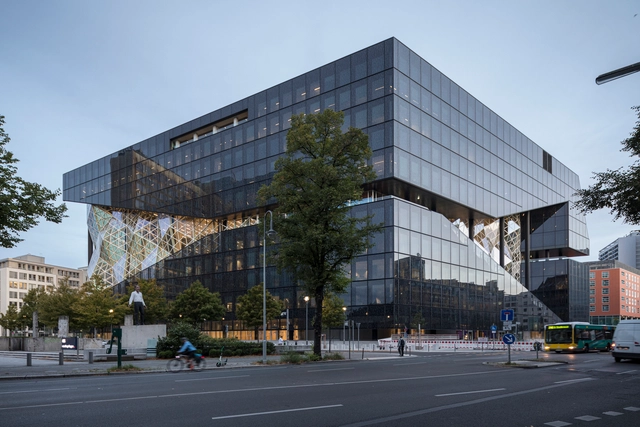
Axel Springer has launched a move from print to digital media. Its new building on the campus in Berlin acts both as a symbol and a tool in this transition - a building to lure the elite of (Germany’s) digital Bohemia. Bisected by a diagonal atrium that opens up to the existing Axel Springer buildings, the essence of the design is a series of terraced floors that together form a ‘valley’ that creates an informal stage at the centre - a place to broadcast ideas to other parts of the company.

Creative Campus / PHD Architectes

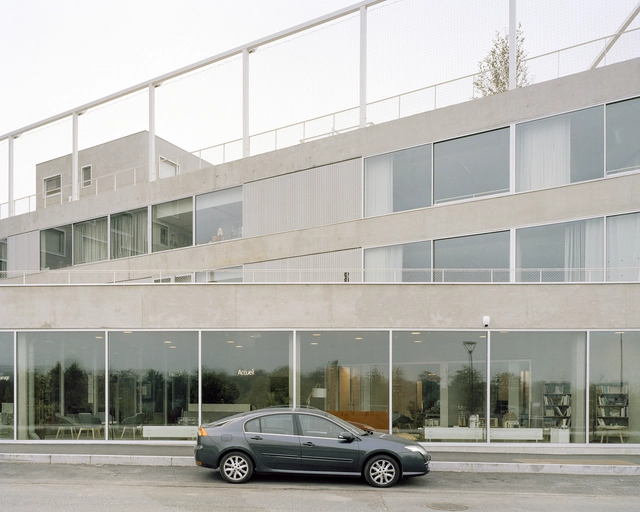
Fluctuating between the exceptional nature of the program and the urbanity of its outline, the agency has designed the 5th campus of the ICONES Group. The project contains a game-design school and a student’s residence of 219 units at the junction of the park, the “Rambla” and La Vilaine, which showcase the new landscape of the Baud-Chardonnet district of Rennes.

Tree House / Pablo Luna Studio

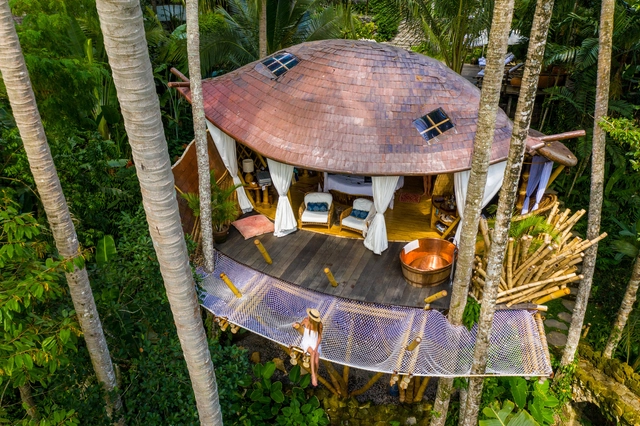
Treehouse is located in the town of Ubud, at the heart of the island of Bali. Surrounded by jungle to the sides and rice terraces in the front, this suite from the boutique hotel Stonehouse, stands five meters above the ground thanks to its 14 centimeter diameter and 8 meter long bamboo pillars.

RMIT New Academic Street / Lyons

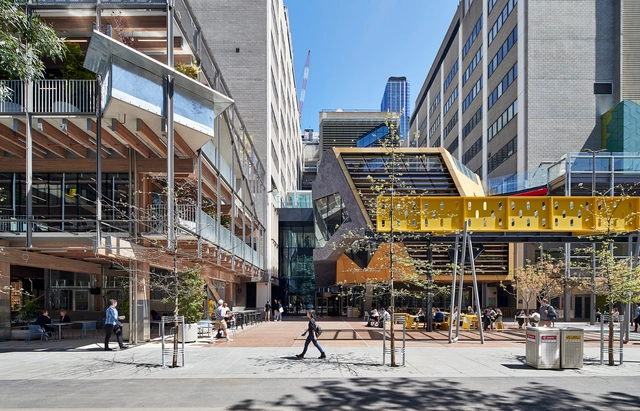
RMIT’s New Academic Street (NAS) is a major project that completely transformed the ‘heart’ of RMIT University’s city campus, and radically redefined its education and student experience. The project brief included over 30,000m² of refurbished space in four existing buildings, together with three new buildings totaling approximately 6,000m². The project design is a collaboration between Lyons, MvS Architects, NMBW Architecture Studio, Harrison & White, and Maddison Architects, all of whom are university alumni.

Peach Hut Community Center / ATELIER XI

In the beginning, the architect received the original commission to design a 300-square-meter public building for facilitating the county’s culture and art education in Xiuwu, Henan. However, considering the vast serving area (630-square-kilometer county area) and the difficulty of traveling between scattered villages, the architect came up with a proposal to divide one building into a series of miniature facilities in different locations so as to better serve local communities.      

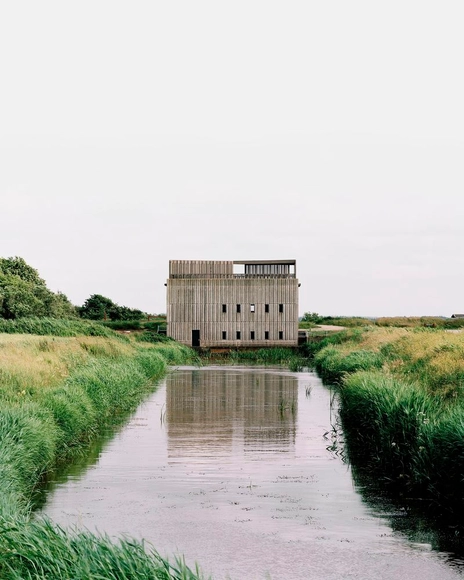
Skjern River Pump Stations / Johansen Skovsted Arkitekter

The project is a conversion of three pump stations originally constructed in the late 1960s in connection with the large land reclamation project where Skjern River was straightened out. A large number of environmental problems were associated with this alignment of the river, leading to the river being restored to its original run in 2002. In this way a vast and rich natural area reappeared with many visitors.

MEETT Toulouse Exhibition and Convention Centre / OMA

MEETT, Toulouse’s new Exhibition, and Convention Centre, is located in the innovation zone north of Toulouse. The project is not only about architecture, but also about infrastructure, urbanism, landscape, and public space. The 155,000m2 exhibition and convention center is positioned in between the city and the countryside: it connects urbanized plots to the south – mainly dedicated to aeronautics, including the airport hangar of Airbus– to an agricultural landscape to the north.

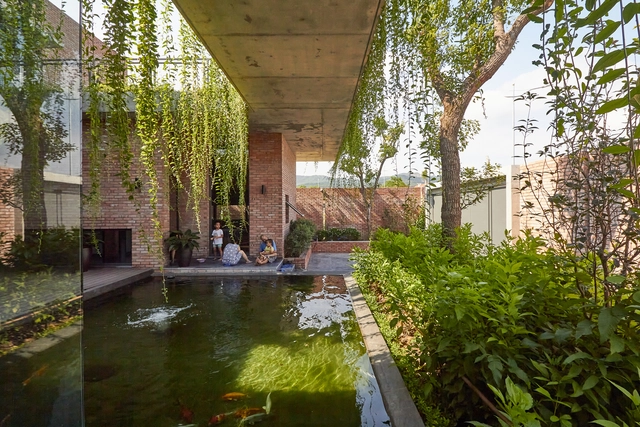
Greenery Curtain House / HGAA

The house is built in Mao Khe, a growing area of ​​urban and economic construction of Quang Ninh province, Vietnam. This land is also a mining center of mineral coal in Quang Ninh province. In the past this area had low environmental quality due to mining operations, and recently the quality of the air and urban has been much improved.

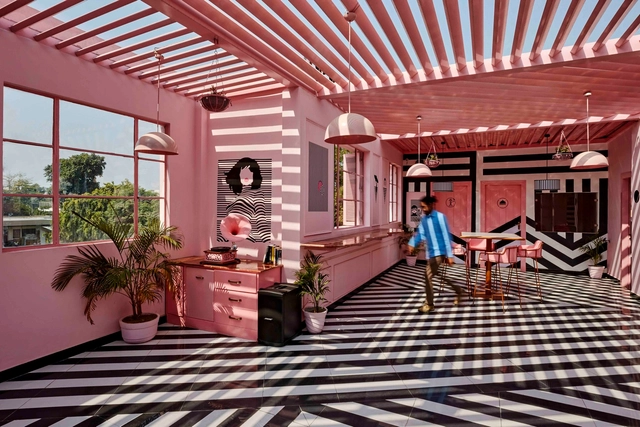
The Pink Zebra Restaurant / Renesa Architecture Design Interiors Studio

Merging Funk into Details - A Concoction of Design Theories.