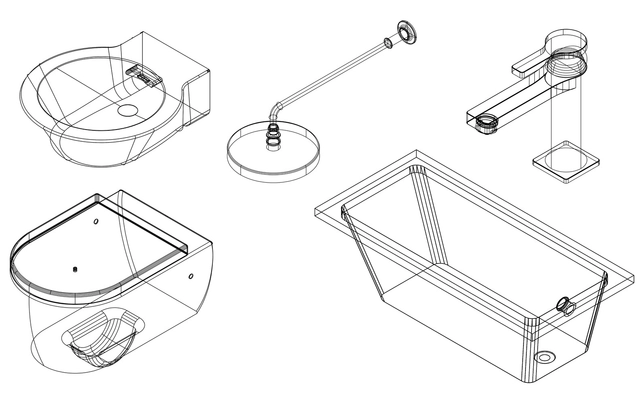
In order to support the design work of our readers, the company Porcelanosa Grupo has shared with us a series of .DWG files of its various bathroom products. The files include both 2D and 3D drawings and can be downloaded directly from this article.


In order to support the design work of our readers, the company Porcelanosa Grupo has shared with us a series of .DWG files of its various bathroom products. The files include both 2D and 3D drawings and can be downloaded directly from this article.
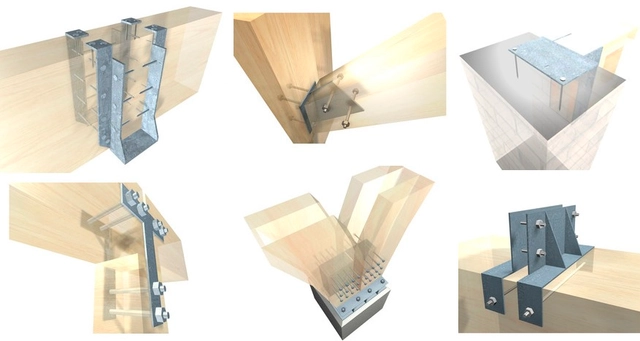
When designing wooden structures, it’s very important to consider joints and reinforcements that will allow them to stay together and upright. These connectors not only allow for adhering wood to wood but also let you anchor wood elements to brick and concrete walls.
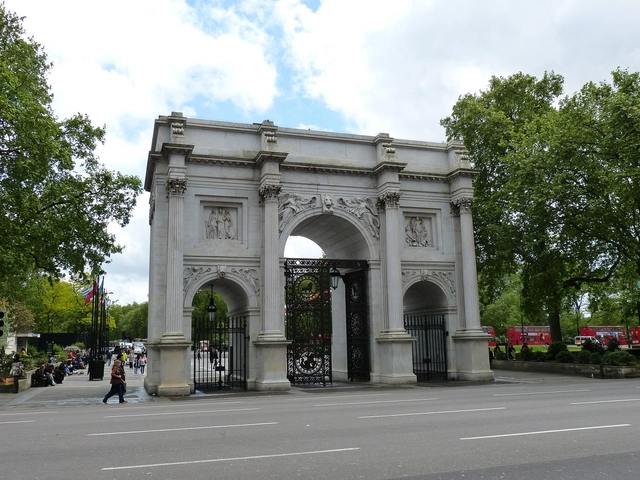
Researchers at Princeton University’s Department of Civil and Environmental Engineering have discovered that hydroxyapatite, the primary compound found in human teeth and bones, can be used to help preserve the condition of marble, which is prone to cracking and deteriorating as a result of the effects of pollution and the weather.
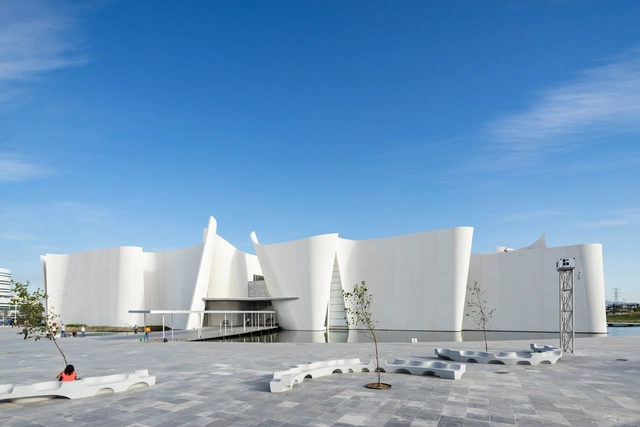
This article is part of our 'Innovative Materials' series where we ask architects about the creative process behind choosing the materials they use in their work.
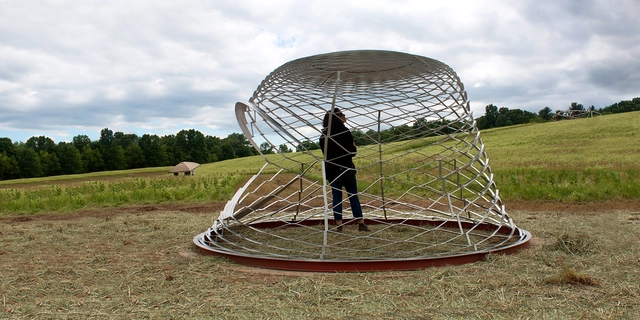
This article was originally published by Autodesk's Redshift publication as "Haresh Lalvani on Biomimicry and Architecture That Designs Itself."
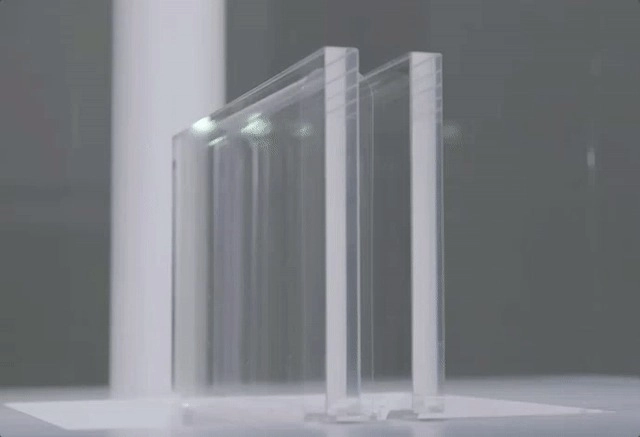
Superthin, flexible glass sounds like something out of a fantasy world – but in fact, it’s something many of us already use everyday as screens for our smartphones and watches. In this video from the Science Channel’s How It’s Made, the intricate process for creating this material, produced by glass manufacturer Schott, is revealed. Watch as the components of the glass are carefully measured out and blended before being melted and reformed into ultrathin sheets.
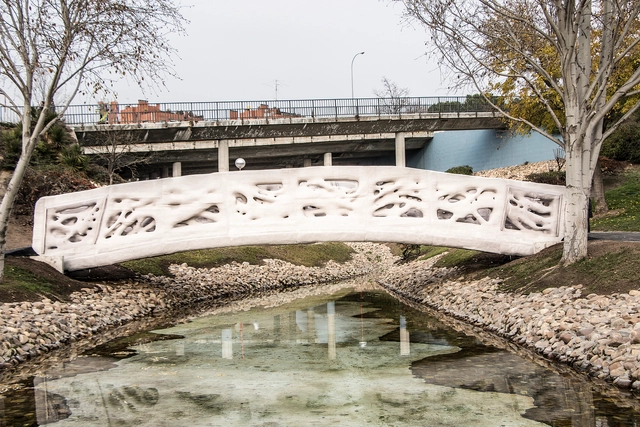
The first 3D printed pedestrian bridge in the world opened to the public on December 14 in Madrid. Led by the Institute of Advanced Architecture of Catalonia (IAAC) in a process that took a year and a half from its conception, the structure crosses a stream in Castilla-La Mancha Park in Alcobendas, Madrid.
.jpg?1485891056&format=webp&width=640&height=580)
At Autodesk's 2016 conference in Las Vegas, a team from Autodesk's BUILD Space led by principal research engineer Andrew Payne collaborated with manufacturer Quarra Stone, engineers Simpson Gumpertz and Heger, and University of Michigan assistant professor Sean Ahlquist to unveil its new Generative Design Pavilion. The project is an exploration of materiality, with stalagmite stone forms that rise up from geometric floor panels to meet fabric that stretches down from a canopy above. The junction of textile and stone aims to emphasize the distinct behaviors of the two materials.
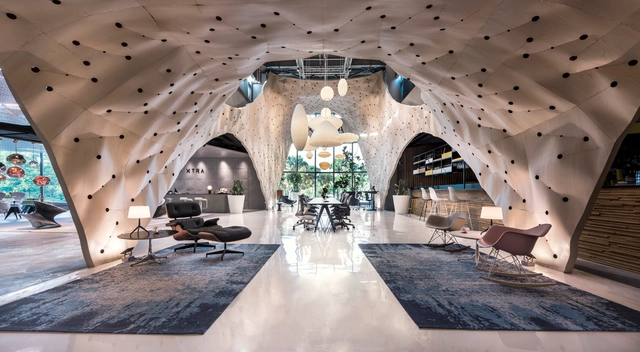
Furniture and design retailer XTRA's new flagship store in Singapore's Marina Square includes a Herman Miller "Shop-in-Shop" that draws inspiration from the furniture it showcases. Encircling the space is a 20-meter arched structure that, from a distance, gives the appearance of tufted fabric pulled taught over a frame. But in fact, this structure is built from a plywood "skin" that designer Pan Yicheng of PRODUCE Workshop has dubbed "fabricwood."
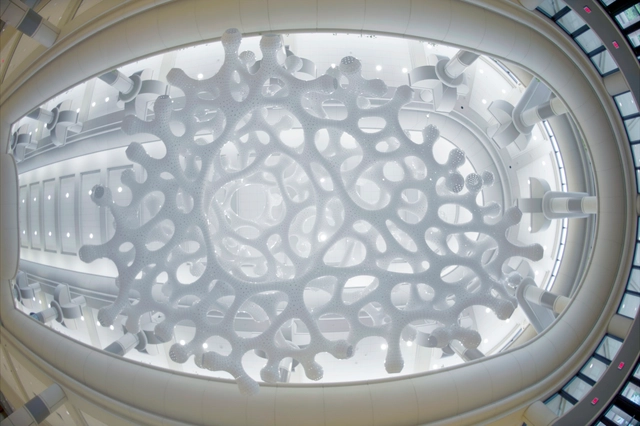
A giant, smooth coral? A cloud-like barnacle? A woman's floral swimming cap?”
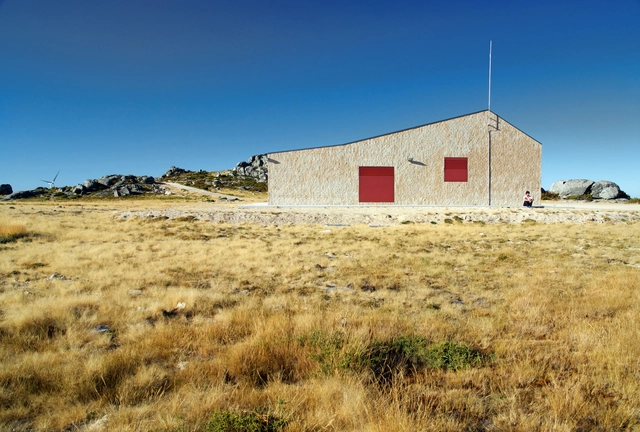
This article is part of our new series "Material in Focus", where we ask architects to share with us their creative process through the choice of materials that define important parts of the construction of their buildings.
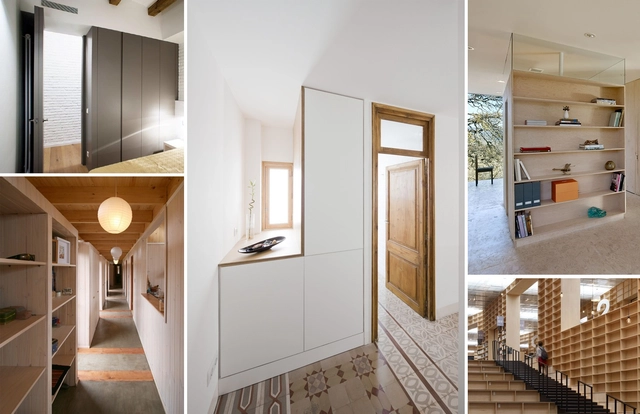
One of the hallmarks of architectural sensibility is a clean, clutter-free space – "a place for everything and everything in its place." Every project requires some element where things can be neatly stored away, whether it be books, kitchen appliances, or entire furniture pieces. Solutions for these storage needs can range from invisible and out of the way, to stunning, textural centerpieces – either way adding necessary functionality to our most-used spaces.
.jpg?1484934632&format=webp&width=640&height=580)
Employing the latest in aluminum and metals innovation, Ben van Berkel and UNStudio have erected the ALPOLIC fair stand at BAU 2017, the world’s leading trade fair for architecture, materials and systems. Emphasizing the inherent strength of the ultra-light material, the parametric design utilizes geometric principles to create a self-supporting semi-private stand for gathering and the display of products.
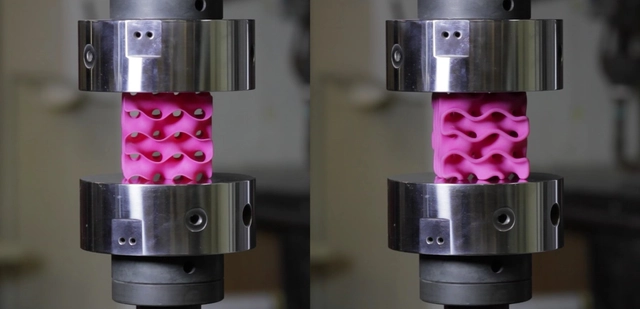
Known for its light weight and high strength properties, graphene has been promised to us as the material of the future for quite some time now. But difficulties in translating its 2D strength into 3-dimensional applications have so far held it back from common use. Now, thanks to new research by the Massachusetts Institute of Technology (MIT), that future may now be closer than ever before. In the school’s latest experiment, researchers have discovered how the material could be shaped into to sponge-like form to resist forces 10 times greater than steel.
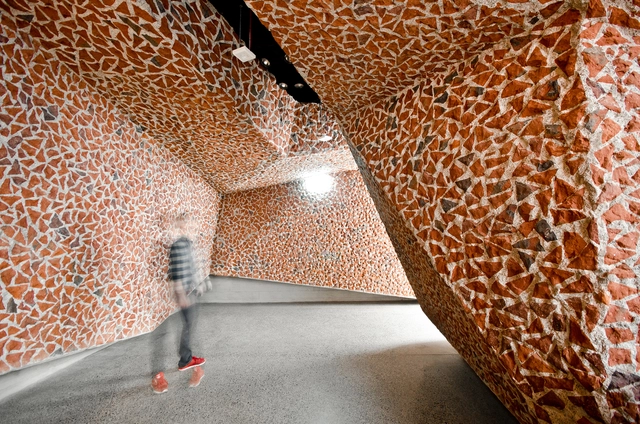
This article is part of our new "Material Focus" series, which asks architects to elaborate on the thought process behind their material choices and sheds light on the steps required to get buildings actually built.
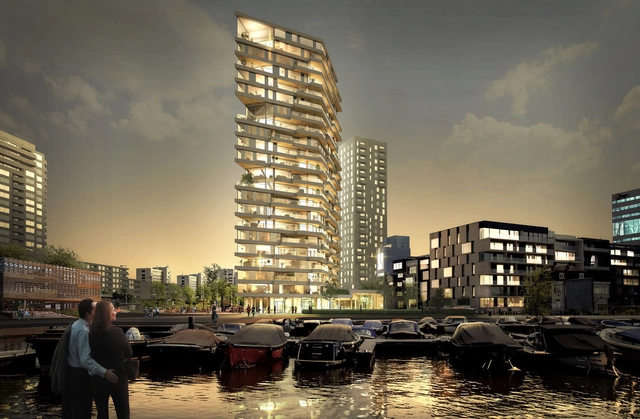
The key to engineering wood strong enough to support skyscrapers may lie in the interaction between molecules 10,000 times narrower than the width of a human hair.
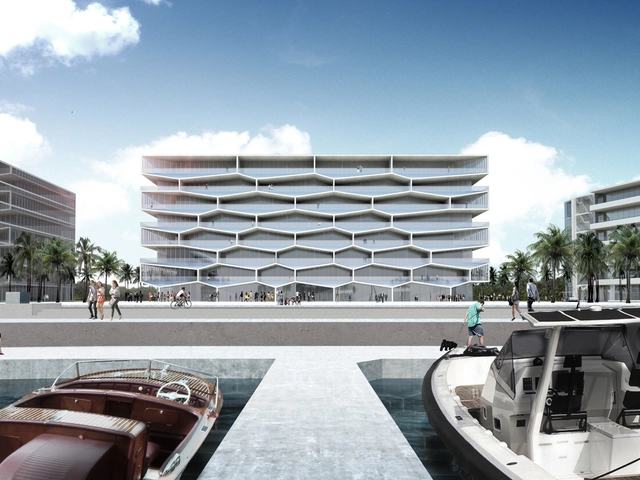
BIG are known for unconventional buildings that often raise the question “how were they able to do that?” Such is the case for BIG’s Honeycomb, a luxury eight-story condominium currently under construction in the Bahamas. The project’s hallmark is its hexagonal façade made up of private balconies, each with its own glass-fronted outdoor pool. The façade was also the project’s greatest engineering challenge, with each balcony (including pool water) weighing between 108,000 and 269,000 pounds (48,000-122,000 kilograms) while cantilevering up to 17.5 feet (5.3 meters) from the structure. Tasked with this challenging brief were DeSimone Consulting Engineers, who previously worked with BIG on The Grove. Read on for more detail on the Honeycomb’s innovative engineering.
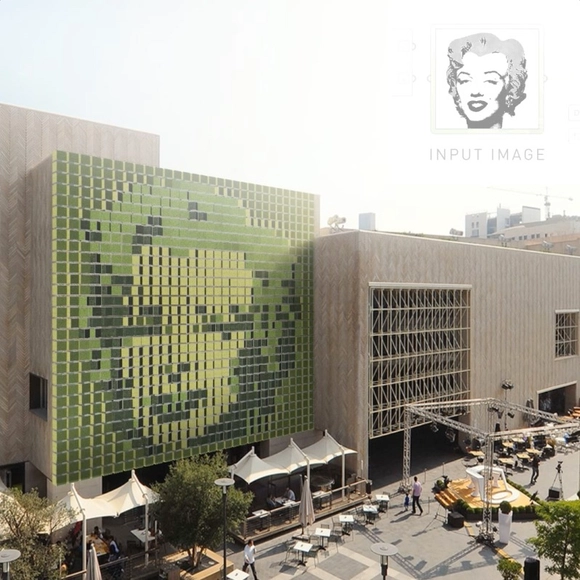
BAD. Built by Associative Data’s Associative Data Research has collaborated with Green Studios to create Kinetic Green Canvas, a prototype Green-Art Installation for building façades.