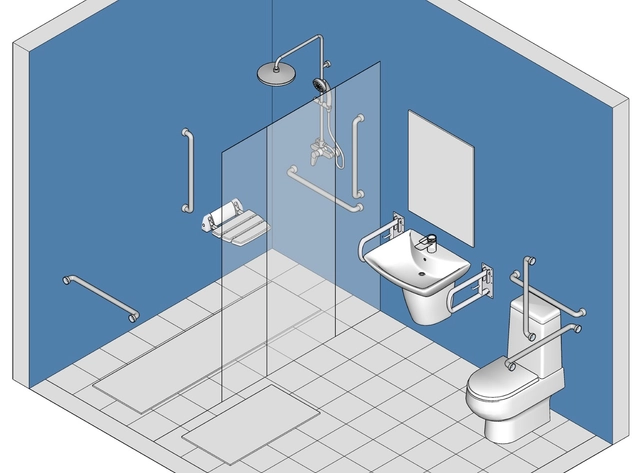
There exist frequent reports of toilet accidents, as they are often located in tight and slippery places. Although no one is immune to a slip after bathing, it is the elderly who suffer most from falls, and can often suffer serious injuries, sequelae, and functional limitations. Due to the natural reduction of reflexes and muscle mass, the higher the age group, the more prone to falls we become.
Air-conditioning isn’t just expensive; it’s also terrible for the environment. Accounting for 10% of global energy consumption today, space cooling in 2016 alone was responsible for 1045 metric tons of CO2 emissions. This number is only expected to increase, with the International Energy Agency estimating that cooling will reach 37% of the world’s total energy demand by 2050.
https://www.archdaily.com/923445/what-materials-keep-buildings-coolLilly Cao
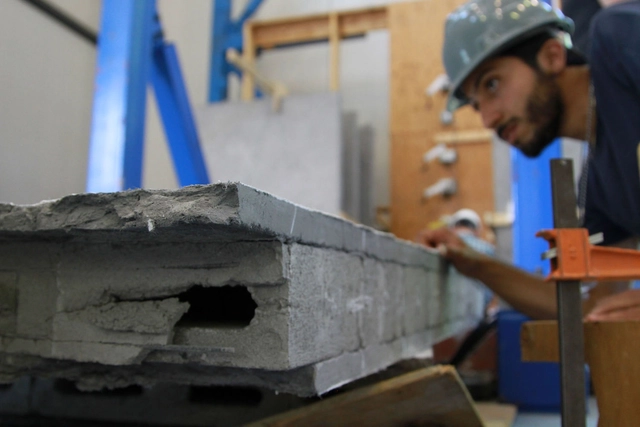
Cracks, which could be classified according to their thickness as fissures or fractures, are serious problems in the construction industry that can negatively affect aesthetics, durability and, most importantly, the structural characteristics of a project. They can happen anywhere, but occur especially in walls, beams, columns, and slabs, and usually, are caused by strains not considered in the design.
https://www.archdaily.com/879953/what-do-the-cracks-in-concrete-structures-meanJoão Carlos Souza
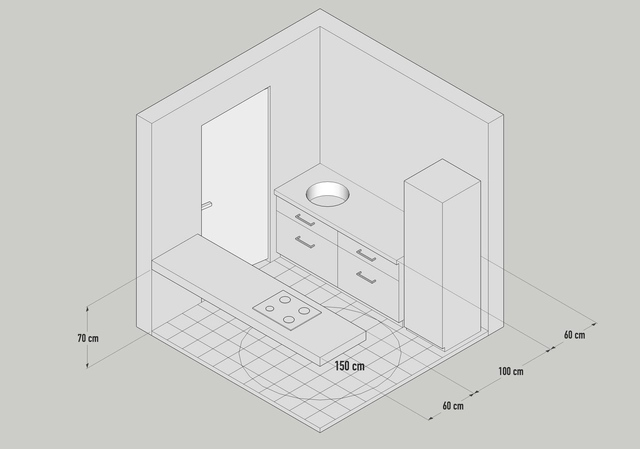
A good architecture project must be accessible to all, regardless of their physical or cognitive abilities. To raise awareness about these issues, and help you in the design process, we have compiled some basic actions that must be carried out for people to inhabit residential spaces comfortably and without obstacles.
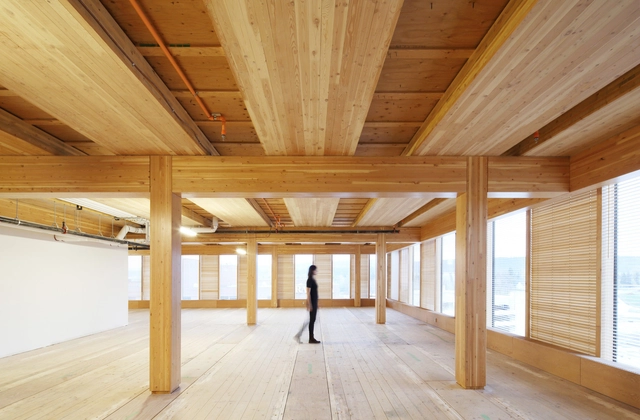
Wood Innovation Design Centre / Michael Green Architecture. Image
Concrete, an essential building material, has for decades offered us the possibility of shaping our cities quickly and effectively, allowing them to rapidly expand into urban peripheries and reach heights previously unimagined by mankind. Today, new timber technologies are beginning to deliver similar opportunities – and even superior ones – through materials like Cross-Laminated Timber (CLT).
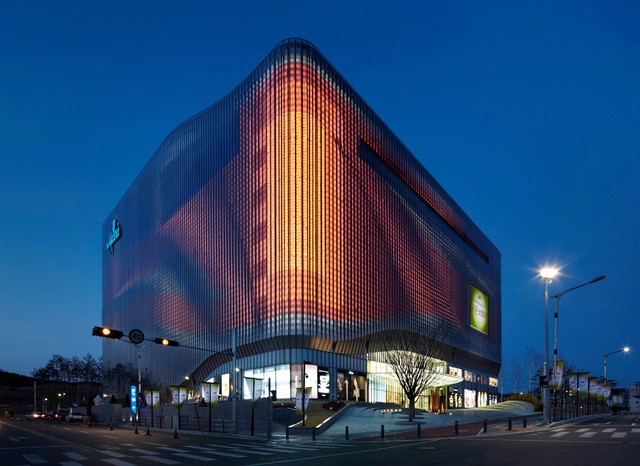
For most of the history of architecture, interesting facades were achieved through materiality or ornamentation. From the elaborately painted friezes of the Parthenon to the glass exteriors of modern skyscrapers, architecture was primarily static, only ‘changing’ as the environment would change and affect the material of the façade in differing ways, be it rain, light, rust, etc.
https://www.archdaily.com/922930/what-are-kinetic-facades-in-architectureLilly Cao
When working in an urban area with a complex topography, one of the biggest challenges is urban integration. Worldwide, many socially deprived neighborhoods are situated in complicated geographical locations surrounded by steep slopes. Such areas complicate mobility for pedestrians, cyclists, and the elderly, with a lack of accessibility often excluding them from taking part in city life effectively.
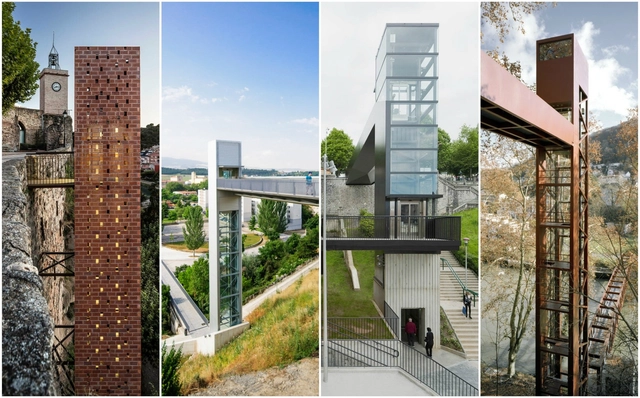
In this context, urban elevators can be a novel solution which combine elements of both functional connectivity and sculpture. With some rising up to 30 meters in height, they become urban and touristic landmarks, creating new viewpoints and walkways. Additionally, in many cases, they can help to uphold the historic legacy of the city.
Below we have collected some interesting examples of urban elevators that have been key in the spatial planning of the urban environment.
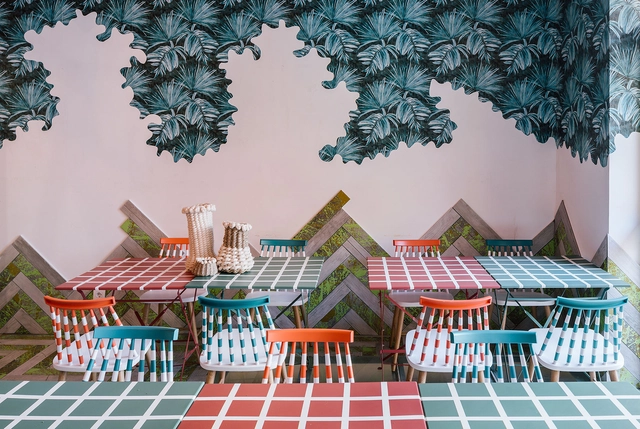
Once the construction of an architecture project is finished, it's time to install the claddings that will make up the visible faces of the interior spaces. Wallpaper –an efficient way to bring color and design into rooms – is generally specified according to the square meters we want to cover, so we must start by calculating the area of each surface with great precision.
It's very likely that you are reading this text in an interior space with the lights on. For most people, modern living entails spending most of the day in closed rooms, bathed in a sum of artificial and natural lights. Yet while artificial light has afforded mankind incalculable possibilities, it has also caused some confusion in our bodies, which have evolved for thousands of years to respond to the stimuli of sunlight in the day and darkness at night. This responsiveness to natural light is called the circadian rhythm or cycle, and describes the 24-hour biological cycle of almost all living beings. Circadian rhythms are primarily influenced by light reception, but temperature and other stimuli also play a role in the process.
Terrazzo is a mix of a concrete mixing base with natural stone fragments; it is characterized for being an extraordinarily resistant and versatile material. Since its frequent use some decades ago, this material has been rediscovered by architects and is used more and more often in works nowadays. Aside from the natural stones, this cement mixing base can include unused elements from construction – nails, bricks, and chunks of wood – resulting in very interesting final products.
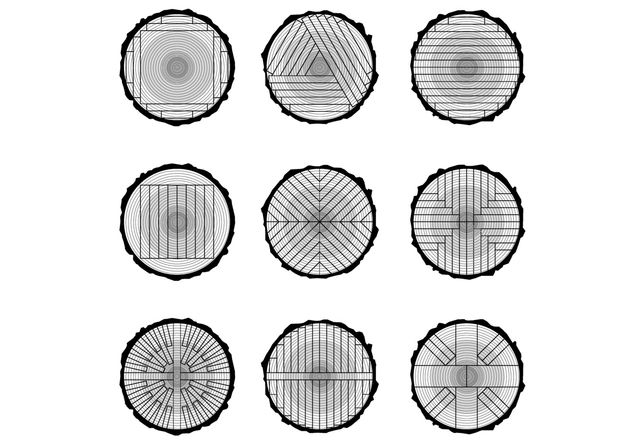
As wood is one of the most widely-used materials in the world, architects are accustomed to being able to easily obtain sawn wood at a nearby store. However, many of us know little about its manufacturing process and all the operations that determine its appearance, dimensions, and other important aspects of its performance.
The history of concrete dates back to ancient Rome, approximately 2,000 years ago. The so-called “Roman Concrete” is composed of limestone, volcanic ash, and seawater and it permitted the construction of aqueducts, highways, and temples; many of them still stand to this day. Some time ago, this original mix was discovered to form a mineral called aluminum tobermorite, which gets stronger as time goes by.
In this video from NOWNESS, an excerpt from Yuri Ancarani's documentary "Il Capo" (The Chief), the filmmaker captures the mesmerizing business of Marble extraction in the hills of Northwest Italy. The prized delicacy of the Carrara stone's surface is juxtaposed against the dramatic size and weight of the blocks they are removing, which eventually fall with an earth-shattering thud. Similarly the rugged power of the excavators is in marked contrast to the precise, understated gestures of the chief himself, who directs his workers with a complex series of predetermined hand signals.
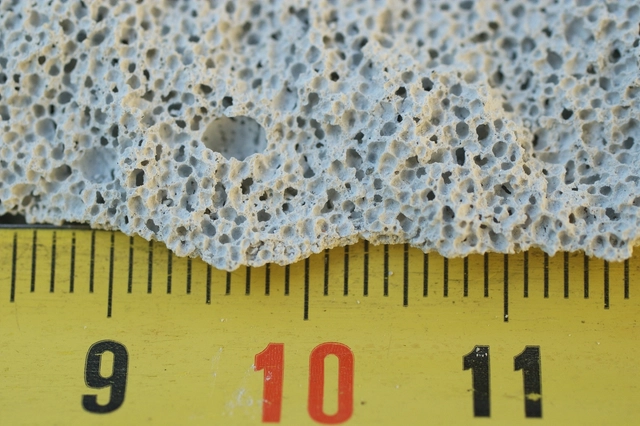
Since its invention in 1920, cellular concrete tackled the search for an industrial material that had similar characteristics to wood. It was lightweight, could be cut or perforated, and avoided some of its disadvantages; for instance, its water absorption and need for maintenance. Nowadays, Autoclaved Aerated Concrete (AAC) blocks are actively present in the marketplace by manufacturers like Hebel or Retak, which are building an easy to use and efficient constructive system. If you ever wondered about how to build with these masonry ingredients, it is pertinent to dig a bit deeper into the advantages of this material.
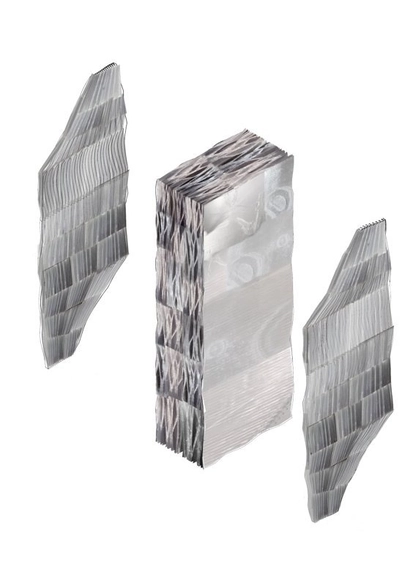
British company Kast has launched a new version of its traditional pigmented concrete sinks. Since concrete is an extremely versatile material, which combines the characteristics of natural stone with the ability to be molded in different forms, the products show carved surfaces with highly defined textures. The exploration of their linear patterns ranges from smooth horizontal ripples to diagonal folds or 'sharp' and vertical grooves. The organic variations in the colors and textures of the surfaces create a different aesthetic that comes directly from the character of the material.
Funded by Norman Foster in 1967, Foster+Partners studio develops projects that integrate architecture and engineering with interior and object design. In a special collaboration with Porcelanosa – experts in the fabrication of furniture and accessories made out of stone, ceramic, brass, wood and KRION®–, they have designed a collection of bathrooms in simple and minimalistic ways, highlighting the essence of the materials and the trade of their fabrication.
Videos
Image Courtesy of TuDelft and the Spong3d project
The term "resilience" has been employed in a wide range of subjects. The scientific definition is the ability of a substance or object to recover its form after suffering some trauma. In other words, it is quite different from resistance, as it concerns the capability of adapting and recovering. In ecology, resilience is about the ability of an ecosystem to respond to a perturbation or disturbance, resisting damage and recovering quickly. In architecture, however, designing something while having resilience in mind can lead to a variety of approaches. Resilient designs are always site-specific. Predicting the potential scenarios for typical building use, and even any disasters that could challenge the integrity of the project and its occupants is an important starting point. Furthermore, it is possible to address adaptive structures and materials that can ''learn'' from their environment and continuously reinvent themselves. Since there are software and robots with algorithms that learn from their contexts, why can't we use the same approach in construction?