The Environmental Protection Agency estimates that Americans spend 90 percent of their time indoors. Spending that much time inside makes us feel disconnected from the outside world, affecting everything from our productivity to mental health. Not to mention physical health concerns ranging from poor circulation to airborne contaminants.
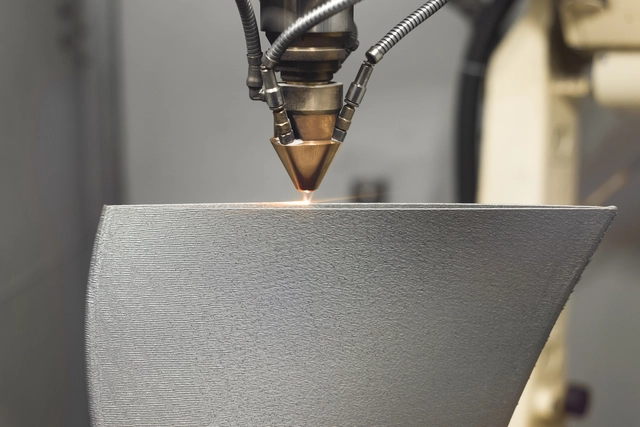
Additive Manufacturing (AM) is a term used to identify the manufacturing processes performed by 3D printing through layer-by-layer construction. In addition to avoiding the generation of waste through the use of precise geometries and exact quantities of material, these controlled processes can be much faster than traditional ones, since they don't require tools or other instruments.
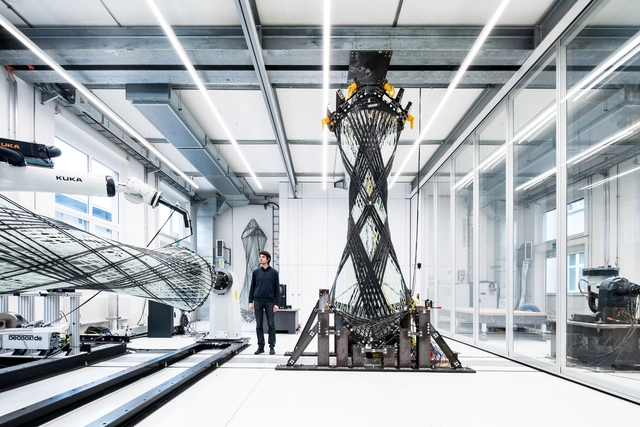
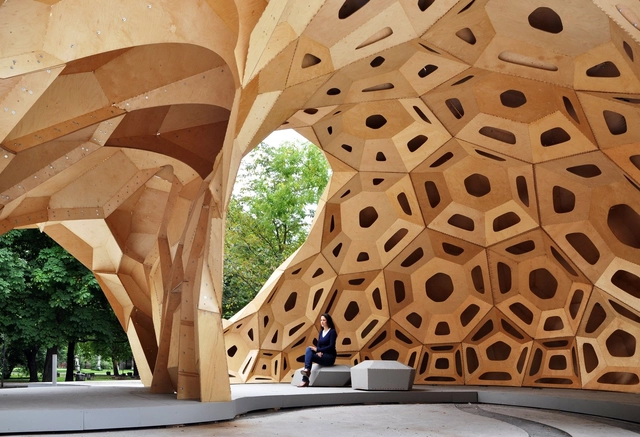
Materials and technology come together in new spaces and experiences. When looking to innovations in advanced construction, the Institute for Computational Design (ICD) and the Institute of Building Structures and Structural Design (ITKE), together with students at the University of Stuttgart, have been creating a series of experimental pavilion for many years. These structures tell a story of computational design and computer-aided manufacturing processes for advanced construction.
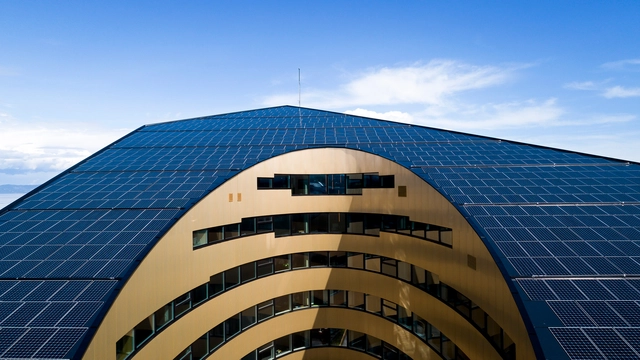
Once restricted to space stations and satellites, photovoltaics are now gaining popularity and becoming an increasingly viable option. Every day, the sun releases an enormous amount of energy, far more than the entire population consumes. Being that the sun is a sustainable, renewable, and inexhaustible source for generating electricity, not using it seems almost counter-intuitive, especially considering the social and environmental impacts of other forms of energy generation. But the technology to create electricity from the sun is by no means simple and still has some limitations, the most significant being price. The following article attempts to explain some basic concepts about this process, and to highlight important considerations for designing a solar energy system.
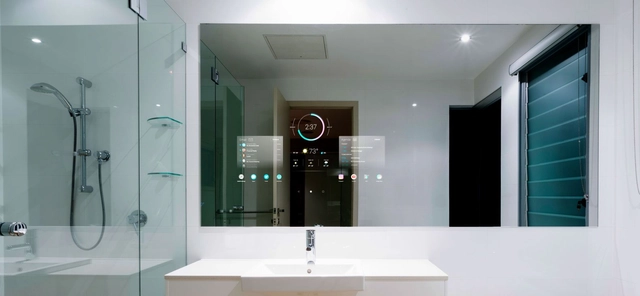
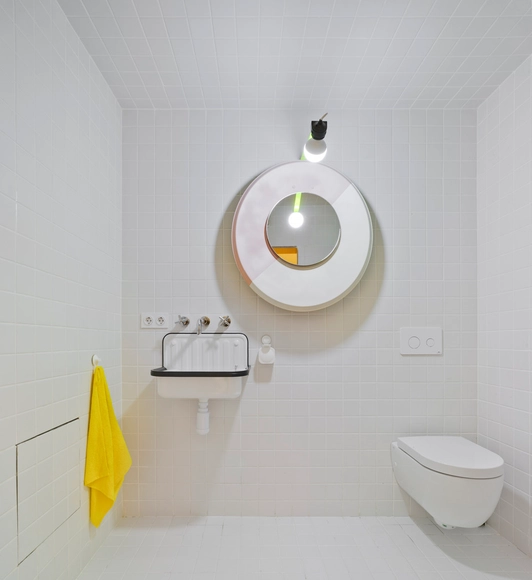
Home automation, from voice-controlled virtual assistants to app-controlled thermostats, has quickly and unexpectedly ushered the future into our own homes. As technology continues to progress, the way we interact with our environment will likely only grow more and more futuristic – even spaces as personal as our home bathrooms. While the prospect of such a highly digitized personal life may be daunting to some, others see this trend’s potential for improving not just comfort, but health and safety as well. Below, we outline some of the technologies that we hope to see in the bathrooms of the future.
https://www.archdaily.com/926022/what-will-bathrooms-look-like-in-the-futureLilly Cao
As construction evolves, new advancements are shaping how we design. These movements are the product of shared ideas and the convergence of building technologies that open up new possibilities for architecture. From the atomic scale of materials to preassembled homes and faraway planets, the changes in BuildTech are felt across industries. As a result, disciplines are learning from one another to reimagine how we build.
Square, rectangular, hexagonal, matte, shiny. It's hard to think of a more versatile flooring material than tiles. They're also known for their high durability, ease of maintenance and installation, and are among the most common choices for covering floors and walls, whether wet or not. Following are 10 common questions about ceramic tiles, and their answers:
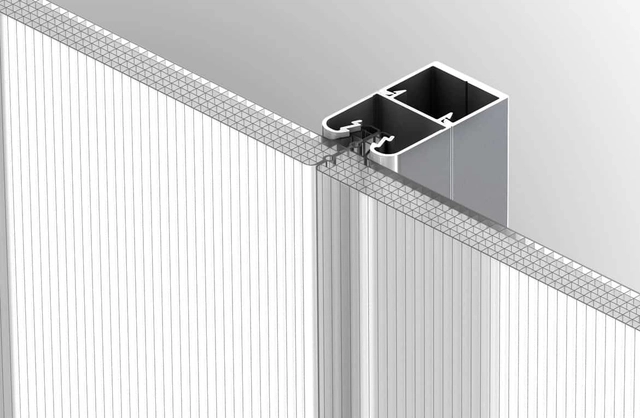
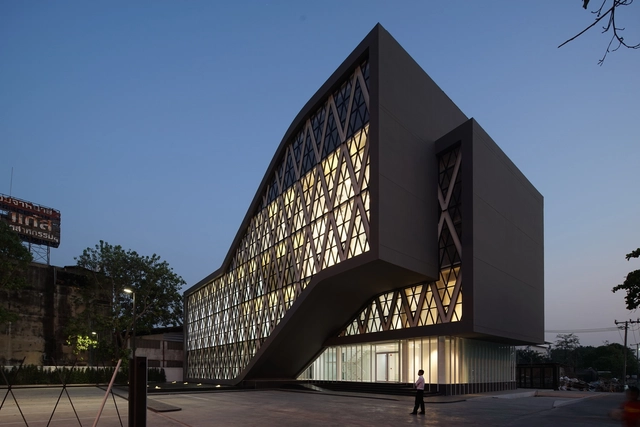
Translucent facades are light glazing panels used on the exterior of buildings, protecting the structure from weather damage, dampness, and erosion. Its composition of polycarbonate microcells creates a soft, naturally diffused light with a wide range of possible colors, brightnesses, and opacities.
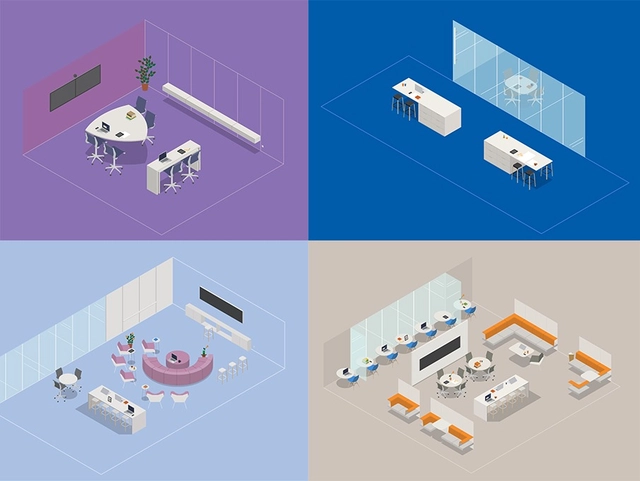
Today's generation no longer sees work in the same way as previous generations. New company models and occupation possibilities have changed the spaces where people develop their professional activities. Working from home, from coworking spaces, or remotely from anywhere in the world is already a fairly common reality. But a number of companies still do not utilize or create spaces where their employees can work together, collaborating in the same environment. In addition to shared culture that companies often try to create, it is essential that the design of an office takes into account the needs and particularities of each type of work and encourages communication and interaction, while providing places for concentration and focus. As generations and corporate cultures change, it is natural for the office space to move away from traditional layouts with cubicles, tables, and meeting rooms.
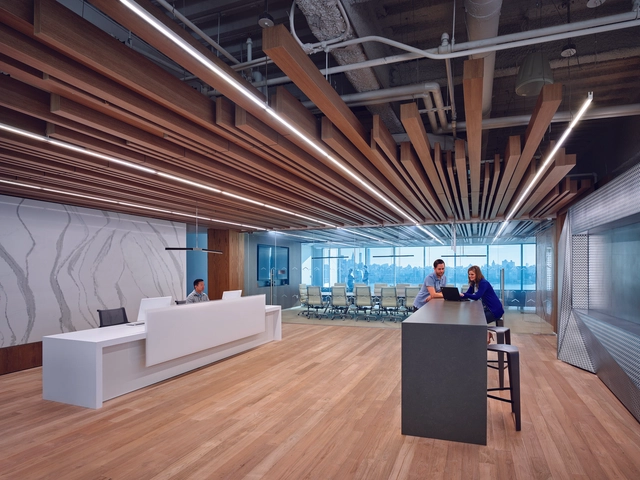
Open ceilings offer an opportunity for creative design and technical integration. They play a key role in forming interior spaces and add value by adding comfort through acoustics, finishes and other integrated solutions to the overall design intent.
The construction industry has evolved throughout time, but always by way of builders. What happens when people are no longer part of building and construction? This is the question asked by British multinational infrastructure company Balfour Beatty, and they’ve published their answer in the 2050 Innovation Paper. The industry report has become a reference point to those looking at the evolution of buildings and design.
For the most part, rubber isn’t considered a conventional building material – at least not to the same extent that materials like wood, concrete, or glass are. But rubber is commonly used in interiors for flooring of extraordinary color or brightness, and even more unexpectedly for exterior facades with unique aspects or upholstery effects. This functionality is motivated by unique advantages such as smoothness, elasticity, durability, and color consistency.
https://www.archdaily.com/925588/rubber-skin-buildings-a-malleable-seamless-architectureLilly Cao
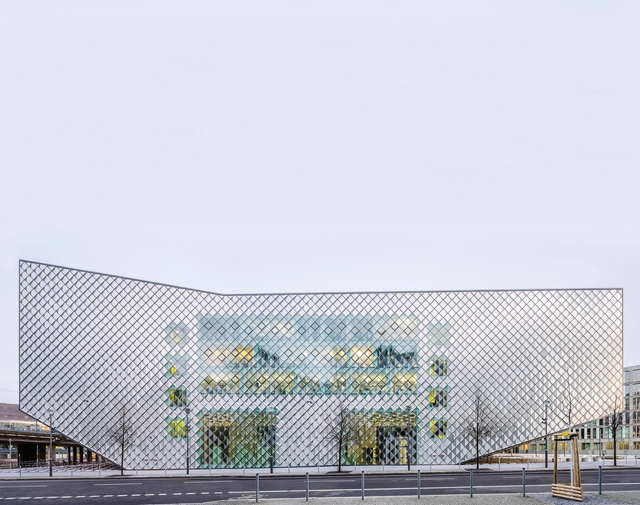
Facades are the interface between the interior and exterior of a building. They are the most striking and visible parts of a building, they protect it from external agents and are one of the main contributors to creating comfortable environments since it is where thermal gains and losses occur. Just like our skin, an extremely versatile organ of our body, it should be natural for it to be the part of the building which bears technology capable of becoming adaptable to the environmental conditions of the place where it is located.
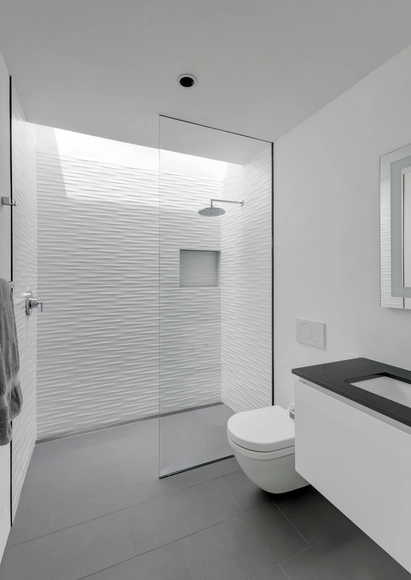
Because it doesn't include a bathtub, or require doors, screens, or curtains, the walk-in shower often makes bathrooms appear larger, cleaner, and more minimalist.
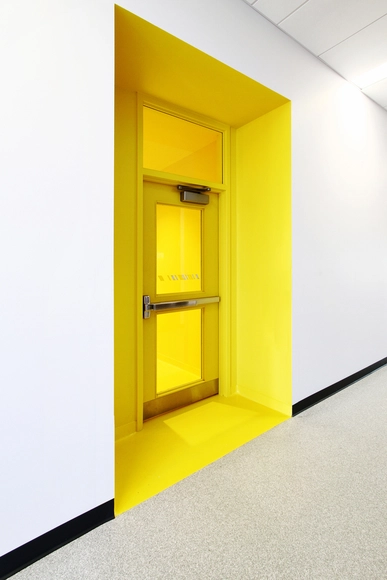
Fire doors are doors that meet fire resistance standards and can prevent fire (or smoke) from spreading through the floors or living spaces of a building, allowing people to evacuate safely from a fire.
Once restricted to luxury or super-tech buildings, home automation is proving to be an increasingly fundamental and affordable addition to architectural projects, whether to new buildings or renovations. While understanding how they operate can be extremely complex, the primary purpose of technology is to make life simpler, safer, and easier. By definition, home automation seeks to be globally intelligent, functioning as a system that facilitates processes without unnecessarily complicating the user's life. The idea is to connect devices, which in turn connect and talk through a centralized control unit, accessible by computers, tablets, and mobile phones. These include lights, appliances, electrical outlets, and heating and cooling systems, but also alarms, doors, windows, smoke detectors, surveillance cameras, and many other sensors and devices.
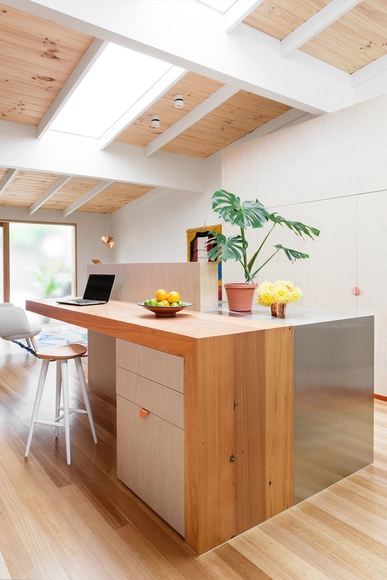
One of the most practical and functional spaces of any residential project is the kitchen. Its artificial surfaces – be it countertops, kitchen benches, or coverings – contain most of the space's equipment. Thus, it’s essential to build kitchens with the most resistant and hygienic materials. Aside from these requirements, it's also important to pay attention to aesthetics and profitability, while adapting the space to the dynamics of each family.
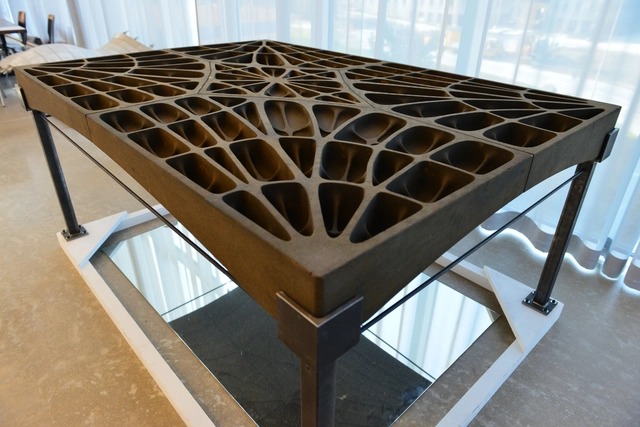
With the intention of maximizing available space and avoiding steep construction costs, researchers from ETH Zurich’s Department of Architecture have devised a concretefloor slab that with a thickness of a mere 2cm, remains load bearing and simultaneously sustainable. Inspired by the construction of Catalan vaults, this new floor system swaps reinforced steel bars for narrow vertical ribs, thus significantly reducing the weight of construction and ensuring stability to counter uneven distributions on its surface.
https://www.archdaily.com/869192/gothic-construction-techniques-inspire-eth-zurichs-lightweight-concrete-floor-slabsOsman Bari