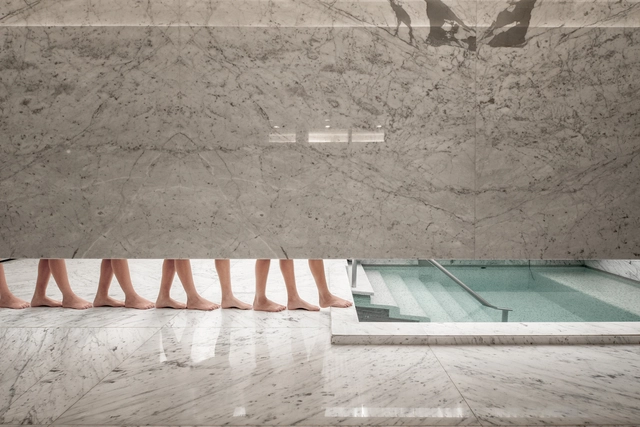
Emmi Pikler was a Hungarian pediatrician who introduced, in the years after World War II, a new philosophy on early childhood care and learning for children up to the age of 3. It was after the birth of her first child that she began to question: what happens when a child is allowed to develop freely? The observed results culminated in the introduction of a new methodology.
Everyone loves models, but not everyone loves making them. For some, models bring up memories of fingers full of dry glue, cuts from sharp pieces, wasted materials, and large doses of frustration. For others, with the unique ability to physicalize drawings easily and beautifully, making small-scale models can even be fun. But, of course, on the internet, there will always be someone who can take any activity to unbelievable levels of achievement. In model building, the OUROBOROS ARQ YouTube channel takes this role. With almost 2 million subscribers, and videos with over 50 million views, the channel documents the construction processes of highly complex miniature buildings.
Timber trusses are wooden structural frameworks used to support roofs or other heavy structures. Fabricated from a series of triangles linked by a ridge beam and purlins, wooden trusses are structurally advantageous due to their high strength-to-weight ratios and corresponding ability to support long spans. However, these structural components can also be used for aesthetic ends, and when left exposed, can complexify, beautify, and open an interior space.
https://www.archdaily.com/948955/the-beauty-of-exposed-wooden-trussesLilly Cao
Between 1950 and 2011, the world's urban population increased fivefold. In 2007, for the first time, the number of people living in cities surpassed the number of people living in the country. In 2019, the urban population had already reached 55% of the total population, and by 2050, it is estimated that just over two thirds of the population will live in urban areas. However, this growth is not constant in all parts of the world: according to the UN World Urbanization Prospects 2018 Report, the global urban population is expected to grow by 2.5 billion inhabitants between 2018 and 2050, with almost 90% of this increase concentrated in Asia and Africa. As populations in these areas increase, so will the demand for energy, food, and water, making resources more scarce. This scarcity will be compounded by the negative impact of urbanization on the climate and the environment.
For many, the aesthetics of wood are powerfully enchanting. With a huge diversity of species and innumerable variations in colors, weights, and textures, wood is one of the most highly appreciated materials of all time. But the unrestrained logging of forests for use in construction has had and will continue to have enormous environmental impacts if precautions such as sustainable management, legitimate certification, or reforestation are not taken. Being an organic material, when used for construction, wood tends to morph under conditions of humidity, heat, and loads, and its fibers eventually deform over time. In addition, wood is a material that does not respond well to environments where it is soaked and dried repeatedly, which can cause it to rot after some time if it is not adequately waterproofed. Therefore, there are some situations where using wood may not be a good idea.
Hydraulic tiles are tiles produced entirely by hand with cement-based raw materials. Created in the mid-1800s in Spain, and widely used in Europe and America, it is a versatile option that can not only be applied in public areas, such as squares and sidewalks, but also interiors, including floors, walls, and furniture. Their versatility stems from the fact that they are highly customizable, from their colors and patterns to their geometry and dimensions. Read below a mostly technical explanation of these tiles, their manufacture, and their installation.
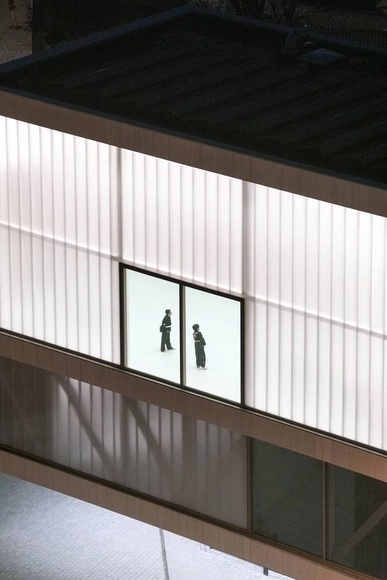
Diversifying the materials of an interior space can greatly improve its depth and visual interest. At the same time, adding partitions or other delineations of internal space can help organize flow, circulation, and visibility. Polycarbonate, a type of lightweight, durable thermoplastic, is an excellent medium for both functions.
https://www.archdaily.com/948075/polycarbonate-for-interiors-8-examples-of-translucent-architecture-indoorsLilly Cao
Residência Familiar / Ruetemple. Image Cortesia de Ruetemple
In early 2020, along with the implementation of worldwide social isolation measures, we published several articles in order to help our readers increase productivity and comfort in their home offices. After months of continued isolation, surveys show that more than 80% of professionals want to continue working from home even after quarantine ends. In addition, a good number of companies are similarly satisfied with current work practices, showing a high tendency to adopt this practice indefinitely, since the majority of companies observed that remote work was as or more productive than face-to-face work.
Corals are fundamental to marine life. Sometimes called tropical sea forests, they form some of the most diverse ecosystems on Earth. They serve as a refuge, breeding, and feeding area for dozens of species in the sea, and their absence can negatively affect local biodiversity to a tremendous degree. Yet just as humanity pollutes and destroys, it can also remedy and encourage the creation of more life. This is why shipwrecks of old vessels or the sinking of concrete structures for the creation of artificial reefs are frequently reported as providing immense potential. In Hong Kong, researchers have been developing 3D printed structures using organic materials that can lead to the creation of new opportunities under the sea.
The polished concrete technique is not only suitable for many different environments, but also harmonizes well with various building materials, and has been the material of choice for many Brazilian architects in housing designs in recent years.
All too often, architects and designers spend hours searching for textures and materials to represent their visions. This struggle takes many forms: from scrolling through Google, Pinterest, and databases in search of the perfect texture, to manually creating one over the course of several hours, or even days. In either case, the result is frequently painful, and rarely perfect. A database organized, reliable, free and easy to use is not always a simple thing to find.
At the 2014 Venice Biennale, celebrated architect and curator Rem Koolhaas chose an unusual curatorial theme. Rather than exploring the major issues that plague modern society or their manifestations in the profession of architecture, the event's theme, "Fundamentals," and its main exhibition, "Elements of Architecture," examined in detail the bare fundamentals of buildings, simple elements used by everyday architects for everyday designs. According to Koolhaas, “Architecture is a profession trained to put things together, not to dismantle them. Only by looking at the elements of architecture under a microscope can we recognize cultural preferences, technological advances, changes triggered by the intensification of global exchange, climatic adaptations, local norms and, somewhere in the mix, the architect's ideas that constitute the practice of architecture today.”
It’s no secret that tiny homes have become exceedingly popular in recent years – a signifier of minimalist bohemian living in response to the excesses of the current day. From reoutfitted RV’s to prefabricated Muji homes to futuristic Nestron pods, the world of architecture has seen a variety of tiny houses gain viral attention in the past decade alone. As this typology grows more widespread around the world, communities of these tiny homes have proliferated as well, popping up in North America, New Zealand, East Asia, and more. These communities combine the quaint lifestyle of minimalist living with collective spaces for social interaction, bringing together like-minded families and individuals into fashionable tiny neighborhoods. We will examine several such communities below.
https://www.archdaily.com/947194/minimal-homes-and-a-central-collective-space-tiny-house-communities-around-the-worldLilly Cao
The Brundtland Report, 1987 - "Our Common Future" - introduced the notion that the sustainable use of natural resources must "meet the needs of the present generation without affecting the ability of future generations to meet theirs." Since then, the term sustainability has been popularized and, often, trivialized in our daily lives. In the construction industry, this is no different. As much as we know that to build, we need to destroy, how is it possible to mitigate the effects of construction during the useful life and demolition of buildings? A sustainable building, in its design, construction, and operation, must reduce or eliminate negative effects overall and may even generate net positive impacts on the climate and environment – preserving resources and improving the quality of life of the occupants simultaneously. To say that a building is sustainable is easy and even seductive. But what exactly makes sustainable construction?
Inspired by vernacular architecture, Kathryn Larsen is a bio-based designer working with seaweed. Throughout her career, she has been doing an intensive investigation into eel-grass, a material that has been used for centuries around the world. Larsen wants to apply all the benefits of this material (rot resistance, fire resistance, non-toxic, insulation characteristics comparable to mineral wool, and its ability to create carbon negative buildings) into prefabrication development and other technologies that enable the creation of new cladding and other elements, such as insulation batt and acoustic panels.
When building for a more sustainable world, the materials you choose undoubtedly play the biggest part in minimizing your project's carbon footprint. Building a wall out of plastic bottles, for example, prevents them from adding to the hoard in a landfill. However, there is a material used for centuries throughout the world that tops all the rest when it comes to sustainability: adobe.
In residential architecture, there have always been central, indispensable spaces and peripheral spaces more easy to ignore. When designing a home, the task of the architect is essentially to configure, connect, and integrate different functions in the most efficient way possible, necessarily prioritizing some spaces over others. And although today many are designing in ways that are increasingly fluid and indeterminate, we could say that the bedroom, bathroom, and kitchen are the fundamental nucleus of every house, facilitating rest, food preparation, and personal hygiene. Then meeting spaces and other service areas appear, and with them lobbies, corridors, and stairs to connect them. Each space guides new functions, allowing its inhabitants to perform them in an easier and more comfortable way.
In the dome of the Pantheon in Rome, several construction techniques were used to allow such a bold construction to stand. One concerns the composition of the concrete (in this case, non-reinforced concrete) with different densities throughout the structure. Closer to the top, lighter stones were used in the mixture, reducing the dome's weight retaining the solidity of the base. Another technique was the inclusion of “coffers”, which are nothing more than subtractions in the concrete, reducing the weight of the dome while maintaining a cross section sufficiently robust to support its own weight. Built almost 1,900 years ago, this building still surprises us with the genius of the solutions. Using a quantity of materials just high enough to fulfill its primary function, and creating intelligent structures as a result, is just one of the lessons that this building provides.