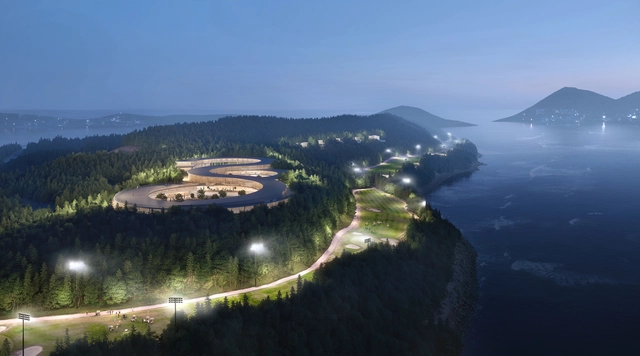
UNStudio has recently designed the masterplan for Gyeongdo Island, a new sustainable leisure destination in South Korea. Driven by nature, the 470,000 m2 buildings and public spaces are centered on the qualities of a green environment.
UNStudio has recently designed the masterplan for Gyeongdo Island, a new sustainable leisure destination in South Korea. Driven by nature, the 470,000 m2 buildings and public spaces are centered on the qualities of a green environment.
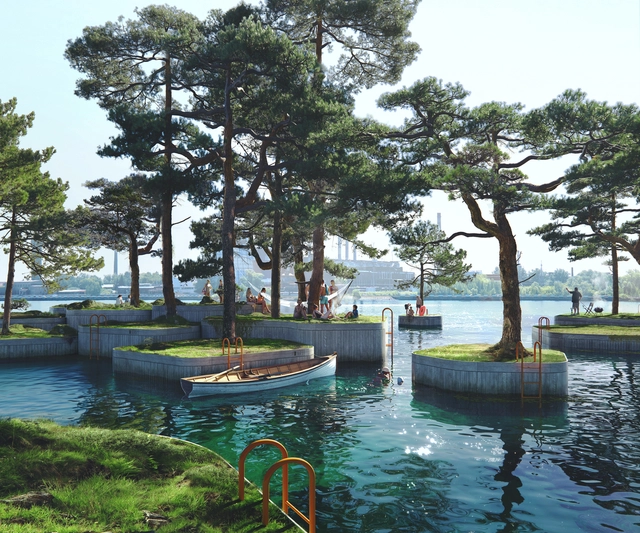
Marshall Blecher & Studio Fokstrot have introduced “wilderness and whimsy”, to the Danish capital by creating a series of floating islands in the city’s harbor. Adding a new archetype to the urban space, the project can be used by boaters, fishermen, kayakers, stargazers, and swimmers.
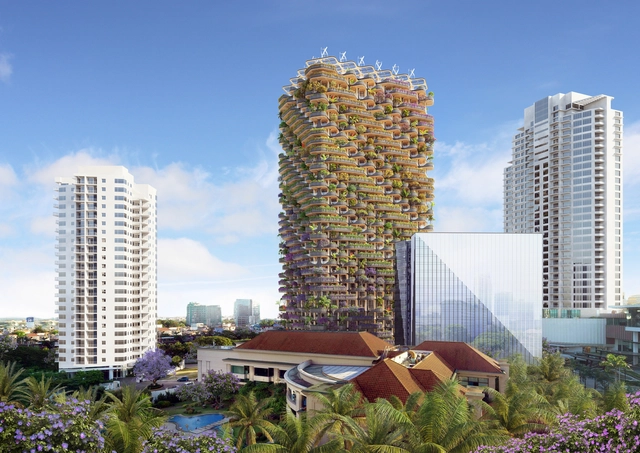
Vincent Callebaut Architectures has imagined The Rainbow Tree, a modular mass timber condominium tower in Cebu City, Philippines. Revealing the cultural and natural Filipino heritage, the project, named after an iconic and colorful tree from the Philippines the Rainbow Eucalyptus, was entirely conceived in a way to reduce the carbon footprint of the building.
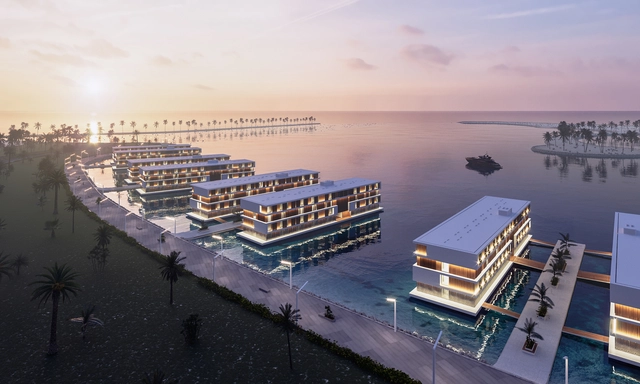
Located on Qetaifan Island North in proximity to Lusail International Stadium, which will host the opening and final games of the FIFA World Cup 2022, ADMARES and Sigge Architects are developing 16 floating hotels to serve tourists and fans that will be visiting Qatar.
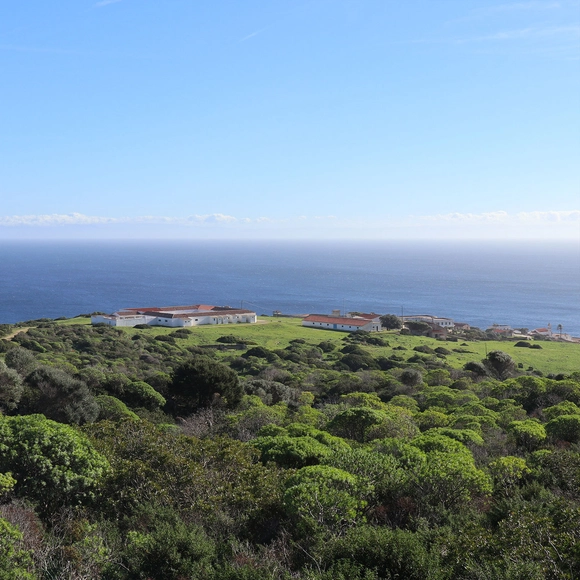
Every human intervention on an island – even those that interpret it as an ideal space for confinement - starts as an act of colonisation aimed at reducing the unescapable condition of insularity. Enacting the power of nomads as decolonising agents, Casting Castaways will migrate every two years from island to island across a former carceral archipelago in the Mediterranean Sea. We will seek for a pedagogy that, while suggesting future scenarios vis a vis current trends in tourism, environmental preservation and heritage, interrogates those territories to understand how and whether architecture can challenge and escape from the very ideas of incarceration and colonisation.
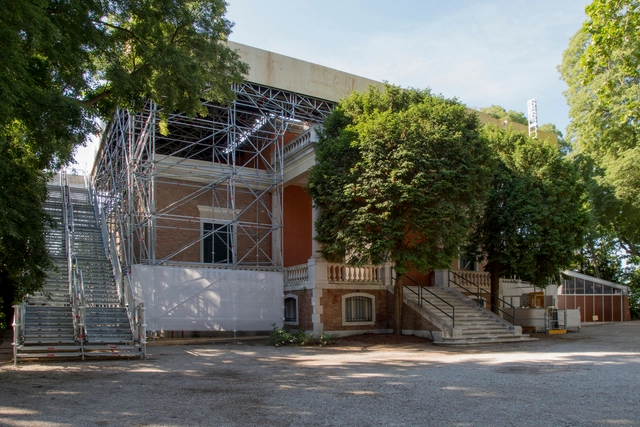
As part of our 2018 Venice Architecture Biennale coverage, we present the completed British Pavilion, which received an honorable mention in the Biennale awards. To read the initial proposal, refer to our previously published post, "Caruso St. John to Transform the British Pavilion Into a Politically Charged Meeting Space at 2018 Venice Biennale”
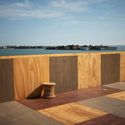
A joint venture from Caruso St John Architects and artist Marcus Taylor, "Island" creates an elevated public space, offering views of Venice and a unique place for both meeting and reflecting.
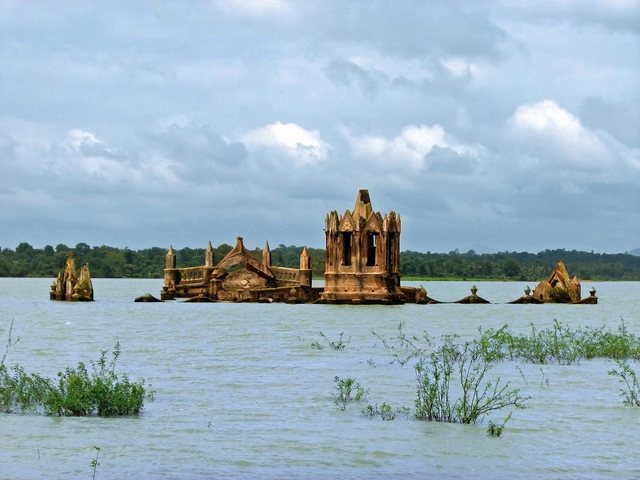
As part of our 2018 Venice Architecture Biennale coverage we present the proposal for the British Pavilion. Find the curator statement below.
The British Pavilion for the 2018 Venice Biennale, entitled 'Island', was curated by Stirling Prize-winning Carusco St John Architects, working in collaboration with artist Marcus Taylor. Responding to the Biennale theme of ‘Freespace’ set by curators Yvonne Farrell and Shelley McNamara of Grafton Architects, ‘Island’ sees the construction of a new public piazza on the roof of the British Pavilion, leaving the building below empty of exhibits.
At the piazza's centre, the Pavilion’s roof protrudes upwards through the floor to represent both an island, and an undiscovered world beneath. The programme for the British Pavilion sees a series of events including poetry, performance, film and debate, all interpreting interpretations of ‘Island’ and ‘Freespace’.

Generating new models for participatory development for Ulleung island in South Korea.
The SHINBISUM workshop aims to open an alternative way of thinking about rural development in Ulleung-do and beyond. In a world where participatory practices are becoming the norm, how can the local and international community contribute to shape the future of JangHeung? The residents of Ulleung island, the Korea rural community corporation, Yangji Co., and urbz invite you to imagine with them the future of one of Korea’s most iconic locality. The workshop will produce strategic ideas and design interventions for JangHeung village. If you like to create, ideate, design and build - join us for a 5-day participatory immersion in a place which embodies the struggle of many localities around the world. Like so many other places, Ulleungdo is torn in between urban development and the preservation of their natural environment.

Paradisiacal, utopian, dystopian, heterotopian – islands hold an especially enigmatic and beguiling place in our geographical imagination. Existing in juxtaposition to what’s around them, islands are figures of otherness and difference. Differentiated from their contexts and as much myth as reality, islands have their own rules, their own stories, their own characters, their own ecologies, their own functions, and their own forms.
The LA+ IMAGINATION design ideas competition asks you to design a new island. You can locate it anywhere in the world, program it any way you want, and give it any form and purpose you can imagine.
AWARDS:
USD $10,000 total prize money and feature publication in LA+ Journal’s LA+ IMAGINATION issue

Works of India is an archive of drawings, sketches, artefacts, models, tools and pictures collected and made during two and a half years of life and work. The collection arises as necessity to document the relation between human, natural and built landscape to portray a frame for a way of life in India.
The selected material articulates in six environments which reflects upon the relation between man and nature, god and matter, a certain sacrality which is embedded during the act of creation and a sort of deep rooted understanding in the way of making and building.
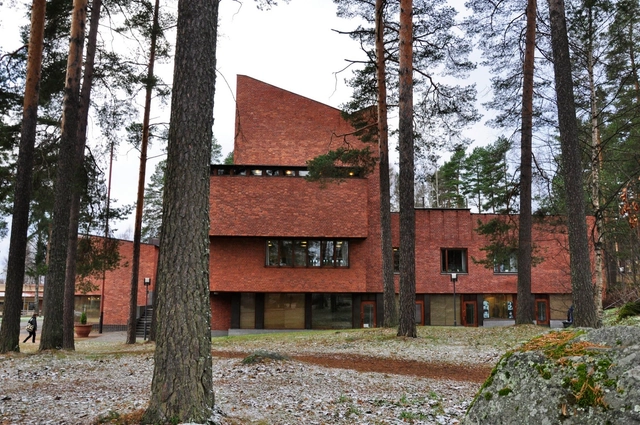
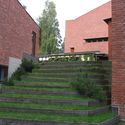
Occupying the center of a small farming town in Finland, Säynätsalo’s Town Hall might appear almost too monumental for its context. Designed by Alvar Aalto in 1949, the town hall is a study in opposition: elements of classicism and the monumental blended with modernity and intimacy to form a cohesive new center-point for the community. These and other aspects of the design initially proved somewhat divisive, and the Town Hall has not been without controversy since its inception.