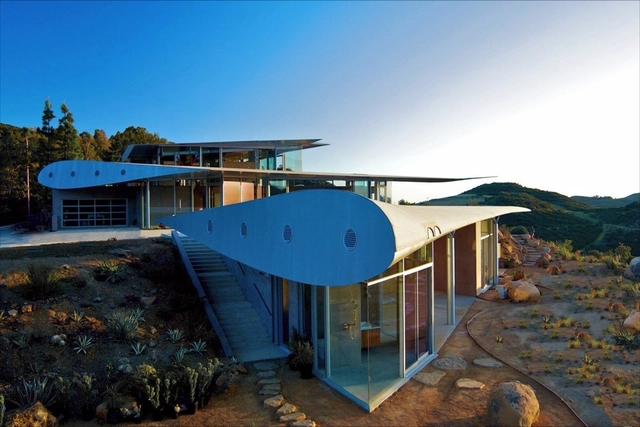
The EPA estimates that in 2009, the United States produced approximately 486 billion pounds of solid waste, most of which could have been recycled. And where did all that solid waste go? Right into our landfills, not too far from where we live and work. The same year, 34% of municipal solid waste was recycled (compared with only 10% in 1980) but the problem remains that, according to Chemical & Engineering News, most product-design methods used today are short-sighted. Most of these products were not designed with an end-of-life solution in mind, therefore most cannot be recycled or reused.
Read on to find out what this means for design after the break.
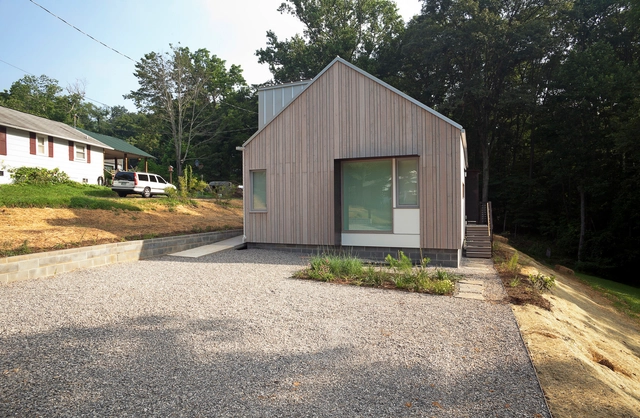
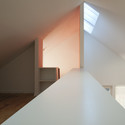
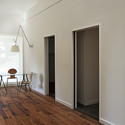
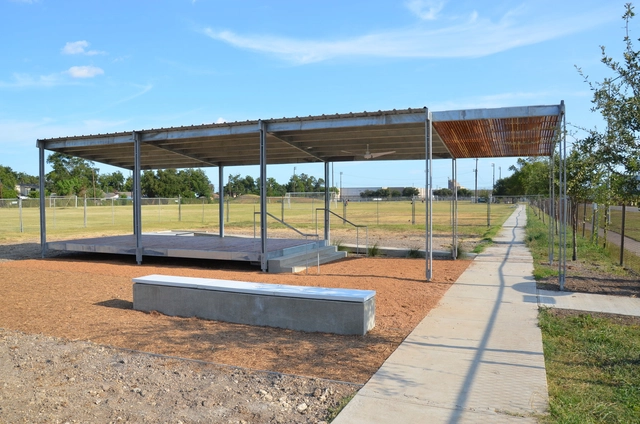
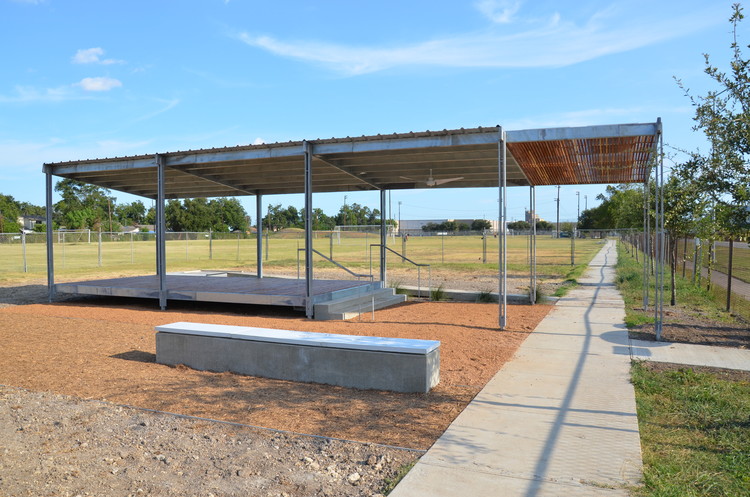
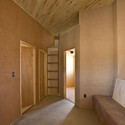
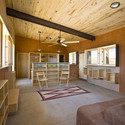
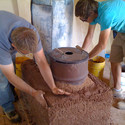
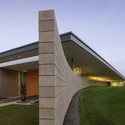
Architect: Sanders Pace Architecture Location: Manchester, Tennessee Project Team: Brandon Pace, Michael Davis, Michael Aktalay, Larry Davis, Matthew Davis, Carah Ferry, Will Spencer, Garrett Ferry, Ashley Pace, John Sanders, Stephanie Dowdy, David Scott, Shane Elliot, Leslie Smith Project Area: 900 SF (x2 pods) Project Year: Summer 2011 Photographs: Sanders Pace Architecture
Ten years ago the world was jarred at seeing a financial institution of a high urban city destroyed. Maybe at that moment we found ourselves second-guessing the security of our society and our government, of the stability of our ever-expanding cities, of the soundness of our buildings. But a decade later cities are still thriving: growing and rebuilding. Senator Daniel Patrick Moynihan predicted that our attitudes toward the value of urban development would remain unchanged, and he may have been right. So have we, as law-makers, designers and inhabitants of the urban environment learned from what ten years ago was considered a failure in our cities and government agencies? ArchDaily had the pleasure of interviewing Mr. Patrick Phillips, CEO of the Urban Land Institute (ULI), an international organization devoted to the responsible use of land and in creating sustainable thriving communities worldwide.
19 university teams from across the world are gearing up to make their way to Washington D.C. for the Solar Decathlon. Last week,we previewed the 19 designs and, by popular demand, today we’ll be sharing more info about SCI-Arch + CalTech’s design. Entitled CHIP (short for Compacted Hyper-Insulated Prototype) the residence’s geometry is designed to respond to the sun’s orientation while wrapped in a sun performative envelope. More about CHIP, including a video walk-through, after the break.
The Y.S Sun Green Building Research Center at National Kung University in Taiwan has recently been awarded top honors by the USGBC, in addition to receiving the Taiwan Ecology, Waste Reduction and Health Diamond Certification from the Ministry of Interior. The three-story 4800 square meter building utilizes 13 different sustainable building techniques in order to achieve a 65% energy savings and a 50% water savings over typical office buildings.
FBN Architects recently received planning approval for 55 dwellings on the site of the former South Primary School in Paisley at 103-109 Neilston Road for Loretto Housing Association. The design includes 37 socially rented houses that surround a landscaped central square and shared surface, 6 townhouses that line Neilston Road and a courtyard building, which houses 10 supported flats for young adults as well as a staff base. More image and project description after the break.
In the wake of Hurricane Irene it only seemed appropriate to take a second look at Rising Current, an exhibit that was featured at the MoMA just last year. To give you a refresher, the exhibit was a cohesive showcase of five projects tackling the lingering truth that within a few years, the waterfront of the New York harbor will drastically change.
Team Zero, comprised of ARO and dlandstudio, specifically took a look at the lower Manhattan landscape, proposing to develop a new soft and hard infrastructure solution paved with a mesh of cast concrete and engineered soil and salt tolerant plants. This would create greenways that act as absorptive sponges for rainwater. The porous green streets address daily tidal flows and storm surges with 3 interrelated high performance systems (network of parks, wetlands and tidal salt marshes). These systems stop sewage overflow, block higher sea levels and mitigate storm surge.
Rising Current provided an emphasis on how to re-think the city, relevant before, and even more pressing now after the flooding from the hurricane. Let’s hope that the ideas for solutions that were generated from the exhibit can now be considered for implementation. More about Rising Currents and Team Zero’s solution following the break.
According to George Baird of Architectural Record, skepticism of sustainability is on the rise. Architectural historians, theorists, practicing architects and even construction lawyers and risk managers are warning designers about the risks associated with the “going green” ambition. Sustainability takes many forms. From the recycling and reusing of materials to new technological innovations, “green design” can be humble: sourcing natural and passive solutions energy needs; and it can be extravagant: using customized and computer-enhanced systems that detect environmental conditions and respond accordingly to the building’s needs.
UPDATE: New renderings of the project have been released as the building approaches completion. They can be viewed here.
The design for the new Taipei Nangang High-tech District Office Tower, by Aedas, draws inspiration from the shape of the river pebbles, developing a unique aesthetic that conveys the idea of softness and elegance as well as strength and character.
Located in close proximity to the Jilong River and a major overpass highway in Taipei, the surrounding environment provided the opportunity to propose a building that will redefine the skyline of this rapidly developing area of Taipei. More images and architects’ description after the break.
Gardens by the Bay will be Singapore’s largest garden project and is central to the country’s continued development of Marina Bay. Managed by the Singapore‘s National Park Board, the gardens were designed by a team of two firms: landscape architects, Grant Associates and architects, Wilkinson Eyre Architects. The gardens will feature two cooled conservatories – the Flower Dome (cool dry biome) and Cloud Forest (cool moist biome), as well as themed horticulture gardens, heritage gardens, and hundreds of thousands of plants from around the world.