

-
Architects: K2S Architects
- Area: 950 m²
- Year: 2013
-
Manufacturers: RMIG
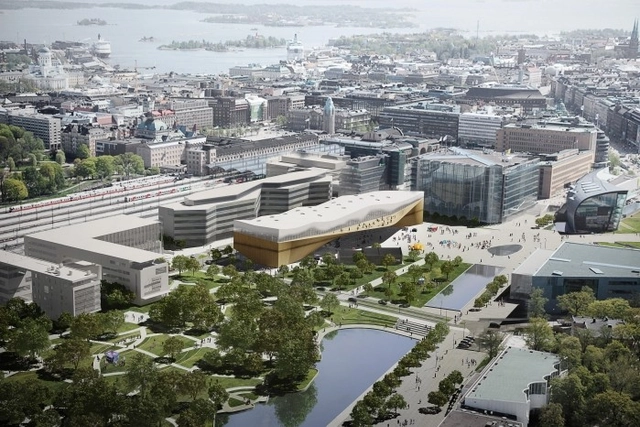
ALA Architects have just won the design competition for the new Helsinki Central Library with their entry “Käännös”. Located in the heart of Helsinki, the 16,000 square meter library building will consist almost entirely of public spaces and will offer a wide selection of services. It will serve as the new central point for the city’s impressive public library network and is slated to open in 2018. More images and architects' description after the break.
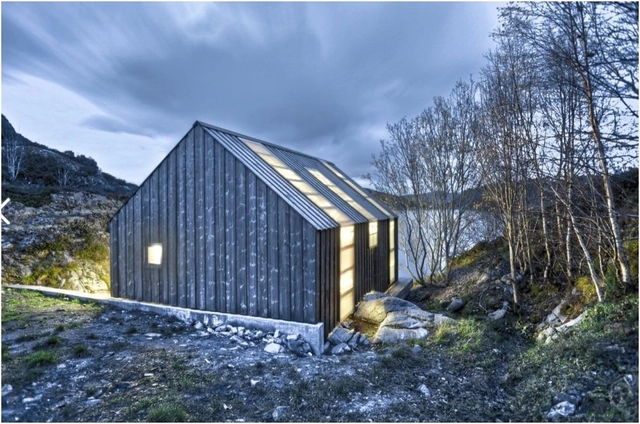
The Museum of Finnish Architecture’s summer exhibition, 'Light Houses.Young Nordic Architecture' is a two-part showing of contemporary work by young Nordic architects taking place now until September 22. Thirty-two architects from Finland, Sweden and Norway – all born after 1962, the year the pavilion was designed – were invited to design a sculptural piece that both complements the modernist vocabulary of Fehn’s pavilion and encapsulates their office’s philosophy of architecture in a 3D form of pre-specified dimensions. More information on the exhibition after the break.

In terms of both the cityscape and its symbolic significance, the proposal by WEAVA Architects + SWAN Architectes for the Helsinki Central Library will represent a modern and dynamic image of an urban public facility for the citizens of the city. Their ONYX concept forms seamlessly into the planned draft proposal of the Töölönlahti area, responding to the surrounding buildings, infrastructure and urban fabric. It is an iconic cultural landmark in its own right, but also respectful of its place as part of a greater master plan. More images and architects’ description after the break.

In the virtualized information era, Plan 01 believes the design for the Helsinki Central Library should be more than ever a “physical space”. The project should be a place for sensory experience, a place where culture becomes an opportunity to meet and exchange ideas, a place where the civil forum is recovered from the virtual and returned to the urban world. Their concept becomes a symbol in stone and wood that opens its heart to the city and offers visitors a retreat for body and mind. More images and architects’ description after the break.

The Helsinki Central Library, designed by FIRM a.d. and OKB Architecture, is a hub of knowledge, where different people, communities and constituencies can come together. With their concept of ‘Geologies of Information’, their design expresses how if libraries were like sedimentary rocks, where layers of knowledge accumulated over time, libraries of the 21st century are like igneous rock in which different mediums of knowledge and learning are fused into a granular heterogeneous whole. More images and architects’ description after the break.

PRAUD shared with us their concept proposal, titled ‘The Heart of the Metropolis’ for the Helsinki Central Library competition. With the intent for a building that serves a larger civic function by creating a space for congregation at an urban scale, their library design aims at becoming a ‘Living Room’ for the city. The result is a true metropolitan building that not only creates a dialogue with the city, but one within the architectural language, making it timeless and essential for Helsinki. More images and architects’ description after the break.

Opening at 6:00pm tomorrow at the Museum of Finnish Architecture, UNBUILT HELSINKI is an exhibition about the Unbuilt City and its inhabitants as part of the World Design Capital Helsinki 2012 program. Drawn from the museum’s archive and beyond, unrealized projects in Helsinki are studied by a team of researchers who generate new relationships with local resources in order to translate the projects into architectural models. Their findings and the narratives behind the buildings are displayed in an exhibition at the museum. The event is curated by Åbäke and Nene Tsuboi and will be up until February 24. For more information, please visit here.

In contrast to the other buildings in the Töölönlahti District of Helsinki, an essential component of the design by PAR and Arup for the Central Library involved creating a public space at the top of the library—visually connecting Töölönlahti to Senate Square and the city at large. The library is organized by six intersecting axes that afford spectacular vistas while creating a variety of spatial configurations for the library’s program. With it’s six floor levels each pointing toward a celebrated landmark, the Central Library becomes a symbolic center for city. More images and architects’ description after the break.

The proposal for the Helsinki Central Library by OODA tries to merge the most efficient program articulation with a strong concept which intends to suggest the overall theme integrated with Helsinki’s context. Their building acts as a shifting point between the two demarked city urban networks – ancient and modern – merging both, creating a public path that connects to the park while it simultaneously generates the formal composition. The new central library will be much more than a traditional library. It will be a dynamic entity, fully equipped, comprised of the physical spaces themselves as well as technology, library collections, staff, tourists in an all-age designed forefront building. More images and architects’ description after the break.

Djuric Tardio Architectes shared with us their concept,’The Storytelling Tree’, for the Helsinki Central Library competition. The starting point for their design begins with the book, a never ending memory, which can tell us stories and tales from here and elsewhere, like a hundred-year-old tree. As the roots of the tree are anchored firmly to the ground, the culture is firmly anchored to books, made with paper obtained from the tree itself. More images and architects’ description after the break.

The proposal by Ghirardelli Architetti for the Helsinki Central Library aims at being a place for everyone: open and accessible, usable and public. A public square animated by exhibitions, events and music. They propose a building where stratigraphy tells the plot of common feelings, the need of investigating, experimenting and understanding: all this is gathered and preserved in the libraries all over the world which people of all ages have given their contribution to, showing their own direct bond to the first trace given to build our memory. More images and architects’ description after the break.

Located at a strategic point within the city of Helsinki, the ‘Shared Dreams’ proposal for the Helsinki Central Library conforms to the proposed massing and urban regulations, while endeavoring to give a coherent response to the program and the environment. Designed by Kubota & Bachmann Architects, the variety of the urban conditions will be, from the very beginning, reflected in the concept of the building and the organization of spaces. More images and architects’ description after the break.

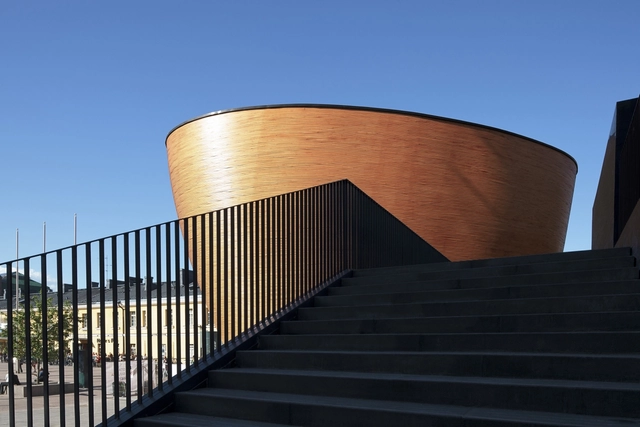

Armi OPEN Workshop – Urban Brain Stream is an international workshop that aims to develop our urban environment. It is part of the program of both World Design Capital Helsinki 2012 and the Helsinki Design Week. In a series of workshops, to be held around the world in a span of 24 hours on September 6, professionals in architecture, art, business, construction, design, graphic design, media and traffic planning, together with city residents, discuss current challenges in urban planning in the context of each city involved. The workshops will discuss topics that have to do with movement and communication – the redesigning of the experience of moving and communal urban spaces. The findings of the workshops will be summed up in an open public meeting at the Huutokonttori information center in Jätkäsaari, Helsinki, on Septmeber 7, from 3pm to 7pm. For more information, please visit here.