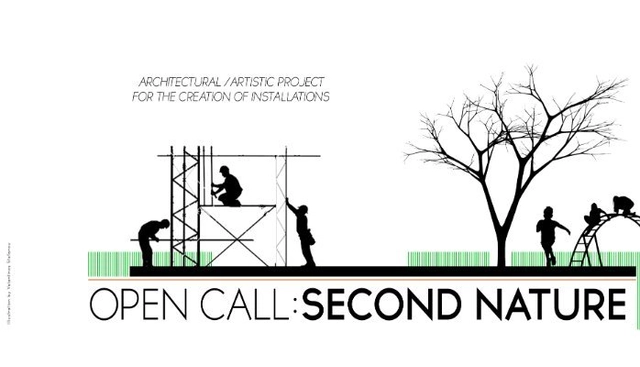
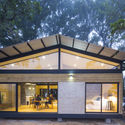
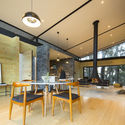
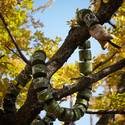
The European Capital of Culture – PAFOS2017 announces the architectural/artistic Open Call entitled “SECOND NATURE”, for the creation of light, small scale structures that will be placed in the Municipal Garden, in the centre of Pafos-CYPRUS. The Open Call is open to professional architects, artists, designers and students of architecture schools of member states of the International Union of Architects (UIA).
In collaboration with client Shinsegae, Olson Kundig Architects has designed a 20,000 square foot roof garden in Uijeongbu, South Korea. Sitting atop the ninth floor of a twelve story department store, the park acts as a playground for children and a cultural center for the community. The project follows a rising trend: placing green spaces on top of buildings in urban areas to create safe and secluded public places. This particular garden uses entirely native species and incorporates sculptures by the artist Do-Ho Suh.
Everyday, in the city of London, 30 million meals are served. That’s millions of trucks arriving to millions of stores and restaurants in a complex, tightly scheduled orchestration of production, transportation, and distribution.
We take it for granted that this system will never fail. But what would happen if these trucks were stopped? As unrealistic as it sounds, it’s happened – and not so long ago.
In 1989, over 57% of Cuba’s caloric intake was imported from the Soviet Union. When it collapsed, Cuba became, virtually overnight, solely responsible for feeding its population – including the 2.2 million in the city of Havana. [1] What happened next is an incredible story of resilience and innovation.
As our world becomes increasingly urbanized, our farms increasingly endangered, and our reliance upon fossil fuels increasingly undesirable, the question of how we will feed billions of future city dwellers is no mere thought experiment – it’s an urgent reality.
The story of Cuba offers us an interesting question: What would our cities look like if we began to place food production/distribution as the primary focus of urban design? And what will it take to make this vision a reality?
More on how Food can shape our cities, after the break…