1. ArchDaily
  2. Filter

Filter: The Latest Architecture and News

Absorb, Filter, Store: 9 Projects Showcasing How Sponge Cities Adapt to Climate Challenges

Subscriber Access | 

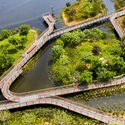
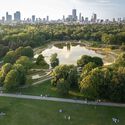
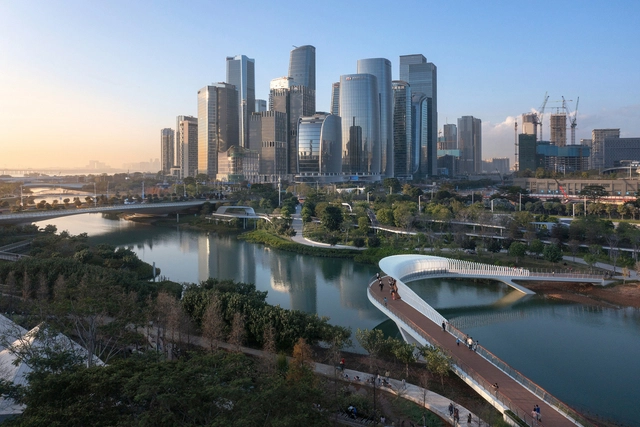
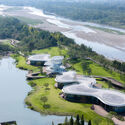
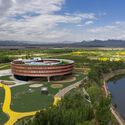
The concept of "sponge cities" has gained prominence since it was introduced by Chinese landscape architect Kongjian Yu, founder of Turenscape, and was officially adopted as a national policy in China in 2013 to combat urban flooding. This approach prioritizes nature-based infrastructure such as wetlands, rain gardens, and permeable pavements, creating landscapes with porous soil where native plants can thrive with minimal maintenance. When it rains, these systems absorb and slow down water flow, reducing flood risks. In contrast, traditional concrete- and pipe-based drainage solutions, though widely used, are costly, rigid, and require frequent maintenance, sometimes even making cities more vulnerable to flooding due to blockages and overflows.
Absorb, Filter, Store: 9 Projects  Showcasing How Sponge Cities Adapt to Climate Challenges - Image 1 of 4Absorb, Filter, Store: 9 Projects  Showcasing How Sponge Cities Adapt to Climate Challenges - Image 2 of 4Absorb, Filter, Store: 9 Projects  Showcasing How Sponge Cities Adapt to Climate Challenges - Image 3 of 4Absorb, Filter, Store: 9 Projects  Showcasing How Sponge Cities Adapt to Climate Challenges - Image 4 of 4Absorb, Filter, Store: 9 Projects  Showcasing How Sponge Cities Adapt to Climate Challenges - More Images+ 5

The Siege of Sarajevo Museum - The Art of Living 1992-1996 Fama Collection / Studio Zec + ahA + Filter

Subscriber Access | 
The Siege of Sarajevo Museum - The Art of Living 1992-1996 Fama Collection / Studio Zec + ahA + Filter - Image 20 of 4
Courtesy of Studio Zec + ahA + Filter

A collaborative work by Studio Zec + ahA + Filter, The Siege of Sarajevo Museum – The Art of Living 1992-1996 project is launching a new way of interacting and learning about the phenomenon of the Siege of Sarajevo. Regarding urban survival, Sarajevo has become a powerful symbol and a lesson for current and future generations. The museum will be a unique depository of human knowledge – where human ingenuity, creativity and intelligence will be captured amidst the urban post-cataclysmic realm. It is a heritage snap-shot of faces and voices that have shaped the longest siege in the modern history of mankind. More images and architects’ description after the break.