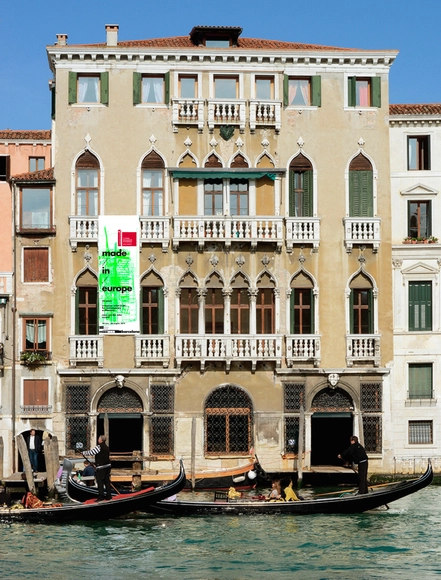
"European-ness Porosity" is presented as part of “MADE IN EUROPE: 25 years of the European Union Prize for Contemporary Architecture – Mies van der Rohe Award.”


ArchDaily complete coverage

"European-ness Porosity" is presented as part of “MADE IN EUROPE: 25 years of the European Union Prize for Contemporary Architecture – Mies van der Rohe Award.”
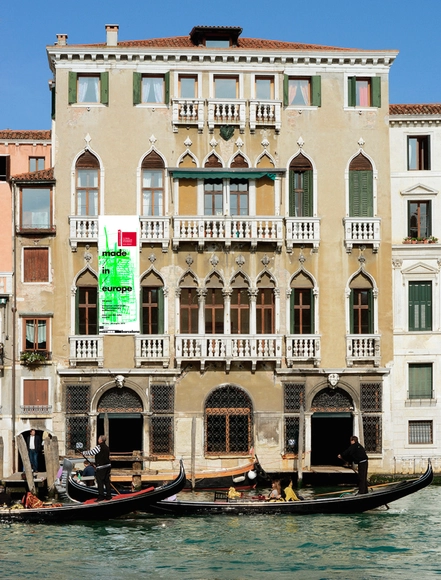
"Is there a distinguishing feature in European architecture beyond the fact that it is 'Made in Europe'?" This question (and others) will be answered in an exhibition which highlights the archives of the European Union Prize for Contemporary Architecture – Mies van der Rohe Award. Coinciding with the 2014 Venice Biennale, The European Commission and the Fundació Mies van der Rohe present “Made in Europe.” Showing a unparalleled and unique examination of the development in architecture over the past 25 years, the exhibition will draw on material from Europe's largest collection of documents (more than 2,500 projects and 230 original models) on contemporary architecture.
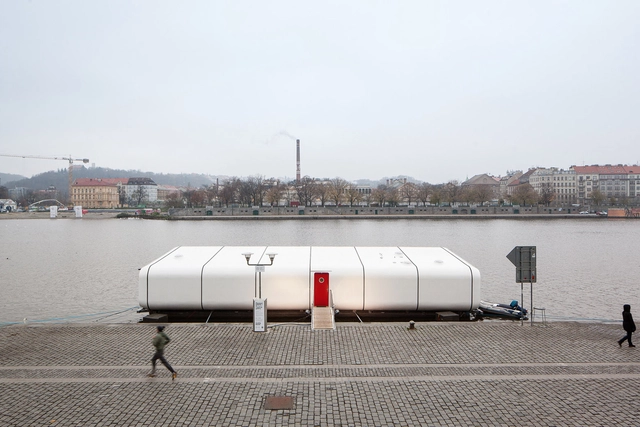
Houseboat or house? It’s both. PORT X defies all notions of deeply rooted house or houseboat, as we know it. Its elegant curves represent clean, timeless and functional design as well as unique harmony of modern hi-tech and natural materials.
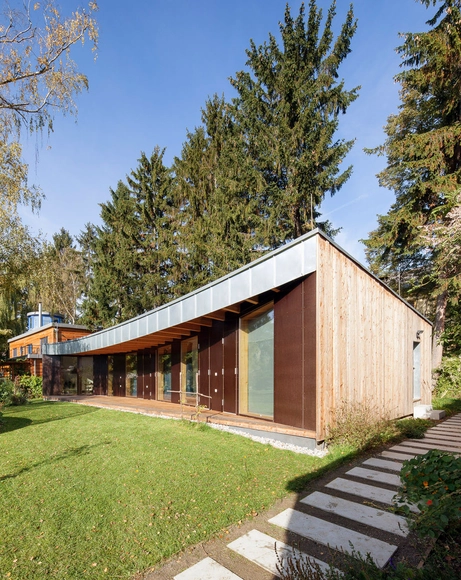
It is a ground floor object based on rectangular plan. The most visible element of the house is the roof formed by ruled surfaces. Longitudinal edges of the roof are bended curves, which determine the shape. The one in the north facade sag upwards in one third of its length. Curve in southern facade sag down in the middle. The shape of the roof is affected by the function of internal space. The common living areas have a higher ground clearance and a more representative character. In children's bedroom in the middle, the height decreases and the space is more intimate. Generally the height of the rooms grows towards the garden; space opens to sun and green. Funnel shape of the south facade is about absorbing maximum of the garden. Roofed terrace lies in front of bended façade in loggia style it is a part of the house.
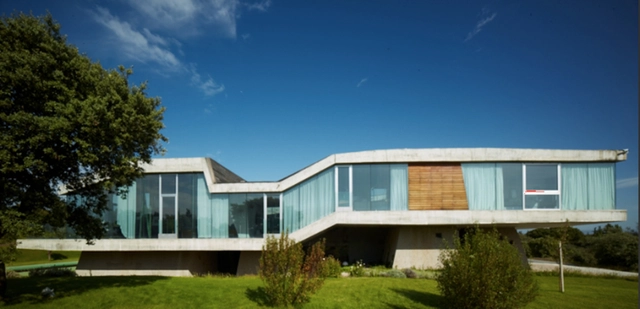
After climbing the hill we thought, ingenuously, that the best way of being established here would be to lie down on a carpet protected from the Sun for a parasol. A carpet that we’d be able to wrinkle to be more comfortable, a parasol that rises and goes down, changing the character of the space that it covers, adaptable to the positions of the body. House and body are recognized in that both are opened systems, in constant exchange with the exterior.
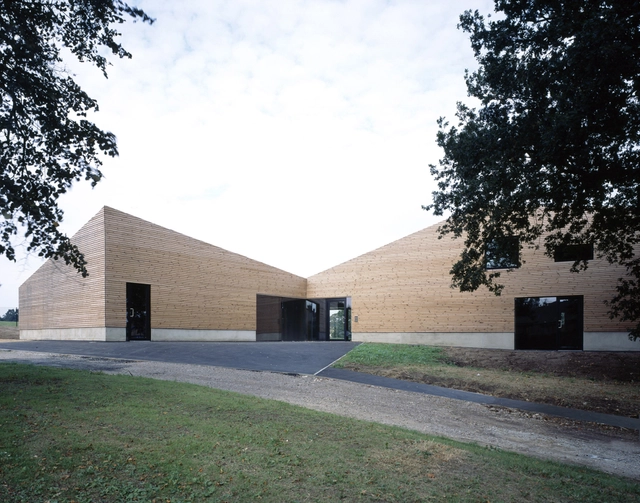
Following an RIBA competition, DSDHA were commissioned to design a SureStart building to serve the St Anne's area of Colchester. A public consultation process followed based around 3 possible sites for the new St Anne’s Sure Start building, where this green field site on Harwich Road, which leads into Parsons Heath recreation ground was selected.

Jo Coenen & Co Amsterdam Public Library

A green clearing surrounded by forest was the only context for the proposed small house. Hence the idea to “carve out” a piece of the grass-covered site, move it up and treat it as the roofing to arrange all the required functions underneath. When the whole was ready, the client came up with another request, to create some space for a small recording studio and a conservatory. The latter was obtained by linking the ground floor with the grassy roof through an “incision” in the green plane and “bending” the incised fragment down, inside the building.
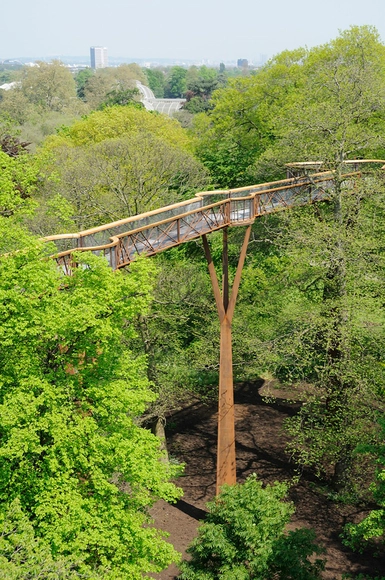
Kew Garden's Tree Top Walkway opened on 24th May 2008, Kew’s Year of the Tree, to over 9,000 visitors. The Walkway is a thrilling experience, taking visitors 18m high into the tree canopies for a birds-eye view of Kew, providing insights into the special role of trees in our breathing planet and the intimate views of a deciduous woodland and its inhabitants from within the tranquillity of the leaves. Inspiration for the walkway was drawn from the ancient Fibonacci sequence found repeatedly in nature.

Marks Barfield’s Lightbox opened in September 2007 and won the UK 2008 Arts Fund Prize. It is a new kind of community cultural centre, and Woking’s first museum and gallery.

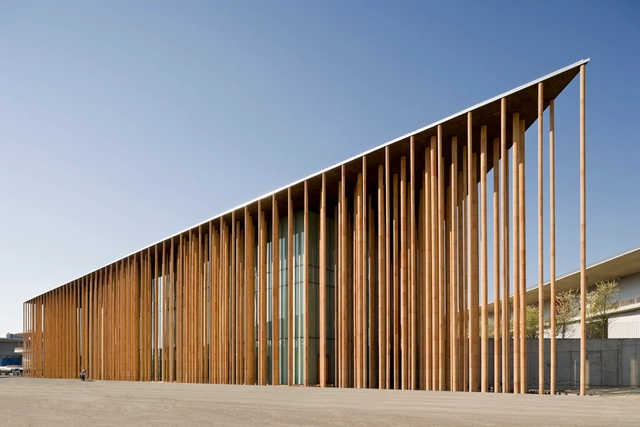
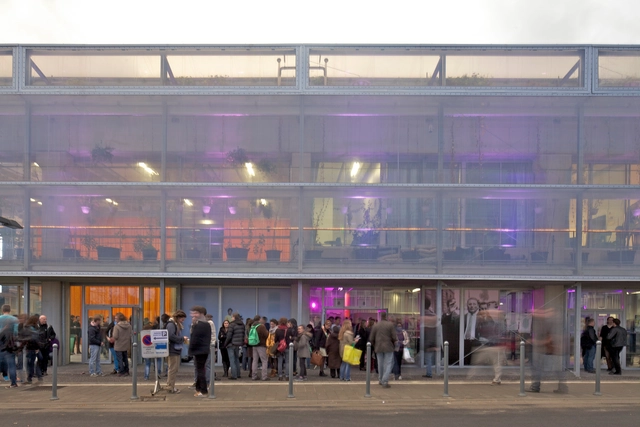
The multi-purpose hall in Lille is a place of cultural dissemination both at a city scale and at a neighborhood scale. It is part of the 28 ha restructuring process of the Arras Europe sector.

One of the main focuses of the Turato Architects’ Hall and Square project in Krkwas to finish an architectural dialogue started way back in 2005, when Idis Turato completed an elementary school, Fran Krsto Frankopan (with his former studio “Randić Turato”).
.jpg?1384142860&format=webp&width=640&height=580)
This design is prompted by the desire for a better integration of all the teaching facilities connected with the Medical Centre. The Medical Centre thereby hoped to optimise the synergy between the departments, their staff and their expertise. This ambition called for a new building that matches both the goals and the existing buildings on location. The design, however, also contributed to a better integration and linking of the entire Erasmus Medical Centre with the city. In that process the Westzeedijk, but especially the adjacent Museumpark, must be transformed from barriers into a turntable or meeting point. After all, other institutions border on this park which also contribute to an urban culture such as the museums, the Kunsthal, the Medical Faculty, the Polytechnic, and the Erasmiaans Gymnasium. The urban and cultural potential of the park and its potential as a flywheel have hardly been exploited so far.
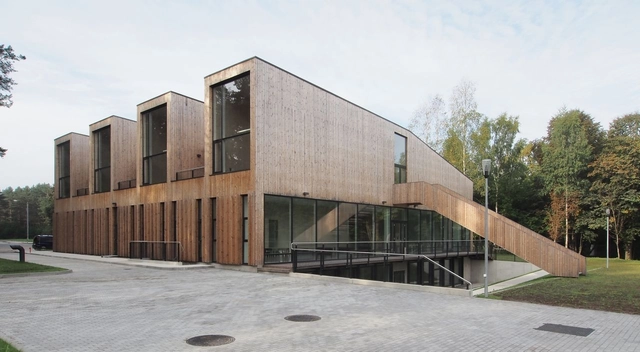
The purpose of centre is to provide the artists and researchers with space for workshops, lectures, individual projects and residency. The 2096 sq. meters building is located in Vilnius, Valakampiai, next to the city beach. Built instead of the old shop, it stands in the axis of the street, just at the ending of the former trolley ring.

Dungeness beach is a classic example of ‘Non-Plan’ and the houses that populate the beach have developed through improvisation and bodge. This scheme develops this tradition in a way that responds to the drama and harshness of the landscape.

The project consists of the renovation of a building from the late Nineteenth century in the old centre of a small town in the province of Bergamo, which had initially been built as a primary school. The intention was to make the building available to the citizens, by renovating and expanding the original building, which was to become the new municipal library and thus a centre of culture. The C-shaped plan of the original building and the fact that more space was needed suggested the addition of a new block on the open side, to create an internal open court and turn the building into a more stately “palazzo” formed around a court.