1. ArchDaily
  2. Digital Twin

Digital Twin: The Latest Architecture and News

AI and Architecture Software at AIA25: From Code to Concrete in the Digital Future

Subscriber Access | 

The future of architecture isn't just being drawn—it's being coded. Since mathematician John W. Tukey coined the term "software" in 1958 in The American Mathematical Monthly, its influence has steadily expanded, from revolutionizing science and engineering to quietly transforming architecture. What was first embraced as an innovation for structural calculations and drafting has since revealed a much broader potential, becoming a creative driver in architectural narrative and practice.

While that transformation has already taken root—software now embedded in the way we design and think—it continues to evolve. At the recent AIA Conference on Architecture & Design in Boston, current innovations made it clear that we're entering a new chapter: one where software and artificial intelligence aren't just enhancing workflows but actively shaping sustainability, regulation, and decision-making. Architects and software developers now treat code with the same logic as a material—shaped not by modeling or carving, but through parameters, cycles, constant evolution, and feedback. At the same time, architects are working with AI as a co-pilot in the design process, collaborating with it to support decision-making and enhance the design.

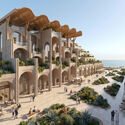
AI, Data, and Predicting Urbanism: Interview with Peter Hirshberg and Anna Fedorova

This article is the ninth in a series focusing on the Architecture of the Metaverse. ArchDaily has collaborated with John Marx, AIA, the founding design principal and Chief Artistic Officer of Form4 Architecture, to bring you monthly articles that seek to define the Metaverse, convey the potential of this new realm as well as understand its constraints. In this feature, architect John Marx interviews Peter Hirshberg, chairman, and Anna Fedorova, principal at the Maker City Project.

AI, Data, and Predicting Urbanism: Interview with Peter Hirshberg and Anna Fedorova - Image 1 of 4AI, Data, and Predicting Urbanism: Interview with Peter Hirshberg and Anna Fedorova - Image 2 of 4AI, Data, and Predicting Urbanism: Interview with Peter Hirshberg and Anna Fedorova - Image 3 of 4AI, Data, and Predicting Urbanism: Interview with Peter Hirshberg and Anna Fedorova - Image 4 of 4AI, Data, and Predicting Urbanism: Interview with Peter Hirshberg and Anna Fedorova - More Images+ 3

How We Learn to Live in Synthesized Realities: The Albanian Pavilion Investigates Virtual Civic Spaces at the 2023 Venice Architecture Biennale

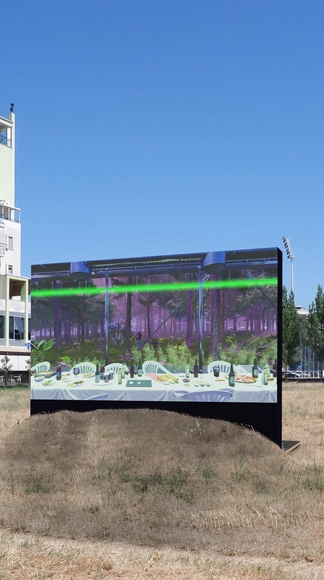
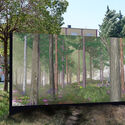
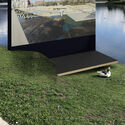
For the 18th International Architecture Exhibition – La Biennale di Venezia, The Albanian Pavilion set out to respond to the theme “The Laboratory of the Future” with the exhibition “Untimely Meditations or: How We Learn to Live in Synthesized Realities.” The project seeks to introduce and understand new typologies of civic spaces by repurposing the rendering engine as a mechanism for exploration. The curatorial team is composed of architects Martin Gjoleka, and Era Merkuri, exhibiting together with architect Ani Marku and 3D digital artist Geraldo Prendushi.

How We Learn to Live in Synthesized Realities: The Albanian Pavilion Investigates Virtual Civic Spaces at the 2023 Venice Architecture Biennale - Image 1 of 4How We Learn to Live in Synthesized Realities: The Albanian Pavilion Investigates Virtual Civic Spaces at the 2023 Venice Architecture Biennale - Image 2 of 4How We Learn to Live in Synthesized Realities: The Albanian Pavilion Investigates Virtual Civic Spaces at the 2023 Venice Architecture Biennale - Image 3 of 4How We Learn to Live in Synthesized Realities: The Albanian Pavilion Investigates Virtual Civic Spaces at the 2023 Venice Architecture Biennale - Image 4 of 4How We Learn to Live in Synthesized Realities: The Albanian Pavilion Investigates Virtual Civic Spaces at the 2023 Venice Architecture Biennale - More Images+ 4