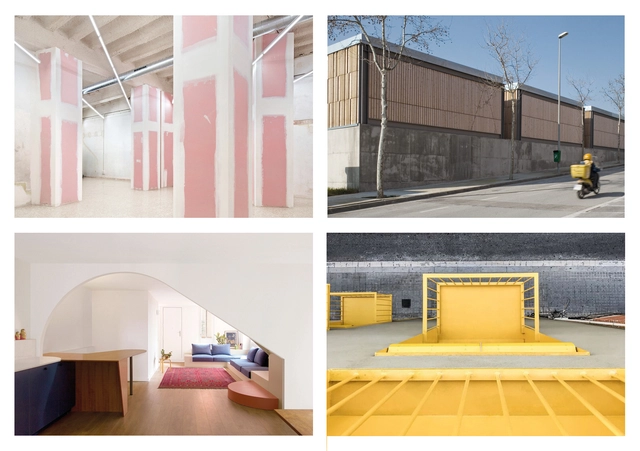
Galería de arte en calle Trafalgar; Archivo histórico comarcal del Garraf; Rehabilitación de vivienda en Walden-7, Viviendas siete vidad - Montaje con fotografías de proyectos de los estudios mencionados
We are going through times of great change and we are all aware of that. The role of women in the field of architecture is becoming more and more relevant and, unlike other times, such as in the 20th century, the female figure is no longer hidden behind the male figure, as happened to Anne Tyng with Louis Kahn or Lilly Reich with Mies van der Rohe, just to mention a few examples.
Whether to mark a change of direction, to highlight its first steps or its own presence in a room, stairs that combine two or more materials tend to draw attention by establishing dialogs between particular characteristics of each material. Concrete, steel and wood are some of the most common choices to compose the structure of stairs due to their high strength and versatility. But, when combined, these different materials expand their individual possibilities and reveal how the design can be tailored to their peculiarities and connections.
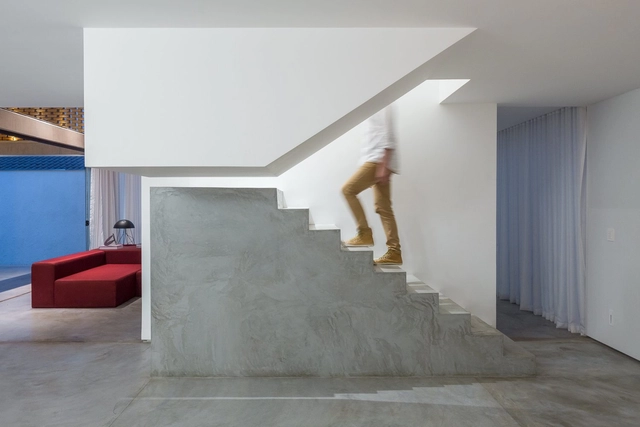
The combination of textures, colors, and finishes among materials can provide a number of creative solutions for these elements used for vertical circulation, as shown in LÂM’s Home, by AD+studio and House 9A, by 23o5Studio, characterized by stairs with a sturdy and rough base that meets a light and sleek structure of steps. The opposite composition order, a lighter base that meets a robust set of steps, thrives ingeniously in Luis Carbonell's Casa Chulavista and messina | rivas' Angatuba House, where the light wooden stairs' base is followed by raw concrete steps.
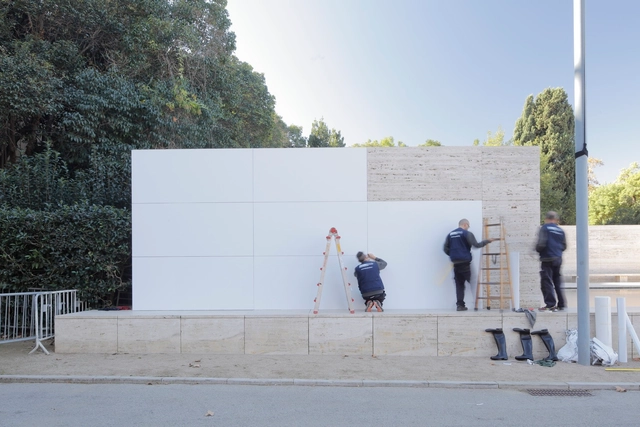
Mies van der Rohe’s Barcelona Pavilion is being transformed into a “1:1 scale model” of itself in a new exhibition designed by Anna and Eugeni Bach titled “mies missing materiality.”
Over the next week, the iconic structure – the longest standing temporary pavilion in modern architectural history – will be completely covered with white vinyl, obscuring the beautiful marble, travertine, steel, chrome, and glass for which it is recognized.
The project sets to prompt discussion about the role of material in the original design, as well as the symbolism of the white surface within modern architecture.
Architects: Anna & Eugeni Bach Location: Pälölä farm, Nummi Pusula, Finland Collaborators: Uma and Rufus Bach Project Dates: July 20 - July 21, 2011 Work Site Dates: August 10 – August 24, 2011 Built Surface: 13,50 m2 Budget: 800 € Promoter/Owner: Uma and Rufus Bach Constructor: Self built (Anna & Eugeni Bach) Photographs: Tiia Ettala
Last summer, architects Anna & Eugeni Bach found themselves in a situation that many parents who are architects with children might be able to relate. Their children, after realizing their parents were architects, wondered why they hadn’t made a house for them. So they promised them they would build a house for them on their grandparents farm in Finland. And, of course, at the kids insistence, they fulfilled their promise. More images and architects’ description after the break.